
CORVALLIS, Ore. — A recent academic analysis finds Oregon’s narrow 2022 approval of Measure 114 coincided with a substantial spike in firearm demand that likely left the state with thousands more guns than it would otherwise have had.
Background checks climbed sharply before and after the vote
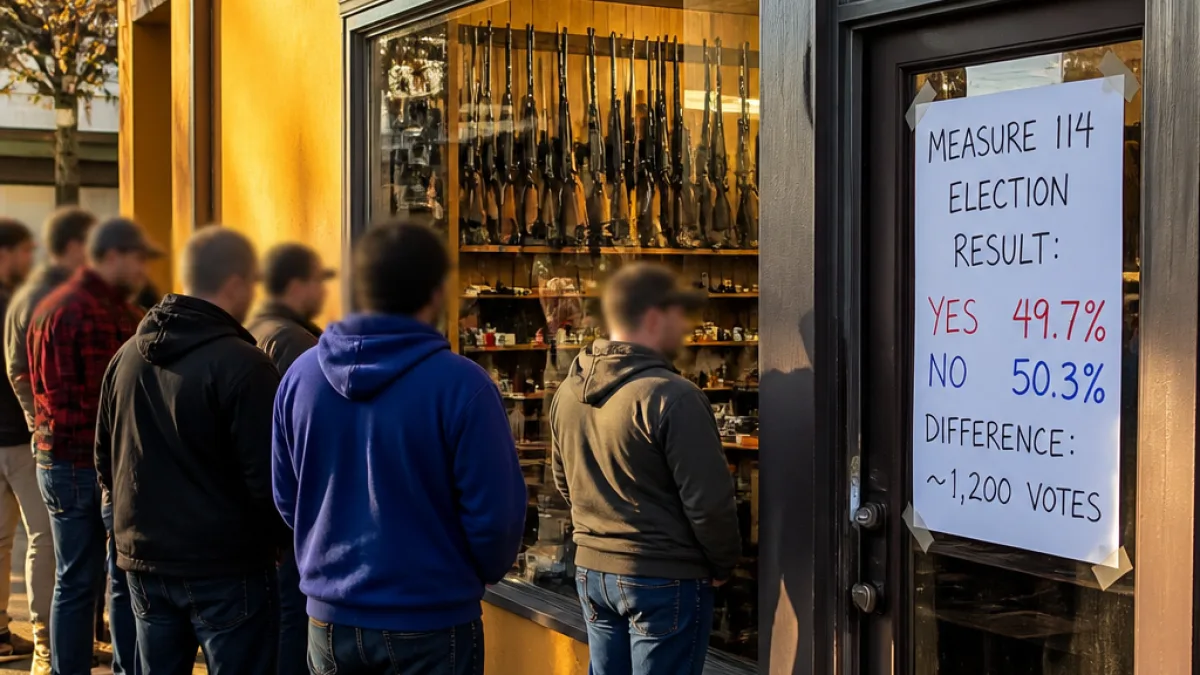
Measure 114, approved by voters in 2022 by fewer than 25,000 votes—975,862 to 950,891—would have required a permit to purchase firearms and banned magazines holding more than 10 rounds. Researchers from Oregon State University, the University of Oregon and the National Bureau of Economic Research examined background check activity as an indicator of firearm demand and report notable increases around the referendum.
The study found background checks rose nearly 14% in the run-up to the election and then surged 157% after the measure passed. By about 18 months after the vote, researchers estimate an additional 63,000 background checks had occurred compared with what they project would have happened without the ballot measure effort.
| Measure 114 figures | Value |
|---|---|
| Vote margin | 975,862 to 950,891 (≈1.3 percentage points) |
| Pre-election background check increase | ~14% |
| Post-election background check increase | ~157% |
| Estimated additional background checks (18 months) | 63,000 |
Researchers and context
OSU economist Katie Bollman, an assistant professor in the College of Liberal Arts and a co-author of the paper, emphasized that not every background check results in a completed purchase but noted some checks lead to multiple firearm acquisitions. She called the size of the increase and the dynamic behind it notable.
"It’s not particularly surprising that people go out and buy more guns when they have compelling reason to believe it’s going to become harder to in the future," Bollman said. "But the magnitude of the increase is pretty remarkable, as is the underlying dynamic driving it."
The researchers conclude the anticipatory buying tied to Measure 114 was large enough that, even if the measure were ultimately implemented, it could take more than a year just to return the state's firearm stock to where it would have been without the referendum effort.
Measure implementation and legal status
Measure 114 has faced multiple legal challenges since voters approved it. Legislators in Salem passed a bill this year delaying the measure’s implementation until Jan. 1, 2028, but that delay hinges on the outcome of ongoing court actions brought by opponents and supporters alike. As of the analysis, the legal disputes remained unresolved.
The study highlights a well-known policy phenomenon: when voters or lawmakers signal future restrictions, prospective purchasers often accelerate buying. With support for the referendum concentrated in urban counties, the measure won statewide by a relatively small margin—about 1.3 percentage points.
Local implications
For law enforcement, public health officials and policymakers, the finding raises questions about how best to measure and respond to changes in firearm prevalence tied to electoral politics. The study does not attempt to link the increase in background checks to changes in crime or incidents of firearm injury; it focuses on demand and transaction indicators.
Practical implications for Oregonians include:
- Potentially higher numbers of firearms in circulation statewide for the foreseeable future.
- Delay of any permit-to-purchase requirement until at least 2028, contingent on court outcomes.
- A demonstrated tendency for purchase activity to spike when voters anticipate future restrictions.
Researchers cautioned that background checks are an imperfect proxy for completed purchases, but the scale of the uptick suggests a meaningful change in the number of firearms entering Oregon households during and after the referendum.
The study adds to a body of evidence from other states and national analyses that policy debates and prospective regulations can prompt rapid, anticipatory buying. As Oregon’s legal process continues and lawmakers have delayed implementation, the state is in effect living with the policy’s unintended market effects while courts consider its future.
Officials and advocates on both sides of the issue have cited the state’s close vote and the legal battles as central to their next steps. The study’s authors said that the timing and magnitude of the purchasing surge make Measure 114’s consequences particularly notable, given the measure has not yet been implemented.

















