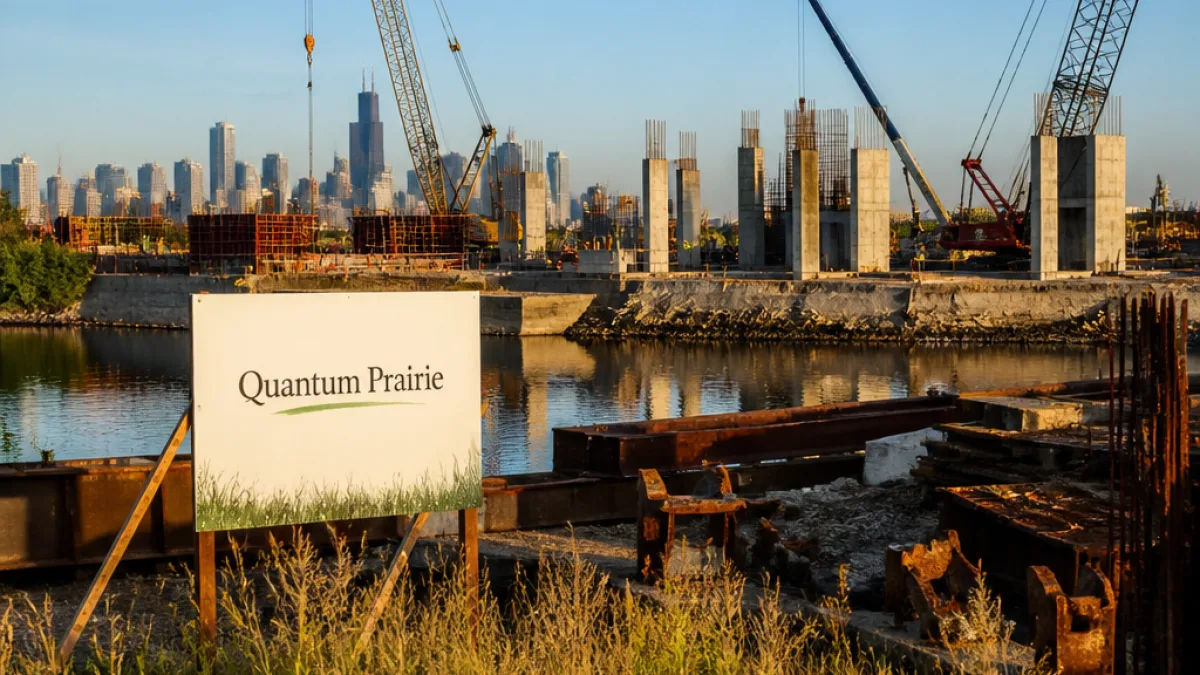
Construction has begun on the Illinois Quantum and Microelectronics Park on South DuSable Lake Shore Drive, a major redevelopment project backed by Gov. J.B. Pritzker that aims to turn a long-vacant stretch of lakefront in South Chicago into a hub for quantum computing and related technologies.
From steel mills to quantum campus
The site was once part of the 128-acre U.S. Steel South Works Plant, which closed permanently in 1992. For more than three decades the lakeside property sat largely unused. The new park will occupy that same footprint, replacing heavy-industry acreage with a technology campus designed to attract companies, researchers and talent.
Harley Johnson, chief executive officer of the park, gave an exclusive first look to CBS News Chicago and emphasized the personal and economic significance of the location: many workers on the project have family ties to the steel mills that once powered the area. "There's no other place like this in the world," Johnson told reporters.
"A lot of the people working on the project have parents or grandparents who worked at the steel mills," said Johnson. "There's no other place like this in the world."
State backing and regional ambitions
The development was greenlit by the Chicago City Council in 2024 and represents a priority for Gov. Pritzker, who pushed state funding and support for the initiative. Proponents say the park could position Illinois as a leading national — even international — center for quantum research and microelectronics, building on existing university and corporate activity in the region.
Supporters have used nicknames such as the Quantum Prairie to describe the cluster they hope will emerge, comparing the aim to that of Silicon Valley in its ability to concentrate companies, capital and talent.
What quantum computing could mean locally
Quantum computing applies principles of quantum physics to process information in ways conventional computers do not, enabling calculations that can operate at different scales and complexities. Experts cited by the park and media outlets point to potential applications in:
- drug discovery and medical research,
- development of advanced materials,
- energy and renewable-technology optimization.
Park officials say creating a dense technology cluster on the lakefront could attract companies and university partnerships that pursue those applications — bringing jobs and investment to a South Side neighborhood that lost manufacturing employment decades ago.
What is known about the project site
| Feature | Detail |
|---|---|
| Location | South DuSable Lake Shore Drive, South Chicago |
| Former use | U.S. Steel South Works Plant |
| Plant closure | 1992 |
| Site acreage | 128 acres |
| City Council approval | 2024 |
Officials involved with the park describe it as a long-term effort to create a "critical mass" of companies and talent. That strategy follows economic-development models in which co-location of startups, established firms, academic researchers and investment capital is intended to accelerate innovation.
While the vision for the park is ambitious, specific details reported so far — including exact timelines for buildout, projected employment figures and complete financing breakdowns — were not disclosed in the exclusive preview. State and local officials have previously said the project would receive significant public support, though figures cited publicly have varied in past announcements.
Community advocates and local leaders will be watching how plans address workforce development, local hiring, environmental remediation of the former industrial site and community benefits tied to the project. The area surrounding the South Works has been subject to long-standing debates over land use, access, and equitable economic opportunity since the plant closed.
For Chicago and Illinois, the park represents a bet that high-tech investment can be steered toward neighborhoods that have seen limited benefits from the tech economy to date. If it succeeds, backers say, the campus could reshape a symbolic lakefront site into a modern economic engine for the city and region.
Reporting for this article included coverage from CBS News Chicago’s exclusive site visit and statements from project leadership.