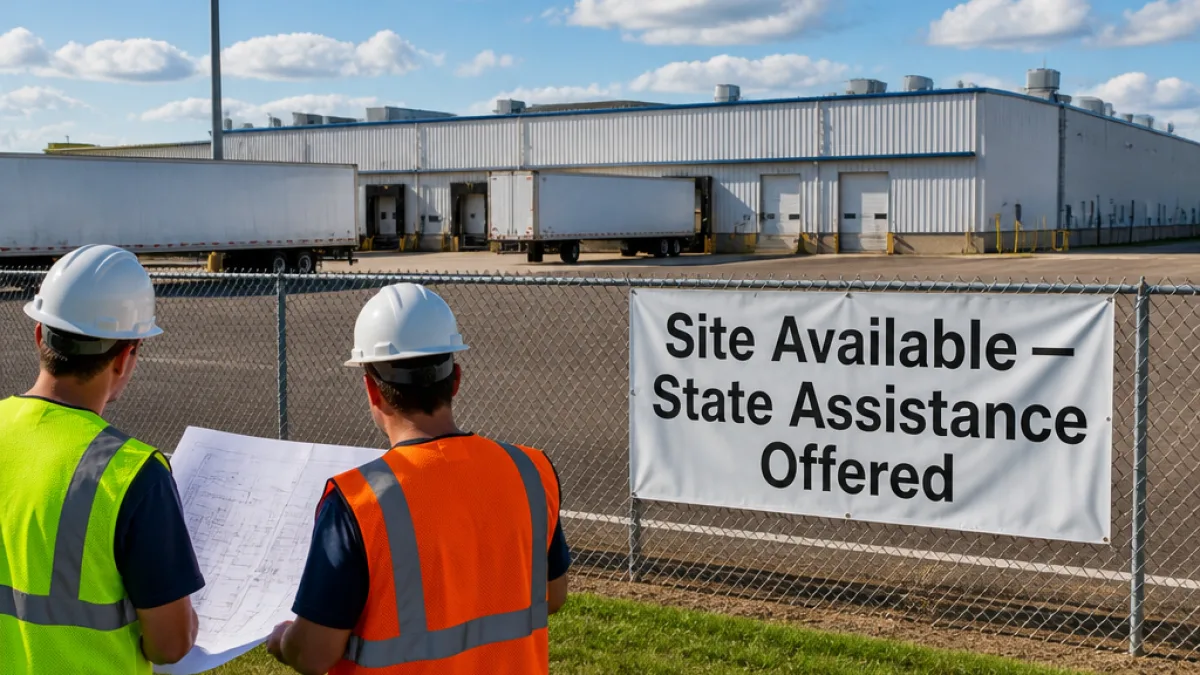
SPRINGFIELD — The State of Illinois announced Thursday it is making resources available through the Invest in Illinois Fund to help attract prospective buyers for the former Tyson Foods beef processing facility in Joslin, a move officials said is aimed at restoring job opportunities and preserving beef industry capacity in the Quad Cities region.
State officials aim to speed sale and reuse
Gov. J.B. Pritzker and the Illinois Department of Commerce and Economic Opportunity (DCEO) said the initiative is intended to return the shuttered plant to productive use, support workers and families affected by the closure, and sustain economic activity in and around the Quad Cities.
“The closure of the Tyson facility in Joslin has had a profound impact on workers, families and communities across Joslin and the Quad Cities,” Pritzker said. “My administration, in partnership with the General Assembly, is committed to doing everything we can to support them and help the region move forward.”
Tyson Foods announced last month it would end operations at the Joslin, Illinois, and Eagle City, Utah, facilities as part of a broader restructuring of its beef business, citing historic cattle shortages. The decision affected nearly 2,500 employees at the Illinois location, according to the state release.
Coordinated state response
Illinois officials said the state has mobilized workforce and economic development resources to assist affected employees while simultaneously seeking opportunities for continued investment at the site. Lt. Gov. Juliana Stratton emphasized that any next steps should benefit the larger community and the state economy.
“After the closure of the Tyson facility, we're using every tool available to make sure working Illinoisans in the Quad Cities have the resources they need to thrive,” Lt. Gov. Juliana Stratton said.
State leaders said the Invest in Illinois Fund will be an additional tool in the search for a buyer, but did not specify how much funding might be offered or the precise forms that support could take. DCEO will coordinate with local workforce providers and community partners to support displaced workers through rapid-response services, the release said.
Local impact and next steps
Economic development and workforce officials in the Quad Cities face the twin tasks of attracting investors for the plant and connecting former employees with jobs and training. The Joslin facility's closure affects not only plant workers but also suppliers, transport companies and small businesses that served plant employees.
- Objective: Attract a buyer to restart or repurpose the Joslin facility.
- Workforce support: Rapid-response services and partnerships with local providers to assist displaced employees.
- Regional goal: Sustain the Illinois beef industry’s capacity and Quad Cities economic activity.
Officials have not released a formal timeline for when a buyer might be identified or for the potential resumption of operations at the site. DCEO said it will leverage state resources to market the property and engage potential investors, including those within the meat-processing and broader food-supply sectors.
Why the plant closure matters
Meat-processing plants are significant local employers and anchor industrial sites that can be difficult to repurpose quickly. The loss of nearly 2,500 jobs at a single facility represents a substantial economic shock for a small community and can have lingering effects on tax receipts, housing markets and local services.
Restoring some form of beef-processing capacity also has implications for the wider supply chain. Tyson cited historic cattle shortages as one of the reasons behind its restructuring, a structural pressure that can change where and how meat-processing capacity is maintained nationally.
Data snapshot
| Item | Detail |
|---|---|
| Facility | Former Tyson Foods beef plant, Joslin, Illinois |
| Employees affected | Nearly 2,500 |
| State effort | Resources from Invest in Illinois Fund; workforce and economic development support |
State and local officials said they will continue outreach to potential buyers and investors while providing assistance to displaced workers. Community stakeholders, including local economic development agencies and labor groups, will likely play a role in shaping any redevelopment proposals and in advocating for resources to retrain or re-employ workers.
As the process moves forward, residents and officials in the Quad Cities will be watching for specific proposals that outline how a buyer would use the facility, the number of jobs that could be restored, and what commitments might be made to local suppliers and the broader community.
Illinois officials framed the use of the Invest in Illinois Fund as an example of the state stepping in to preserve economic capacity and to help communities adapt after a significant corporate restructuring. DCEO did not provide additional financial specifics in its release; those details are expected to be worked out as officials pursue potential buyers and redevelopment options.
— Danielle Osei, State Correspondent