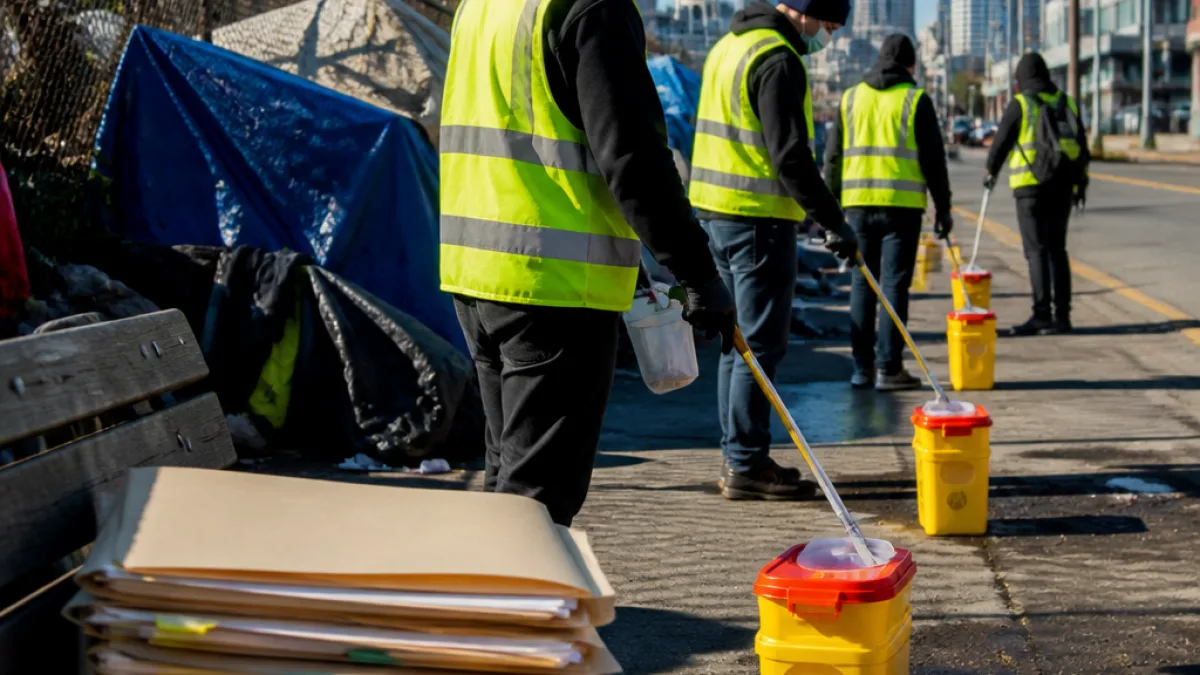
State investigators have opened a review of the cleanup practices used by the downtown nonprofit We Heart Seattle, seeking records that detail how volunteers are trained and protected while collecting used needles and other drug paraphernalia from public places.
What prompted the state review
The Washington State Department of Labor and Industries said it received a complaint alleging that volunteers helping the privately funded outreach group were being put at risk while handling hypodermic needles and fentanyl-related paraphernalia during homeless camp cleanups.
The agency has requested a range of documents from We Heart Seattle, including the group's written safety program, procedures for handling bloodborne pathogens, training materials, records of safety meetings and hepatitis B vaccination forms for volunteers involved in cleanups. The investigation could lead to fines if regulators find lapses in required safety protections.
Organization response and current practices
We Heart Seattle's CEO and founder told reporters the group has safety protocols and equips volunteers with protective gear. She said volunteers who are uncomfortable handling contaminated items are instructed to leave those items to supervisors trained in bloodborne-pathogen precautions.
“I could see maybe somebody filing a complaint, honestly, to thwart our good work,” the founder said, adding that it “feels like an attack when we're just trying to fill the gaps where the government needs some help.”
The organization reports collecting large volumes of trash since its launch seven years ago, including hundreds of thousands of needles and drug-related items. The group's statement and its founder emphasize separation protocols: certain litter is segregated by type and handled according to internal rules.
Public health and volunteer safety concerns
Health experts and public agencies caution that used syringes can carry bloodborne pathogens and present a risk of puncture injuries. The state request for documentation reflects those risks and the legal obligations employers and organizations have to protect workers and volunteers from exposure.
Seattle Public Utilities and other city-contracted crews also conduct needle and hazardous-waste removal with established safety guidelines. The probe raises practical questions about the roles of volunteer groups versus public agencies in addressing drug litter and how consistent safety standards are enforced across different operators.
What investigators requested
| Records sought | Purpose |
|---|---|
| Written safety program | Assess overall safety planning |
| Bloodborne-pathogen procedures | Evaluate medical risk controls |
| Training materials & safety meeting notes | Verify volunteer instruction and oversight |
| Hepatitis B vaccination forms | Confirm immunization and medical protections |
Local context and potential consequences
The inquiry comes as Seattle and King County continue to grapple with visible homelessness, discarded drug litter and the public health impacts of opioid use. Community groups and nonprofits have frequently stepped into roles to remove trash and hazardous items from sidewalks, parks and encampments, arguing they are filling service gaps.
If investigators determine the nonprofit did not meet state standards for protecting volunteers from bloodborne pathogen exposure, the group could face administrative penalties. The inquiry also may prompt conversations among city officials, service providers and volunteer groups about clearer statewide guidance or closer coordination to ensure safety and legal compliance.
- Who is affected: Volunteers, outreach staff, people experiencing homelessness and the general public who may encounter contaminated items.
- Possible outcomes: Administrative fines, required corrective actions, or strengthened safety protocols.
- Wider implications: Review may shape how private groups and public agencies share responsibility for hazardous-waste removal.
The Department of Labor and Industries has not released a timeline for completing its review. We Heart Seattle said it is cooperating with investigators and maintains its practices are protective; the organization's leaders stress their work removes hazards from public spaces.
As the investigation proceeds, city residents and volunteers will be watching for any guidance that clarifies the proper handling of needles and other drug-related waste to protect both cleanup crews and the broader community.