
Curfew extended after shootings; city pairs restrictions with neighborhood outreach
The City of Rochester has extended a restriction that bans public gatherings of 10 or more people between 11 p.m. and 5 a.m., the measure remaining in place at least through Sunday with the possibility of further extensions. The limit was first enacted by Mayor Malik Evans in late July after a string of shootings that left two people dead and eight others wounded, city officials have said.
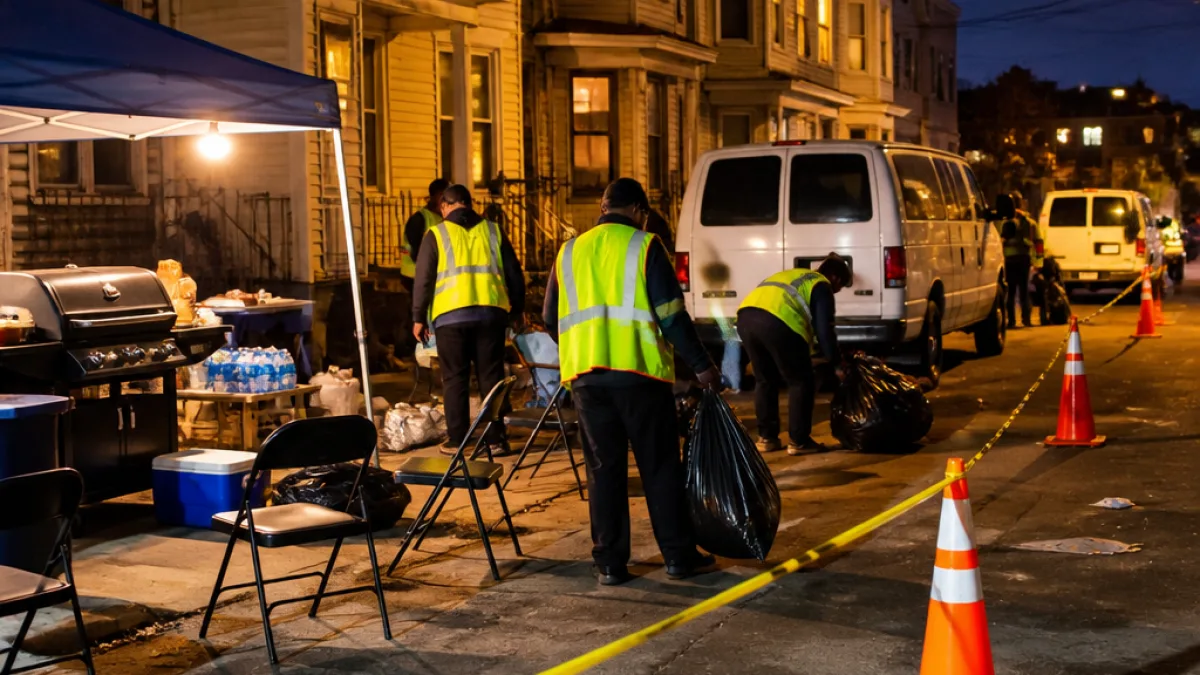
City leaders and community groups are attempting to combine enforcement with outreach to ease tensions and reduce violence. In a neighborhood near one of the shooting scenes, local residents and public-safety workers gathered for a free barbecue and cleanup on Avenue D and Conkey Avenue. The event, organized in part by the city’s Pathways for Peace program in partnership with the nonprofit Walking for Rochester, aimed to restore public space and foster connections.
Neighbors report calmer nights, call for consistent enforcement
Reactions among neighbors at the Avenue D and Conkey Avenue gathering were mixed but leaned toward approval of the curfew’s impact. Some residents said the curfew has coincided with quieter nights and fewer late‑night gatherings.
“Yeah, I feel everything has been calmer since the curfew has been in place,”
said Kerax Bugatti, a neighbor. Nate G, another resident, added,
“The curfew stuff is really doing a lot.”
Antonio Clark, who grew up in the neighborhood, acknowledged the role of supervision and community oversight when young people gather at night: “A lot of youth, you know, running around, certain times of the night... nobody looking over you, so it’s important to a certain degree.”
Not everyone believes the curfew alone will stop dangerous behavior. Stephanie Brown said enforcement needs to be consistent to make a meaningful difference. “It affected a few people, but I mean, they still gonna be outside. So I feel, [there’s] not really anything the city could do. I feel like it’s parents too,” she said.
Pathways for Peace emphasizes relationship building
Pathways for Peace staff at the event described such gatherings as part of a broader strategy to build trust, deliver services and reduce conflict. The program has organized multiple community cleanups and offered free food to draw residents into safe, supervised activities.
Coordinator Anthony Dixon highlighted the program’s role in offering resources to the community. Pathways for Peace provides:
- Conflict mediation to resolve disputes before they escalate
- Crisis response teams to intervene after violent incidents
- Youth engagement activities and outreach to connect young people with services
Dixon said events that put outreach workers, mediators and residents together in public spaces are intended to create relationships that can prevent future violence: the more residents see program staff and can engage with them, the more effective the work can be, he said.
Local context and next steps
The restrictions and outreach come nearly two weeks after the recent shootings. City officials have framed the curfew as one tool among several to curb community violence while ramping up non‑enforcement efforts to address underlying tensions.
At the neighborhood barbecue and cleanup, residents participated in conversations about public safety and took part in efforts to reclaim and maintain shared spaces. Organizers said these activities are intended to complement public-safety measures by fostering stronger lines of communication between residents and service providers.
| Measure | Details |
|---|---|
| Curfew | Ban on public gatherings of 10+ people from 11 p.m. to 5 a.m.; extended at least through Sunday |
| Community programs | Pathways for Peace partners with Walking for Rochester for cleanups, free barbecues and outreach |
| Services offered | Conflict mediation, crisis response, youth engagement |
As the city evaluates the effectiveness of the curfew and outreach efforts, neighbors say they will be watching for consistent enforcement and more opportunities for adults and families to be part of local solutions. For many residents at the Avenue D and Conkey Avenue event, the combination of quieter nights and visible community services offered a measure of relief — but not a full answer to the complex issues behind the recent violence.
City leaders have not announced a firm end date for the restriction; officials say extensions remain possible as they assess public-safety needs and community feedback.
















