
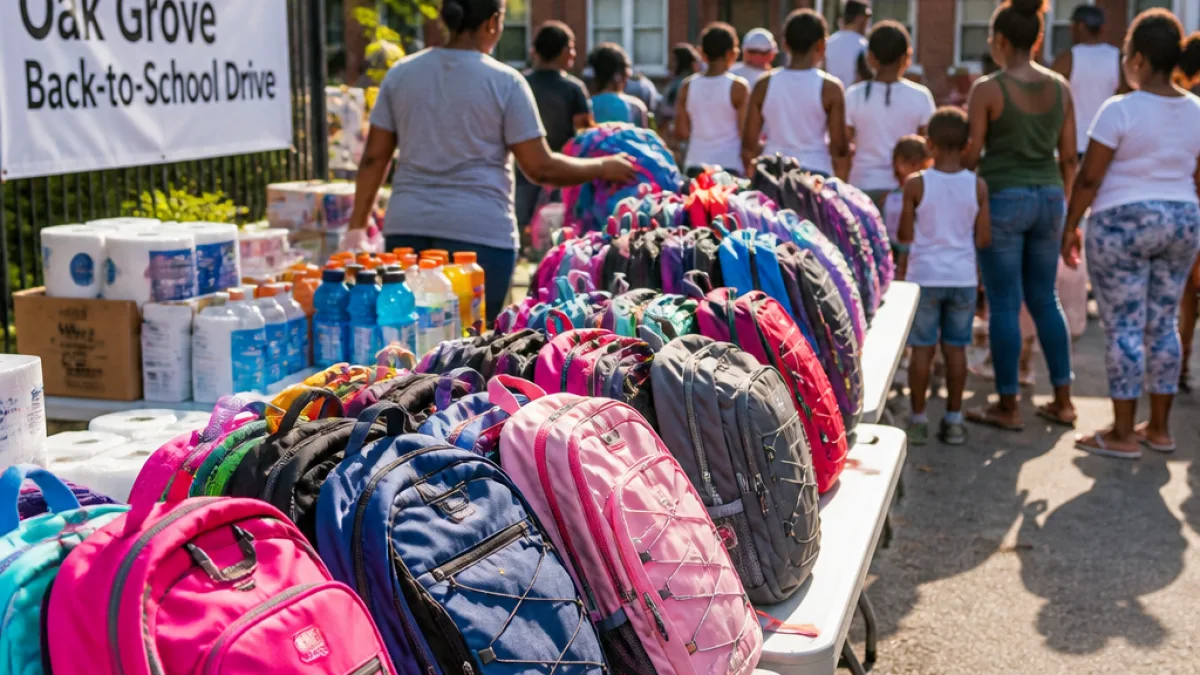
Community effort aims to ease school costs for Southside families
The Oak Grove Neighborhood Association, in partnership with the Latino Civic Association and other organizations, handed out more than 350 filled book bags and a table of additional school supplies to families in Richmond's Oak Grove neighborhood during a free back-to-school event Saturday.
Organizers said the supplies — all claimed by the end of the day — were intended to help families facing tough financial choices amid rising costs. The event also distributed roughly 800 pounds of household items, drinks and other goods through a collaboration with the Southside Amazon distribution center, according to association leaders.
Addressing a local resource gap
Charles Snellings, a representative of the Oak Grove Neighborhood Association, described the neighborhood as a resource desert, saying residents often travel to adjacent neighborhoods for basic needs, including school-related items. The association, formed about 16 months ago, launched the drive to help change that dynamic and to show investment in local students.
"To put people first — that's our whole tagline," Snellings said. He added that an emotional moment from last year stayed with him: "When a mom had the book bag in her hand with her small kid, she went into tears because, you know, school supplies, inflation, all of those things."
Snellings highlighted the difficult trade-offs some families face: paying a utility bill or buying supplies for children. The event sought to fill that gap by providing tangible help and connecting residents with services.
Partnerships and outreach
The Oak Grove Neighborhood Association partnered with the Latino Civic Association to reach Spanish-speaking residents in Oak Grove. Yameli Carpio of the Latino Civic Association emphasized the importance of the collaboration.
"They need to choose between paying a bill or school supplies. So this event is really important for our kids and our community," Carpio said.
About 20 city offices and nonprofit groups were on hand at the event to share information and enroll residents in services they may not know are available, organizers said. Those agencies aimed to link families with longer-term supports beyond the single-day distribution.
- Supplies distributed: 350 filled book bags, additional school items at a supply table
- Additional goods: about 800 pounds of household items, drinks and other essentials
- Partners: Oak Grove Neighborhood Association, Latino Civic Association, Southside Amazon distribution center, ~20 city and nonprofit groups
Local context and implications
Southside neighborhoods like Oak Grove face a mix of economic pressure and limited local retail or social service access, organizers said. The association's efforts reflect a grassroots approach to meeting immediate needs while building visibility for broader investment in the neighborhood. For residents, the event removed one barrier to starting the school year and provided a chance to learn about ongoing support programs.
Organizers framed the drive as the beginning of a larger community-building effort rather than a one-off relief action. By coordinating with established civic groups and city offices, the Oak Grove Neighborhood Association aimed to create pathways for sustained assistance and to draw attention to the neighborhood's resource gaps.
For families who attended, the impact was immediate: children left with school-ready bags, and parents left with information that could ease future burdens. For civic leaders and volunteers, the response — with all supplies gone by the end of the day — underscored continued demand and the importance of local mobilization as school starts in Richmond.
| Item | Amount |
|---|---|
| Filled book bags | 350+ |
| Household items (approx.) | 800 lbs |
| Partner organizations on site | About 20 |
As the Oak Grove Neighborhood Association continues its work, residents and community leaders will be watching whether such initiatives can spur more permanent services and retail access in the South Oak Grove area. For now, organizers say the message is simple: prioritize people and meet immediate needs as part of longer-term neighborhood investment.














