A Richmond gastroenterologist awoke Aug. 20 to an unexpected and unsettling presence: a bat with its wings folded inside her mouth. The physician said the animal did not bite her, but the encounter prompted quick action to contain the bat and alerted local health officials about potential rabies exposure and household safety measures.
How the encounter unfolded
The doctor, who treats patients with Richmond Gastroenterology Associates, said the episode occurred around 6 a.m., roughly 30 minutes before her alarm was set. She recalled dreaming about a small mouse trying to get into her mouth. When she reached up during the dream and felt something soft, she realized it was real.
"I was dreaming that there was a little mouse trying to get into my mouth... when I touched the hair on its back and kind of pulled it out and then looked at it. That’s when it was like, my gosh, this is real life," she said.
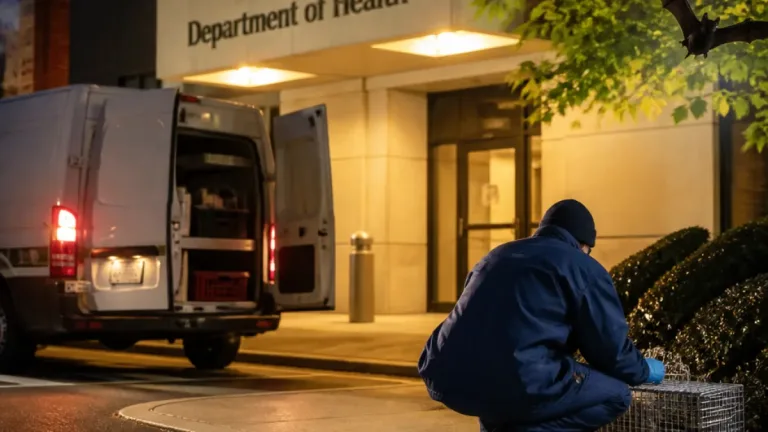
Her screams awakened her husband, who captured the bat and arranged for animal control to take it for testing. She said her husband used a pair of her snow mitten gloves, a plastic net and a bucket; they covered the bucket with cardboard and secured it with masking tape before calling authorities. Concerned about their child, the doctor positioned herself outside their 6-year-old daughter's bedroom door while the capture was completed.
Immediate health response and precautions
The physician reported that the bat did not bite her. She said she did not seek care in the emergency department. Virginia health officials have outlined when contact with bats requires rabies precautions, and the captured animal was turned over to authorities for testing to determine whether rabies exposure occurred.
Public-health officials advise that bats found in homes should be captured and tested when there is any possibility of human contact while the person was asleep, when a person may not be able to reliably report an interaction (young children, intoxicated or incapacitated persons), or when a bat is found in a room with an unattended child. In those circumstances, testing the bat can determine whether postexposure rabies treatment is necessary.
- Time of incident: about 6 a.m., Aug. 20
- Animal: bat, wings folded inside mouth but did not bite
- Action taken: husband used mittens, net and bucket to contain bat; animal control notified
- Health action: bat sent for testing; doctor did not go to emergency room
Practical steps for Richmond households
The episode serves as a reminder for Richmond residents to be prepared for unexpected wildlife inside homes and to follow public-health guidance if a bat is discovered. Residents can take the following precautions without delay:
- Isolate the bat if it can be safely contained and avoid direct handling.
- Use barriers such as gloves and containers to trap the animal, and contact local animal control for guidance.
- If there is any potential human contact while a person was asleep, or if the person is a child or otherwise unable to reliably report contact, seek public-health advice promptly about rabies postexposure prophylaxis.
- Keep children and pets out of the area until the animal is removed and evaluated.
Timeline and logistics
| Event | Detail |
|---|---|
| When | About 6 a.m., Aug. 20 |
| Who | Richmond gastroenterologist and husband; 6-year-old child in home |
| Immediate action | Bat contained with mitten, net and bucket; covered with cardboard taped down |
| Health outcome | Doctor reported no bite; bat sent to animal control for testing |
While the physician described the sensation of the bat's soft wings and called the experience unsettling rather than painful, the episode underscores a broader public-health concern: bats are a primary reservoir for rabies in the United States, and even an unrecognized bite can carry serious consequences. Testing a captured bat can determine whether rabies treatment is needed for exposed people.
Richmond residents with questions about wildlife encounters or potential rabies exposures should contact local animal control or public-health authorities for guidance specific to their situation.