
Columbus — Economic unease and voter apprehension about Republican incumbent Sen. Jon Husted’s relationship with the president are key drivers in the 2026 Ohio Senate contest, according to a new Fox News poll that shows former Sen. Sherrod Brown leading Husted by 8 points.
Inflation and household finances dominate voter priorities
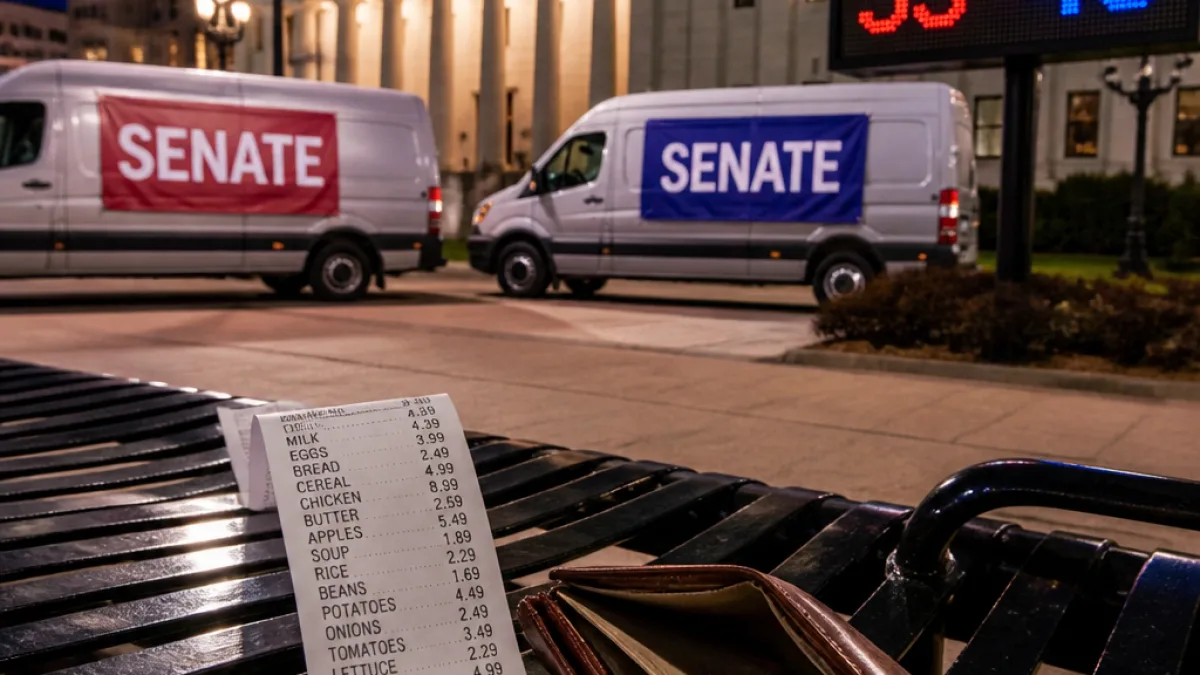
The survey finds inflation is the top concern for Ohio registered voters, with 40% naming it as their most important issue — well ahead of healthcare, immigration and political divisions. That economic strain appears to be substantial: the share of Ohioans who say their family is "falling behind" financially has risen from 28% in 2020 to 38% now.
Those who say their household is falling behind favor Brown by a wide margin — by about 40 points — underscoring how cost-of-living pressures could reshape party loyalties in a state that has trended Republican in recent statewide contests.
Voter attitudes toward candidates and party loyalty
Despite Donald Trump’s 11-point win in Ohio in 2024, Husted faces a vulnerability over perceptions that he is too close to the president. The poll finds 51% of respondents are concerned about Husted's ties to Trump, a jump from 46% in June.
By contrast, fewer voters — 44% — say they worry Brown is too closely tied to the Democratic Party establishment. Those perceptions appear to be translating into cross-party movement: Brown not only retains strong Democratic backing but also draws notable support from outside his party.
- 87% of Republicans favor Husted.
- 97% of Democrats support Brown.
- Brown attracts 11% of overall Republican voters as crossover support and 25% of non-MAGA Republicans.
- About two-thirds of independents favor Brown.
Those forces help explain why Brown holds an 8-point advantage in the head-to-head matchup: 53% to 45%. The margin is unchanged from a similar poll in June, suggesting a steady lead rather than a transient spike.
Turnout intensity widens Brown’s advantage
The poll also measured how candidate support varies with voters’ certainty to turn out. Among those who rate their likelihood to vote a 10 out of 10, Brown leads 54% to 44%. The gap grows among those labeling themselves "extremely motivated" to vote, where Brown holds a 15-point advantage at 57% to 42%. That suggests Brown’s edge may strengthen if groups that are highly motivated — including liberals and college-educated voters, according to the poll — actually show up at the polls.
| Group | Support |
|---|---|
| All voters | Brown 53% — Husted 45% |
| Committed voters (10/10) | Brown 54% — Husted 44% |
| Extremely motivated | Brown 57% — Husted 42% |
Republican divisions are especially consequential: while Husted maintains broad backing among Republicans as a whole, a meaningful slice of non-MAGA Republicans are defecting to Brown. Those defections, combined with independent support and the economic concerns that skew toward Democrats, are eroding the structural advantage Republicans enjoy in the state.
What this means for the campaign in Ohio
The findings set a clear political map heading into the fall campaign. For Husted, the challenge is twofold: address voter economic anxiety and blunt concerns over his relationship with the president that appear to be driving defections by moderate Republicans and independents. For Brown, the task is to maintain and convert the crossover and independent support into turnout, particularly among voters who cite economic pressures as their primary concern.
While this poll offers a snapshot of attitudes now, the persistent focus on inflation and household finances suggests Ohioans will continue to weigh pocketbook issues heavily as they evaluate candidates. How each campaign frames economic policy and how effectively they motivate their likely voters will determine whether Brown’s lead holds or Husted can close the gap.
Reporting from Columbus.