CINCINNATI — Cincinnati Police and local victim-advocacy groups converged across the city this week in an effort they called an “unsolved homicide blitz,” highlighting hundreds of cold-case murders and asking the public to provide tips that could help close long-standing investigations.
Bringing faces, names and resources to the street
The campaign, which spanned multiple police districts this week, was intended to keep the victims’ names alive and to encourage residents with any information — no matter how small — to contact investigators. Officials say there are roughly "400 and some odd unsolved homicides" in Cincinnati that date back across years.
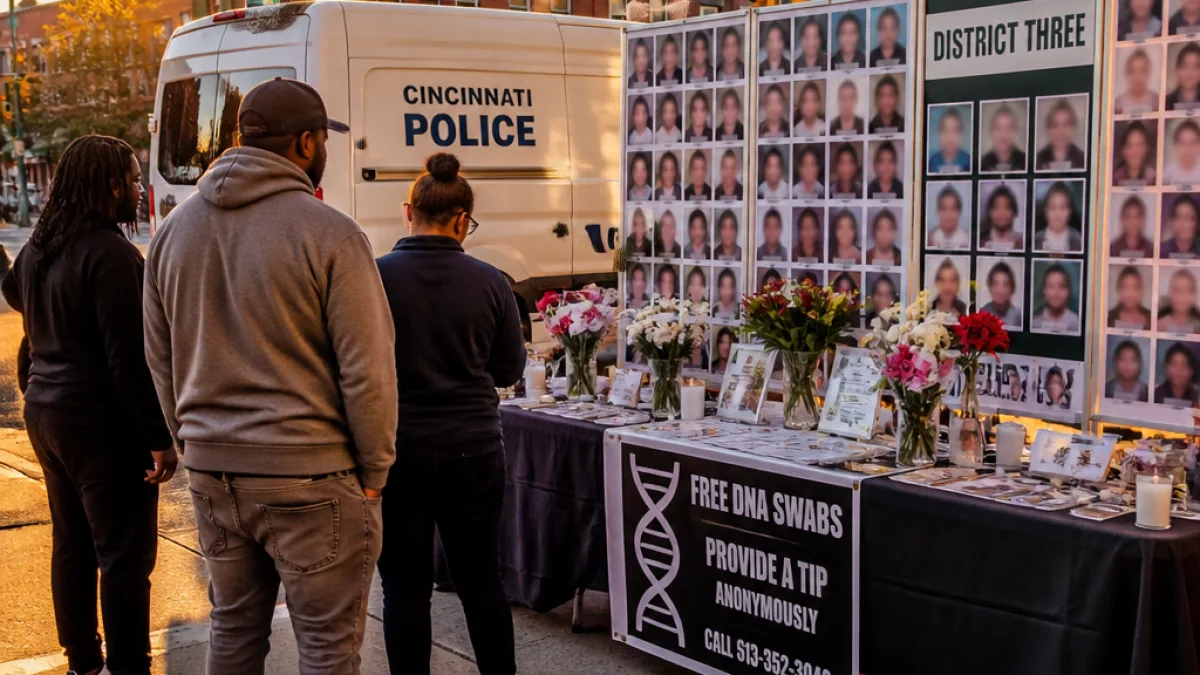
Victim-services staff and community advocates stood on street corners this week displaying posters and flyers with the faces of victims, including more than 60 faces shown on a flyer specific to District Three. The displays drew passersby, including young people who recognized names and images and reacted visibly to learning the cases remain open.
"There are 400 and some odd unsolved homicides in the city of Cincinnati that date back. There's too many. We have to solve this problem," said Karen Rumsey, health program manager of witness advocacy for CPD's Victim Services Unit.
Families press for closure
Among the relatives taking part was Yasmin Abdullah, who said her son, Darnell Mooney, was fatally shot in South Fairmount last November and remains an unsolved case. Abdullah said she has not found closure and urged residents to come forward with information.
"We need the community to come forward," Abdullah told organizers. "You don't understand how helpful just the smallest piece of information can be. You want answers for your loved ones, for yourself." Cincinnati Police and victim advocates emphasized that tips do not need to be extensive to be useful.
Citywide push, local consequences
Monica Benton, a victim-advocate practitioner with the Cincinnati Police Department, said the team visited every district during the week and planned to be in District One the following day. Officials described the effort as a focused, short-term public outreach to supplement investigative work and to provide support to survivors.
The focus on unsolved homicides underscores long-standing challenges for the city: persistent violent crime in some neighborhoods, investigative hurdles, and the trauma experienced by survivors and communities when killings remain unresolved. Advocates said public awareness events like this also serve to remind officials and neighbors alike that behind each case is a person and a family seeking answers.
- Purpose: Raise awareness of unsolved homicides and solicit tips.
- Scope: Multiple districts across the city, with a notable District Three flyer listing more than 60 victims.
- Next steps: Continued outreach and a memorial ceremony planned for Saturday.
Support services and memorial
Organizers said their presence on street corners is part of broader victim services work, which includes supporting families and connecting them with resources. Rumsey noted the team will do whatever is necessary "to bring awareness, to solve cases, to support our survivors, that's what we do. Even if that's standing on the street corner."
Police also announced the department’s 10th annual memorial ceremony for homicide victims will be held Saturday. At that event, organizers said, DNA swabs will be offered to anyone who wants to volunteer evidence that could help investigations.
| Item | Detail |
|---|---|
| Reported unsolved homicides | "400 and some odd" |
| District Three flyer | More than 60 victims pictured |
| Memorial ceremony | 10th annual, DNA swabs offered |
As the week concluded, advocates said the goal is twofold: to secure actionable information that could advance investigations, and to ensure families and communities do not forget the people who were killed. Police encouraged anyone with information about an unsolved homicide to contact the Cincinnati Police Department’s tip lines or CrimeStoppers.
The initiative is the latest public-facing effort by victim services and law enforcement to bridge gaps between investigators and communities, and to provide grieving families with renewed hope of answers and accountability.