
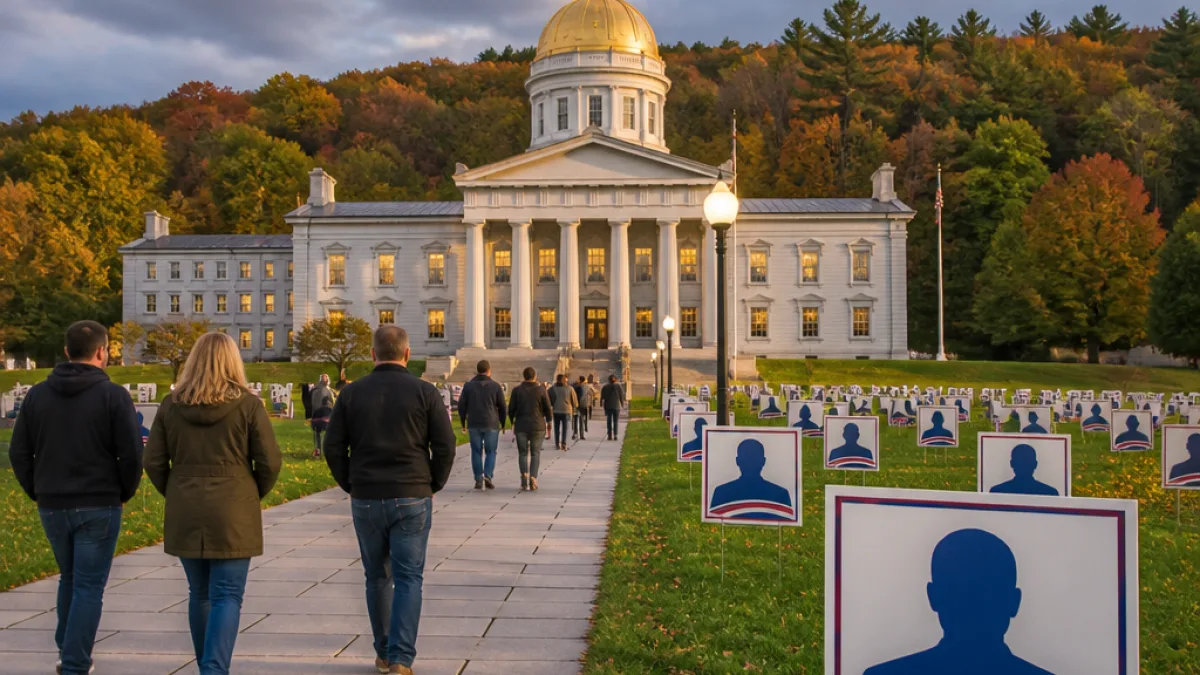
Gov. Phil Scott, a moderate Republican who has been a familiar presence in Vermont politics for nearly a decade, is seeking a sixth term this year as he confronts a political landscape that has grown more complicated for governors who govern across party lines.
Popularity amid political friction
For more than three years Scott has stood out nationally for his high approval ratings, an uncommon distinction for a Republican in a state that leans Democratic in federal races. Still, those numbers have begun to slip, and the broader midterm environment — shaped in part by low approval of former President Donald Trump — is expected to favor Democrats and could make turnout a critical factor.
Political scientists in Vermont say Scott retains strengths that make re-election plausible, but they warn that the combination of waning approval and partisan headwinds may make this race more competitive than his past campaigns.
“Nine years in office with pretty much uninterrupted popularity,”
The governor’s high marks have been documented by national trackers. Morning Consult reported Scott led the field for governors for 14 consecutive quarters, and a survey released Feb. 2 found his approval at 74%.
Where Scott’s appeal comes from
Scott’s approach — broadly described as pragmatic and moderate — has helped him navigate a Democratic-leaning Legislature and retain voters who might otherwise back Democrats in federal contests. He has typically avoided partisan fights over social issues, focusing instead on issues such as fiscal management and local governance.
Analysts compare him to other New England Republicans who sustained appeal in blue states, naming former Massachusetts Gov. Charlie Baker and New Hampshire’s Chris Sununu as parallels in style and strategy.
Mounting headwinds
Yet the political context this cycle complicates Scott’s path. Midterm elections historically produce lower turnout than presidential years, and there is concern among Republicans about generating enthusiasm among the party’s base. Nationally, Trump’s continued influence and overall low approval ratings for the former president are expected to tilt midterms toward Democrats, a dynamic that could make Scott vulnerable despite his personal popularity.
Several local political scientists told reporters that while Scott’s profile gives him a realistic chance to win, it does not render him unbeatable. His recent downward movement in approval — while not quantified in the most recent publicly cited numbers beyond the Feb. 2 Morning Consult finding — was noted as part of the challenge he faces this cycle.
What voters will be watching
Key elements likely to determine the outcome include turnout levels, the strength of Democratic opponents, and how Scott frames his record as the campaign advances. Observers will also watch whether national issues tied to the Republican Party affect independent and moderate voters who have been essential to Scott’s success.
- Incumbency advantage: Long tenure and name recognition help Scott retain a base across party lines.
- National environment: Midterm dynamics and Trump’s unpopularity could suppress Republican turnout.
- Approval trends: A previously commanding approval rating shows signs of decline, which may narrow margins.
| Measure | Fact |
|---|---|
| Morning Consult streak | 14 consecutive quarters leading governors |
| Most recent cited approval | 74% (survey released Feb. 2) |
Scott’s nomination of a moderate, pragmatic posture has been politically advantageous in a state that voted for Democratic candidates at the presidential level in 2024. Still, that same position may place him between two forces: a Democratic electorate buoyed by unfavorable national indicators for Republicans and a Republican base whose turnout is pivotal in midterm cycles.
As the campaign continues, the governor’s ability to translate personal popularity into votes — particularly among independents and moderate Democrats — will determine whether he secures another term or faces a closer contest than his prior races.
This report synthesizes recent coverage and public polling data cited by political observers and does not include new polling commissioned by this newsroom.

















