
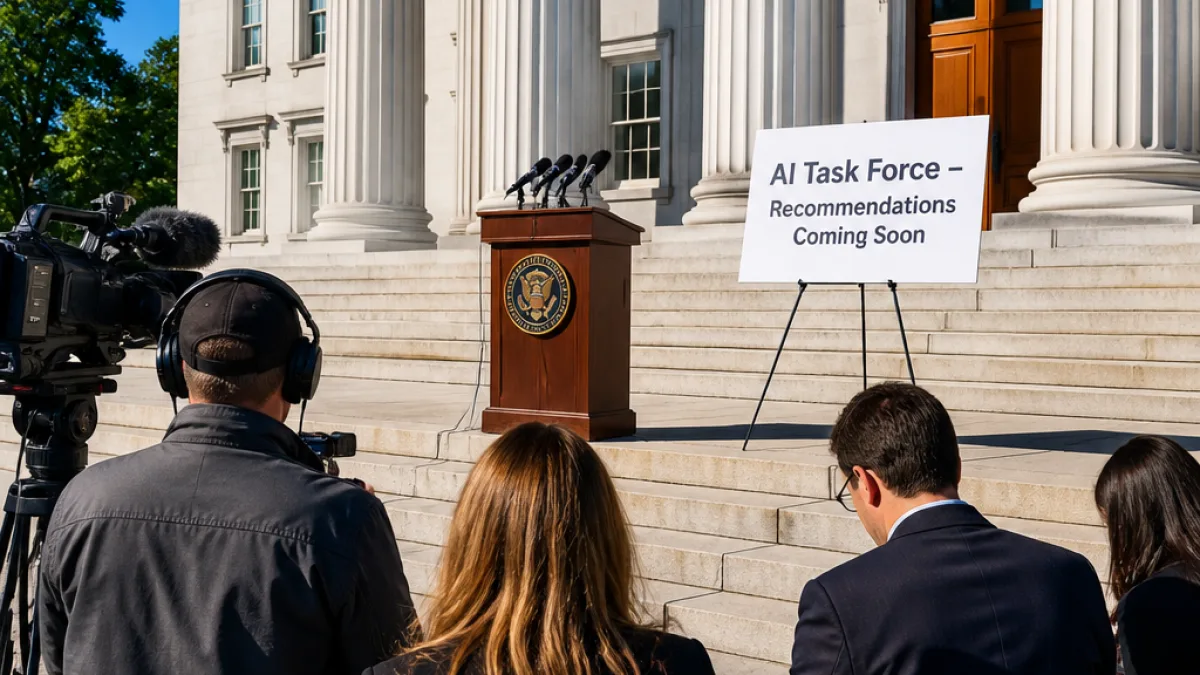
MONTPELIER — Governor Phil Scott on Thursday urged Congress to craft national rules for artificial intelligence, arguing that the technology’s benefits must be balanced with protections for workers and consumers. Scott said Vermont’s efforts to study AI can help, but federal action is necessary to establish consistent safeguards across the country.
State study, federal solution
Earlier this year, Vermont formed an artificial intelligence task force charged with finding ways to help small businesses adopt AI while also protecting existing jobs. Members of that panel have concentrated on educating Vermonters about both the promises and the pitfalls of the technology.
Scott told reporters that the state initiative is focused on practical assistance and public outreach, but that the reach and speed of AI development call for national leadership. He said individual states lack the capacity to set comprehensive standards that will govern the technology as it becomes more deeply embedded in the economy.
“I think there needs to be some guardrails on this to make sure we’re doing it correctly and protecting people. I think it’s a balance, and I think we should do it on the national level. State governments alone can’t do this,” Scott said.
Scott characterized the approach as one of cautious optimism: welcoming AI’s potential to spur growth while pressing for oversight to limit harms.
What the Vermont task force is doing
The state-run group has been exploring how to help small enterprises harness AI tools to expand operations without displacing workers. Task force members have emphasized education — teaching business owners and the public about what AI can and cannot do and what risks to watch for.
Officials expect the panel to publish its final report and recommendations in the coming months. That document is likely to address workforce impacts, training needs, and potential state-level policy options, according to statements from the governor’s office.
- Assist small businesses in adopting AI tools
- Educate the public about AI risks and opportunities
- Provide a final report with recommendations later this year
Why Scott wants federal action
Scott argued that a patchwork of state laws would be ineffective given the cross-border nature of digital technologies and the speed of innovation. A federal framework, he said, would create uniform expectations for companies, reduce legal uncertainty, and help protect consumers regardless of where they live.
He noted that while Vermont can pilot local programs and build public awareness, many regulatory levers — including data privacy standards, liability rules and national workforce training programs — are best handled at the national level.
| Issue | State role | Need for federal action |
|---|---|---|
| Small business adoption | Provide guidance and pilot programs | Consistency across markets |
| Workforce protection | Local training and support | National funding and standards |
| Consumer safeguards | Public education | Uniform legal protections |
Scott’s appeal aligns with growing calls from governors, lawmakers and industry leaders for clearer rules that address both innovation and risk. Vermont’s request for national guardrails reflects concerns shared by other states about how to manage deeply consequential technologies without stifling their commercial and societal benefits.
As Vermont’s task force moves toward its final recommendations, the governor encouraged Congress to consider legislation that would set broad guardrails while allowing room for responsible innovation. He framed the issue as one of balancing economic opportunity with public safety and job security.
With the task force’s report due in several months, state officials say they will continue to engage stakeholders across the public and private sectors. Those conversations will likely inform Vermont’s legislative and administrative choices even as the governor presses for a federal framework.
Reporting from the Statehouse will continue as the task force releases its findings and as lawmakers in Washington consider whether to respond to the call for national AI regulation.

















