
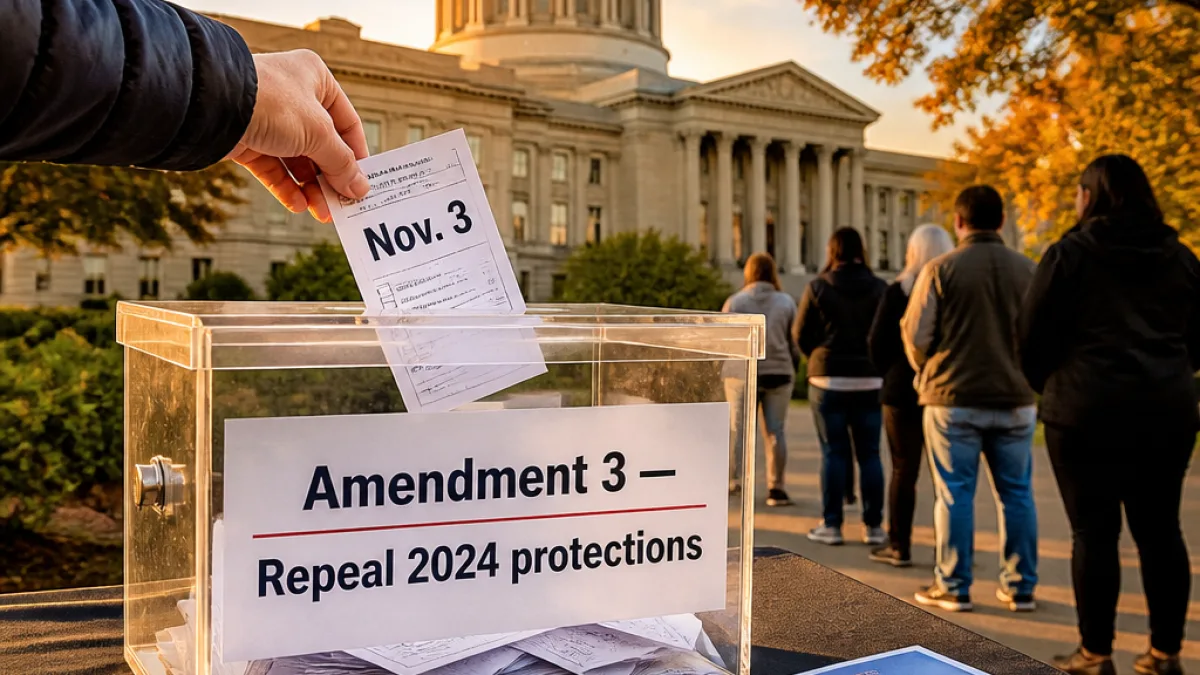
JEFFERSON CITY, Mo. — Missouri voters will decide this fall whether to overturn the reproductive-health provisions they approved two years ago, as the state prepares to place a new Amendment 3 on the Nov. 3, 2026, general election ballot.
What the ballot measure would do
The certified measure asks voters whether to rescind the 2024 constitutional language that protected access to abortion through fetal viability and other reproductive-health rights. If voters approve the 2026 Amendment 3, those protections would be removed and the Legislature would regain broad authority to enact restrictions and regulations governing abortion providers and facilities.
The ballot question spells out several specific exceptions and provisions that would remain or be added if the repeal passes. Those include allowing abortions in cases of rape or incest up to 12 weeks of gestation, permitting abortions for medical emergencies and for fetal anomalies, requiring parental consent for minors seeking abortion and prohibiting gender transition procedures for minors. The measure also says it would allow laws that regulate abortion.
"Shall the Missouri Constitution be amended to: Repeal the 2024 voter-approved Amendment providing reproductive healthcare rights, including abortion through fetal viability; Allow abortions for rape and incest (under twelve-weeks' gestation), emergencies, and fetal anomalies; Allow legislation regulating abortion; Ensure parental consent for minors' abortions; Prohibit gender transition procedures for minors?"
How this differs from the 2024 vote
Missourians narrowly approved a different Amendment 3 in November 2024, with a 51.6% majority voting to enshrine reproductive-health protections, including abortion through fetal viability, into the state constitution. The upcoming measure is framed as a direct repeal of that 2024 language and contains new, more prescriptive limits and conditions on abortion access.
| 2024 Amendment 3 | 2026 Amendment 3 (proposed) | |
|---|---|---|
| Primary effect | Establish reproductive-health rights, including abortion through fetal viability | Repeal 2024 protections; allow new legislation restricting and regulating abortion |
| Exceptions noted | Protections through viability; general reproductive-health language | Rape/incest (under 12 weeks), emergencies, fetal anomalies; parental consent; ban gender transition for minors |
| Legislative authority | Limited by constitutional protections | Explicitly allows statutes to regulate abortion providers and facilities |
Immediate implications and local questions
Approval of the 2026 measure would send Missouri lawmakers back to the center of policy decisions about abortion — shifting regulatory power from the constitutional guarantee voters approved in 2024 to statutes shaped by the General Assembly. Courts and advocacy groups may also factor into the next phase, as legal challenges often follow major ballot actions, though the measure’s text does not itself promise court outcomes.
At the local level, the ballot question notes that state governmental entities estimate no immediate net costs or savings from the change. One county, Greene County, is flagged in the summary as possibly experiencing an "unknown increase in tax revenue," while other local governments reported no estimated fiscal impact.
How the language will appear to voters
Voters will see an official ballot question and accompanying fair-ballot language explaining the measure. The fair language frames a "yes" vote as repeal of the 2024 constitutional section and lists the continued allowances for emergency medical care, miscarriages, ectopic pregnancies and other specific exceptions, while emphasizing that the measure would permit regulation of providers and require informed consent for abortions, including parental or judicial consent for minors.
- Ballot date: Nov. 3, 2026
- What a "yes" vote does: Repeal 2024 constitutional protections and allow legislative restrictions
- Noted exceptions: rape/incest (under 12 weeks), medical emergencies, fetal anomalies
What to watch next
Between now and the November election, Missouri voters can expect campaigns on both sides to intensify, public information drives explaining the ballot language and perhaps legal arguments about how the new constitutional text would interact with existing statutes. Voters should review the official ballot summary and sample ballots provided by the Secretary of State’s office as they prepare to vote.
The state’s placement of this question on the general-election ballot makes it likely to draw significant attention from local and national interest groups. Given the narrow margin in 2024, turnout and voter education will likely play significant roles in the eventual outcome.
Missourians seeking more information should consult the Secretary of State’s office for the certified ballot text and local election authorities for polling and absentee-voting deadlines ahead of the Nov. 3 election.

















