
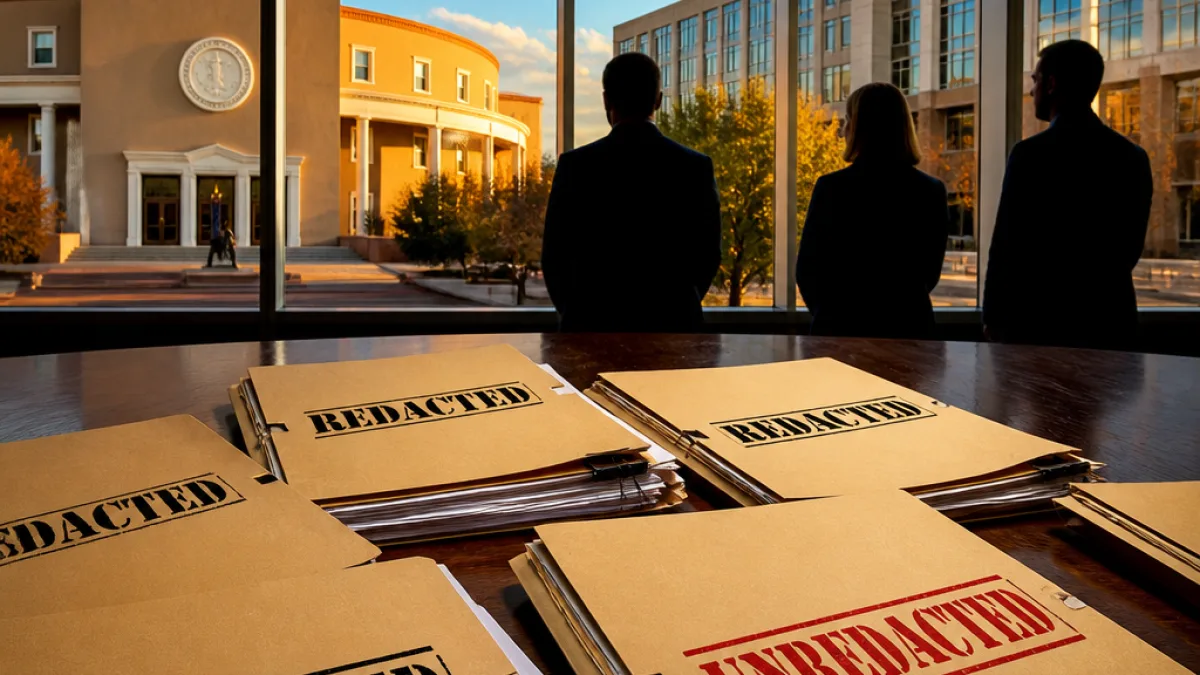
ALBUQUERQUE, N.M. — New Mexico congressional leaders unveiled legislation this week aimed at compelling the U.S. Department of Justice to release unredacted files connected to the Jeffrey Epstein investigation to state and local investigators.
What the bill would do
The measure, led in the U.S. House by Rep. Teresa Leger Fernandez, D-N.M., would create a legal pathway for state and local prosecutors to sue the Department of Justice if the agency refuses to provide requested records tied to the Epstein probe. Under the proposal, federal courts could order the release of the documents and award the suing jurisdiction damages to cover legal costs.
Sen. Ben Ray Luján, D-N.M. introduced companion legislation in the Senate last month. Both lawmakers said they expect bipartisan support for the effort.
State lawsuit already underway
The congressional move comes as New Mexico Attorney General Raul Torrez pursues his own legal action against the DOJ and U.S. Attorney Todd Blanche seeking access to files related to the state's investigation into Epstein's activities at the Zorro Ranch and other matters.
Torrez has accused federal officials of obstructing an ongoing criminal inquiry in New Mexico. In public statements, he said the department’s refusal to provide documents is hindering the state’s ability to investigate potential crimes.
Sharp words from lawmakers
“Our job is to help expose what happened in that secluded mansion, and we will not allow the United States Department of Justice to hide the records our attorney general in New Mexico needs,”
— Rep. Teresa Leger Fernandez.
“Turn over the damn documents, I don’t know why they’re hiding this,”
— Sen. Ben Ray Luján, who added that many constituents demand release of the records.
Legal and political stakes
The bill and the state lawsuit raise separate but related issues: whether the DOJ can withhold investigative materials from state authorities and whether Congress can create a private right of action giving states a court remedy against the federal government for that withholding.
Constitutional and procedural questions are likely to follow if the legislation advances. Legal scholars note such suits can raise separation-of-powers concerns and could prompt the DOJ to argue federal investigative prerogatives or grand jury secrecy rules justify withholding materials.
Potential local impact
New Mexico officials say access to unredacted files could be crucial to completing their inquiry into alleged crimes connected to Epstein’s activities in the state. That may include witness statements, grand jury materials, charging decisions or other investigative reports.
- For investigators: Access could allow re-examination of leads and coordination with federal evidence.
- For victims: Release of records could provide additional context or corroboration for allegations.
- For the DOJ: A forced disclosure could set precedent on federal cooperation with state probes.
Who’s involved — at a glance
| Actor | Role | Action |
|---|---|---|
| Rep. Teresa Leger Fernandez | House sponsor | Filed legislation to allow state suits against DOJ |
| Sen. Ben Ray Luján | Senate sponsor | Filed companion bill; publicly demanded documents |
| NM Attorney General Raul Torrez | State prosecutor | Filed lawsuit seeking access to DOJ files |
| U.S. Department of Justice / U.S. Attorney Todd Blanche | Federal authority | Defendant in state lawsuit; has withheld files |
What comes next
On the legislative side, the bill must clear committee consideration and floor votes in both chambers. Given the bipartisan comments from Luján that he anticipates support across the aisle, sponsors appear optimistic, but passage is not guaranteed.
Meanwhile, the state lawsuit will proceed through federal court. That litigation may provide a quicker test of the legal issues, depending on scheduling, motions and potential appeals. Either path — congressional action or litigation — could produce rulings with implications beyond New Mexico, shaping federal-state cooperation on criminal investigations.
Attorneys general across the country have in recent years pushed for greater access to federal records in high-profile investigations; this effort places New Mexico at the center of another test of how federal secrecy rules intersect with state prosecution efforts.
The DOJ declined immediate comment for this report. New Mexico officials say they will continue to press for transparency as the legal and legislative processes move forward.
Diego Salazar is the state correspondent for WE NEWS covering New Mexico government and public affairs.

















