
JEFFERSON CITY, Mo. — In roughly six months, Missouri motorists who buy vehicles from dealerships will receive a new kind of temporary license plate and pay sales tax at the point of sale under a statewide program the Department of Revenue says is on track for early 2027.
What changes and why
The Department of Revenue is preparing to replace the familiar paper or decal “temp tag” with a new system that will both collect sales tax at dealerships and issue a 30-day interim metal plate. The program is being developed under a system the department calls FUSION, an acronym the agency describes as “Fifty Unique Systems in One Nexus.”
FUSION is the network the agency intends to use to process sales, register vehicles and coordinate the issuance of permanent plates after the interim period. The change stems from legislation passed by the Missouri General Assembly last year that directed the state to alter how vehicle sales tax is collected and how temporary registration is handled.
How the process will work
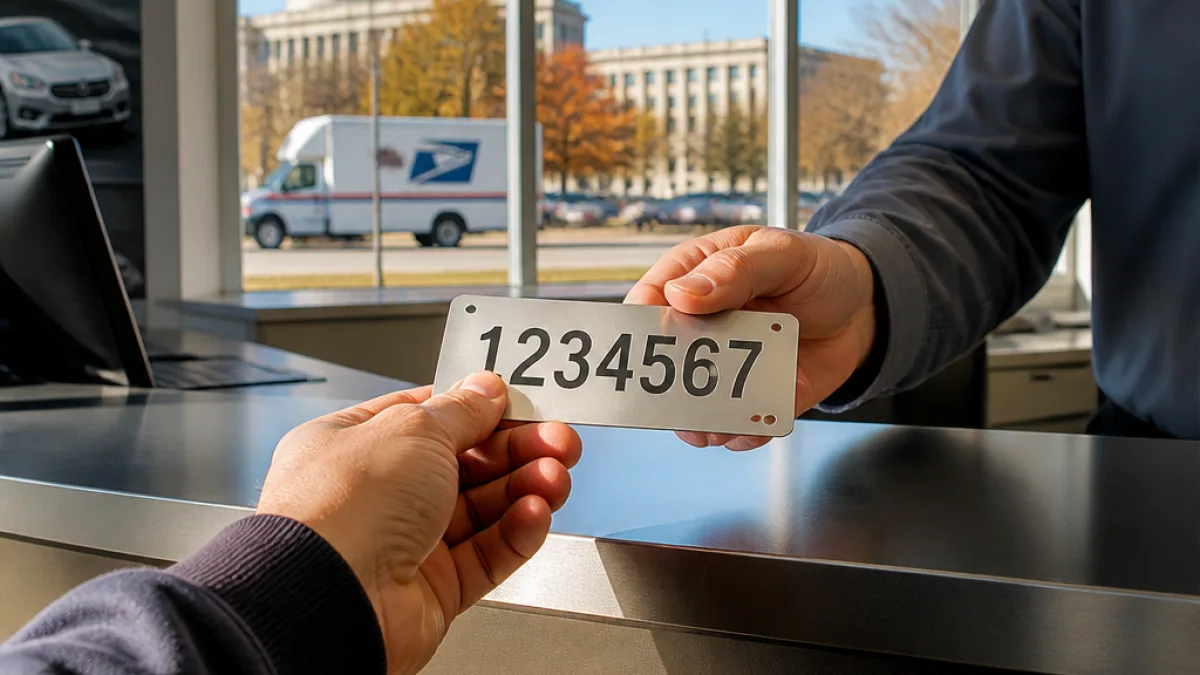
Under the new arrangement, when a consumer buys a vehicle from an eligible dealership, the dealership will collect the sales tax at the point of sale. After the tax is paid, the customer will immediately receive a newly designed 30-day license plate with a seven-digit identifier. The same seven digits will later appear on the permanent metal plate mailed from Jefferson City.
"If you're buying from a dealership … they'll also collect the sales tax at that point of sale," said JoDonn Chaney, a spokesperson for the Department of Revenue.
Chaney also acknowledged there will be a learning curve for dealerships as the state transitions to the new platform.
Rollout, participation and readiness
Department of Revenue officials say the system is being tested through pilot programs and remains on schedule for an early 2027 debut. Participation by eligible car dealerships is mandatory under the new rules.
Agency officials said they are working with dealerships during the implementation period to provide training and troubleshooting. Chaney noted that some dealerships have expressed concerns about readiness and asked for assistance to become familiar with the new processes.
- Timeline: System slated to launch in about six months, targeted for early 2027.
- Plate format: New 30-day temporary plate will have a seven-digit configuration.
- Permanent plate: A metal plate with the same seven digits will be mailed from the central office in Jefferson City.
Practical implications for vehicle buyers
For Missourians purchasing vehicles, the most immediate difference will be paying the vehicle sales tax at the dealership rather than a separate payment process afterward. The in-dealership collection is intended to streamline registration and tax compliance by tying the temporary plate issuance directly to the tax payment.
Dealerships will play a larger operational role in the registration process, which could speed up the transfer of vehicles onto Missouri’s registration rolls if the rollout proceeds smoothly. However, dealerships and customers should expect an adjustment period as new software, procedures and training are adopted.
What the department is emphasizing
The Department of Revenue has emphasized testing and pilot programs in recent months to identify issues before the statewide launch. Officials say they still have time to address problems raised by dealerships and are providing support for those requesting assistance learning the system.
| Element | Current system | New FUSION system |
|---|---|---|
| Temporary plate | Varied temporary tags/decals | 30-day interim metal plate with seven digits |
| Sales tax collection | Often handled separately after purchase | Collected at dealership at point of sale |
| Permanent plate delivery | Varies | Metal plate mailed from Jefferson City with same seven digits |
The Department of Revenue says it will continue to provide updates and guidance for dealerships and consumers as the launch approaches. For now, Missourians buying vehicles this winter and spring should anticipate the new process and be prepared to pay sales tax at the dealership when the program goes live.
Gabriela Montez covers state government and public policy for WE NEWS.

















