
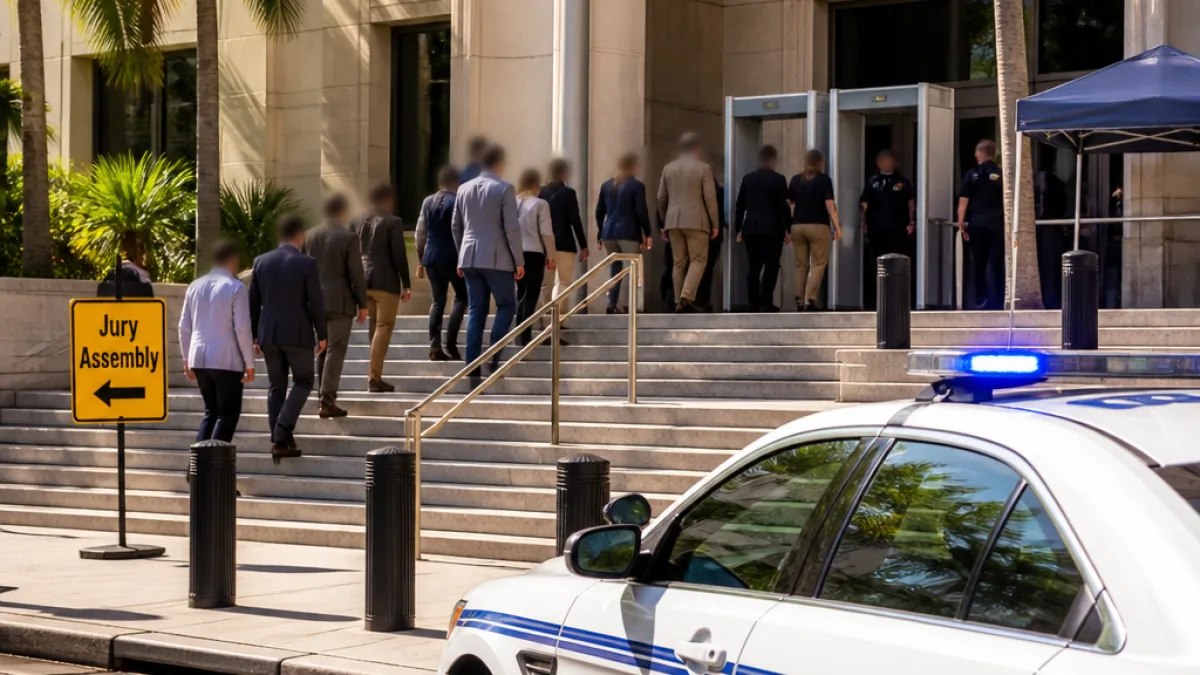
Jury selection opens in Miami penalty phase for 2012 slayings
Jury selection began Monday in the Miami-Dade courtroom that will determine the fate of Alberto Sierra, who this month admitted to killing his estranged wife and her two young daughters more than a decade after the slayings. The proceeding, held at the Richard E. Gerstein Justice Building, will not revisit guilt; Sierra entered a guilty plea on Aug. 7.
Prosecutors say Sierra suffocated his estranged wife, Gladys Machado, 29, and her daughters, Julia Padrón, 8, and Daniela Padrón, 4, inside the family’s Flagami home in November 2012. The bodies were discovered days later in a bedroom closet in a residence on the 7300 block of Northwest Fourth Street.
What jurors will decide
In the coming weeks, hundreds of prospective jurors will be questioned about their views on capital punishment before a 12-person jury is seated to hear aggravating and mitigating evidence. The jurors will determine whether Sierra should receive Florida’s death penalty or be sentenced to life in prison without parole.
"Jurors will be tasked with deciding whether Sierra should be condemned to Florida’s Death Row or sentenced to life in prison."
The penalty phase is expected to move into opening statements after the jury is selected, with lawyers aiming to present a factual record and competing arguments about whether the statutory elements for a death sentence have been met. Because Sierra pleaded guilty earlier this month in Courtroom 4-6, the trial will focus solely on sentencing.
Charges and context
According to charging documents, Sierra faced multiple counts in state court, including:
- Three counts of first-degree murder
- One count of kidnapping
- Two counts of abuse of a human body
- One count of burglary
Prosecutors have argued the circumstances of the case merit the most severe punishment allowed under Florida law. Defense attorneys will have the opportunity to present mitigating evidence during the penalty phase, typically aimed at persuading jurors to impose life imprisonment instead of death.
Community impact and background
The killings shocked neighbors and the wider Miami community when the victims were found more than a decade ago. Court records and earlier reporting indicate Machado and Sierra had a history of domestic violence and had separated shortly before the killings. Machado moved in with relatives in Homestead, while Sierra stayed with his mother in Kendall.
On the evening of the murders, Machado had taken her daughters on an outing, leaving behind a younger child at home with another caregiver. Three days later, a neighbor discovered the bodies inside the Flagami home. The lingering emotional toll of the case is evident in court and in community conversations as the legal process resumes.
What to expect next
Jury selection is expected to continue over several weeks, with detailed questioning about jurors’ views on capital punishment and their ability to weigh aggravating and mitigating factors. Opening arguments in the penalty phase are anticipated after the jury is seated, possibly by early September.
| Key dates | Event |
|---|---|
| November 2012 | Murders of Gladys Machado and her daughters in Flagami |
| Aug. 7, 2026 | Sierra entered guilty pleas in Courtroom 4-6 at the Gerstein building |
| Aug. 17, 2026 | Jury selection begins in penalty phase |
The outcome will determine whether Sierra is sentenced to death and placed on Florida’s death row or serves life in prison. For Miami residents, the case is a reminder of the long arc of criminal proceedings and the central role jurors play not only in establishing guilt but in deciding ultimate sentences in capital cases.
















