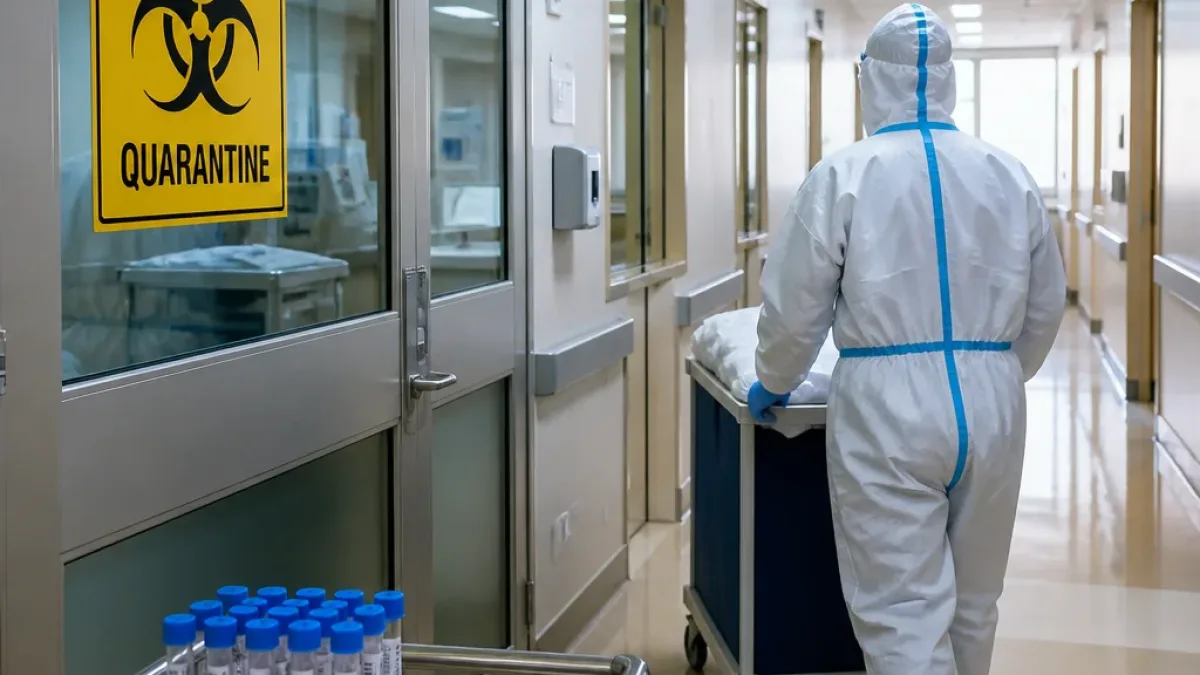
KENYA — Health authorities in Kenya reported an eighth confirmed case of Ebola on Sunday, saying the newly diagnosed patient likely contracted the virus from the country’s first documented case.
Director-General for Health Patrick Amoth told local media that one of the 38 people tested returned a positive result. The patient is a 49-year-old man who worked as a patient attendant, responsible for cleaning utensils and linens, and who developed fever, headache and muscle pain.
“He is a 49-year-old man who is not a healthcare worker. He developed fever, headache and muscle pain,”
According to the Health Ministry, the man began showing symptoms on Saturday, was placed in quarantine and tested for the virus. Officials said he was likely exposed to the nation’s initial Ebola patient, a traveler from the Democratic Republic of the Congo who died at a Nairobi hospital on Oct. 5.
New cases and links to earlier infections
The ministry reported four new cases on Saturday alone, three of whom were health workers who had treated the first patient. The fourth was a relative of the deceased traveler. Kenyan authorities have heightened surveillance and contact tracing as the tally of infections in the country has risen.
The current outbreak is attributable to the Bundibugyo strain of Ebola. Health officials note there is no vaccine or specific antiviral treatment approved for this strain, increasing the challenge of controlling spread and protecting exposed populations.
Regional context and scale in the DRC
The outbreak originated in the DRC, where it has reached substantial scale. Government data indicate the DRC has recorded at least 9,400 cases and more than 4,500 deaths — the deadliest Ebola episode in the country's history — with transmission beginning in May. Ituri province is the epicenter, accounting for nearly three-quarters of confirmed cases, and officials recently reported the virus had appeared in an eighth province, North Ubangi.
| Metric | Reported figure |
|---|---|
| Kenya confirmed cases | 8 |
| DRC cases | 9,400 (at least) |
| DRC deaths | 4,500 (more than) |
Kenya’s proximity and travel links to the DRC and other neighboring countries have prompted intensified screening at border posts and airports. Images from border crossings show travelers accessing port health services at crossings such as the Busia One Stop Border Post between Kenya and Uganda.
Public health response and implications
Kenyan authorities have mobilized testing and quarantine procedures for contacts of confirmed cases. The identification of cases among hospital staff who attended the first imported patient underscores the risks posed to frontline workers and the importance of infection prevention and control in clinical settings.
- Exposure risk: Several new cases are linked directly to treatment of the initial imported patient, highlighting nosocomial transmission.
- No vaccine for strain: The Bundibugyo strain currently involved lacks an approved vaccine or specific treatment, complicating containment.
- Regional spread: The DRC outbreak’s large case and death counts increase the likelihood of cross-border transmission to neighboring states.
Health officials in Kenya and regional partners are expected to continue contact tracing, quarantine of suspected cases and public messaging aimed at limiting spread. The detection of cases among healthcare personnel will likely prompt renewed emphasis on personal protective equipment and protocols in facilities treating suspected Ebola patients.
As the situation evolves, international and national health agencies will monitor for further spread and advise on measures to protect health workers, patients and communities. For now, Kenyan officials say the recent diagnoses are linked to the earlier imported case, and they continue efforts to identify and contain transmission chains.
Reporting from the region and statements from Kenya’s Health Ministry underline the outbreak’s ongoing risk and the necessity of vigilant public health action.