
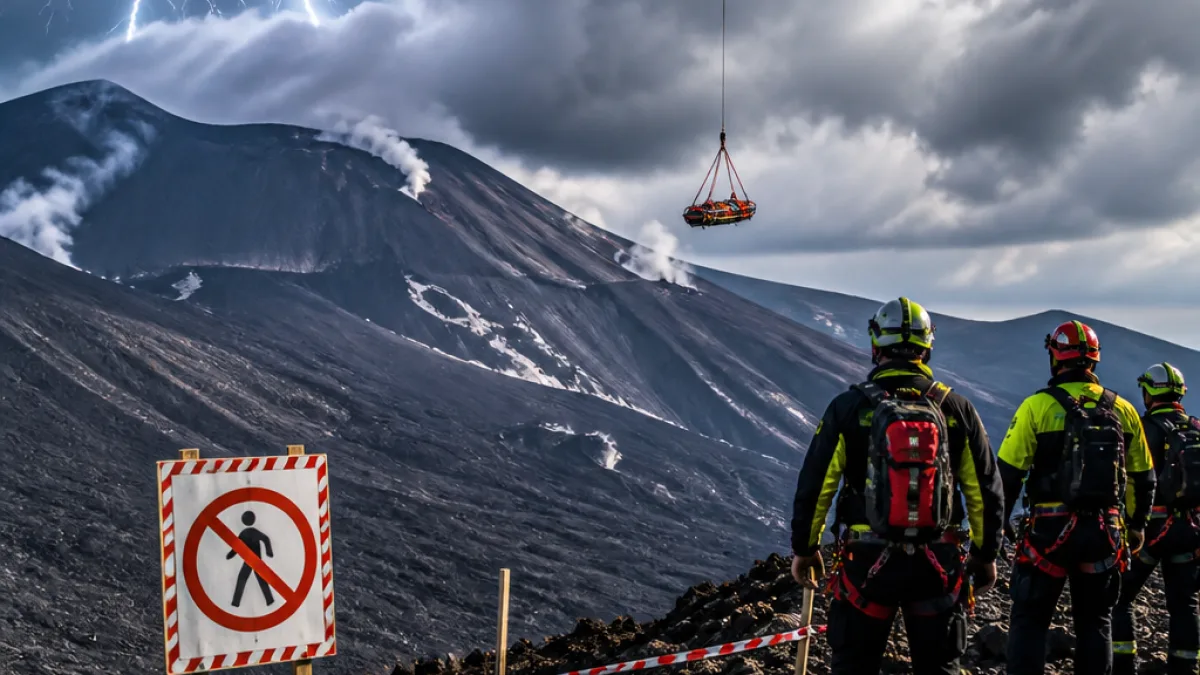
MILAN — A 29-year-old man from Kansas was killed by a lightning strike Sunday evening while hiking on the slopes of Sicily’s Mount Etna, Italian fire officials said Monday. The man was in an exposed area above the tree line in an area authorities had closed because of heightened volcanic activity.
Rescue and medical response
Rescue crews reached the hiker by helicopter after the strike. He was transported from the scene and later pronounced dead by medical personnel, officials said. His name has not been released. The Italian fire service said the incident took place in a zone that had been restricted to visitors amid ongoing eruptions and related hazards.
The site where the hiker was struck is above the tree line and offers little natural protection from storms. Lightning on exposed ridgelines is a recognized danger, and rescuers commonly emphasize the higher risk for hikers caught above tree cover during electrical storms.
Volcano access and public safety
Authorities have closed wide sections of Etna’s slopes in recent days because of prolonged volcanic activity that also disrupted travel; the airport in nearby Catania was closed for most of last week. Officials said the closures are intended to keep visitors away from hazardous areas affected by eruptions and unstable conditions.
Italian authorities noted that, over recent decades, more fatalities on Etna have resulted from lightning strikes than from direct volcanic causes. The last eruption-related deaths on Europe’s most active volcano were reported in 1987, according to official statements.
What this means for travelers from Kansas
For Kansans traveling abroad, the incident underscores the importance of observing local restrictions and weather warnings. Even popular tourist destinations can present severe risks when natural hazards — volcanic activity, sudden storms, high winds — are present. Local officials in affected regions frequently post temporary closures and advisories; travelers are urged to follow them closely.
- Follow local closures: Respect posted restrictions for national parks and volcano slopes.
- Check weather forecasts: Avoid exposed ridgelines when thunderstorms are likely.
- Know emergency contacts: Have local emergency numbers and embassy/consulate information available.
Context on Etna’s hazards
Mount Etna is among Europe’s most active volcanoes and draws large numbers of hikers and tourists. Its frequent activity — ash emissions, lava flows and sudden explosive events — leads authorities to periodically restrict access to reduce risk. The combination of volcanic terrain and mountain weather can create hazardous conditions that change rapidly.
| Fact | Detail |
|---|---|
| Victim age | 29 |
| Location | Mount Etna, Sicily |
| Access status | Area closed to visitors |
| Last eruption-related fatalities | 1987 |
Officials did not disclose the identity of the man or provide further personal details. The Italian fire service handled the initial rescue and recovery operation and reported the case to local authorities. No other injuries were reported in connection with the incident.
Travelers planning excursions on volcanic terrain or mountain slopes should take extra precautions: monitor official notices, avoid closed zones, remain aware of changing weather, and carry means of communication. For U.S. citizens abroad, the State Department and local U.S. consular offices provide travel advisories and assistance; contact information can be found on official government websites.
The death provides a reminder that risks on well-known natural landmarks can come from multiple sources — not only eruptions but also weather-related events such as lightning — and that adherence to closures and warnings can be lifesaving.
Wesley Carrington, State Correspondent


















