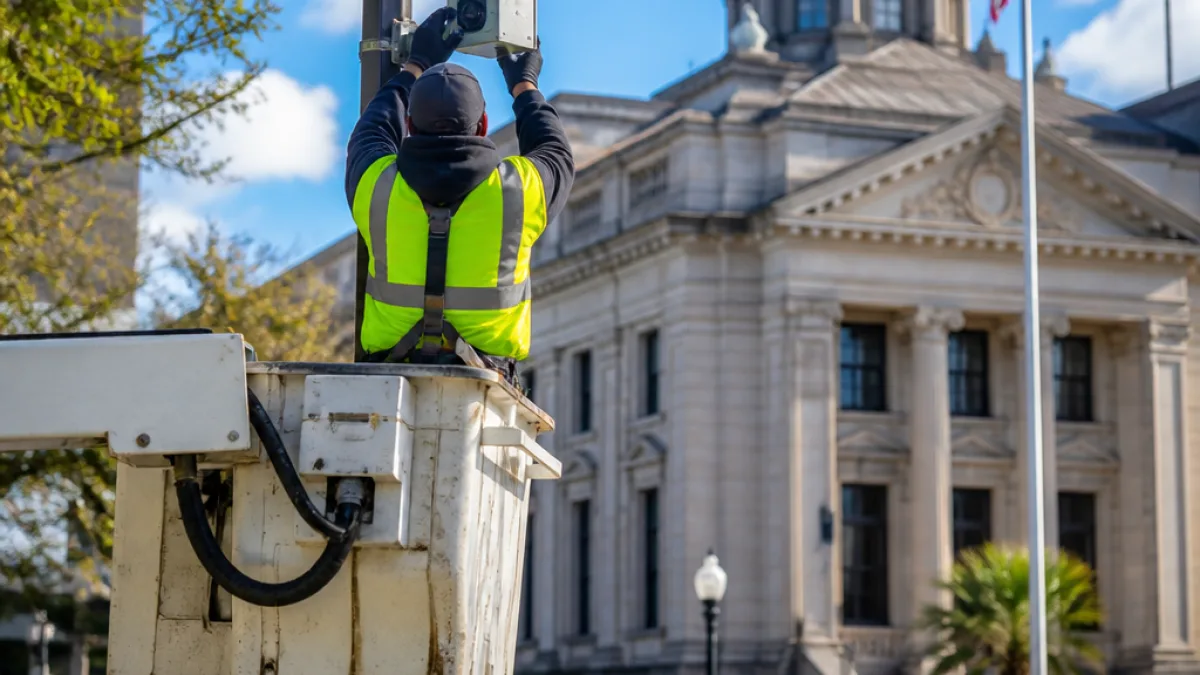
The Jacksonville Sheriff’s Office announced Monday it will stop using automated license plate reader (ALPR) cameras throughout Duval County in compliance with a directive from the Florida Department of Transportation.
State action prompts local change
Sheriff T.K. Waters confirmed the department will follow the state’s guidance and said the decision responds to concerns voiced by community members. In his statement, Waters acknowledged the value the technology has brought to investigations while signaling the need to respect public sentiment and the state’s action.
"As the elected Sheriff of Duval County, it is my responsibility to listen to the concerns of our citizens and act accordingly... The Jacksonville Sheriff’s Office will fully comply with FDOT’s directive."
Waters also noted ALPR systems have been an important investigative tool for the agency, assisting in the resolution of serious crimes and the location of missing or vulnerable people. He described the technology as "enormously valuable" to those efforts but said discontinuation was appropriate "given the decision made at the state level and the concerns expressed by members of our community."
Regional responses and immediate impacts
The move in Jacksonville mirrors action by other law enforcement agencies across Northeast Florida. Earlier the same day, Putnam County Sheriff "Gator" DeLoach announced his office would remove 18 ALPR cameras in his jurisdiction, reflecting a wider regional response to FDOT's revocation of permits and licenses that had allowed such devices on state roads.
Officials did not detail in their initial statements how long the discontinuation will last or whether any data already collected by ALPR systems will remain accessible to investigators. The FDOT action, cited by the sheriff, revoked permits and licenses that had enabled law enforcement agencies to operate LPR technology on state-maintained roadways.
- Jacksonville Sheriff’s Office will cease ALPR use in Duval County, per Sheriff Waters.
- Action follows a Florida Department of Transportation directive revoking permits that allowed ALPR devices on state roads.
- Putnam County also announced removal of its ALPR cameras earlier the same day.
Questions for investigators and the public
The sheriff’s office emphasized its obligation to balance investigative capabilities with community concerns. ALPR technology — which captures and stores images of license plates and can cross-reference them against databases to locate stolen vehicles, suspects or missing persons — has been credited by Waters with aiding in solving serious crimes. The loss of that capability may require deputies and detectives to rely more on traditional investigative methods or other technologies until agencies determine an acceptable path forward.
Residents may see practical effects in certain investigations, particularly those that previously depended on plate-reading alerts to track vehicle movements or locate vulnerable individuals. The Jacksonville Sheriff’s Office has not yet released operational guidance about how patrols and investigative units will adjust tactics or whether the department will pursue alternative technologies or policy changes to address privacy and oversight concerns.
| Item | Status |
|---|---|
| FDOT permits for ALPR on state roads | Revoked (per sheriff's statement) |
| Jacksonville Sheriff’s Office ALPR use | Discontinued throughout Duval County |
| Putnam County ALPR cameras | Removed (18 cameras announced) |
As the sheriff’s office and state authorities move forward, Jacksonville residents and advocacy groups are likely to press for clarity about the legal and privacy implications of ALPR use, the handling of previously collected plate data, and the criteria that might allow the technology’s return. For now, Sheriff Waters framed the decision as a response to both the FDOT directive and the expressed concerns of citizens, underscoring the agency’s commitment to comply with state policy while remaining attentive to community sentiment.
The Jacksonville Sheriff’s Office has not provided additional operational details beyond the statement announcing discontinuation. Further updates are expected as local and state officials clarify the scope of the FDOT action and the procedural next steps for law enforcement agencies across Florida.