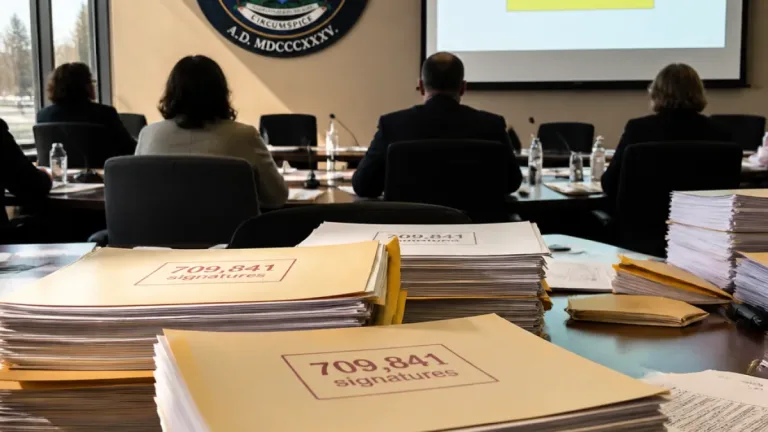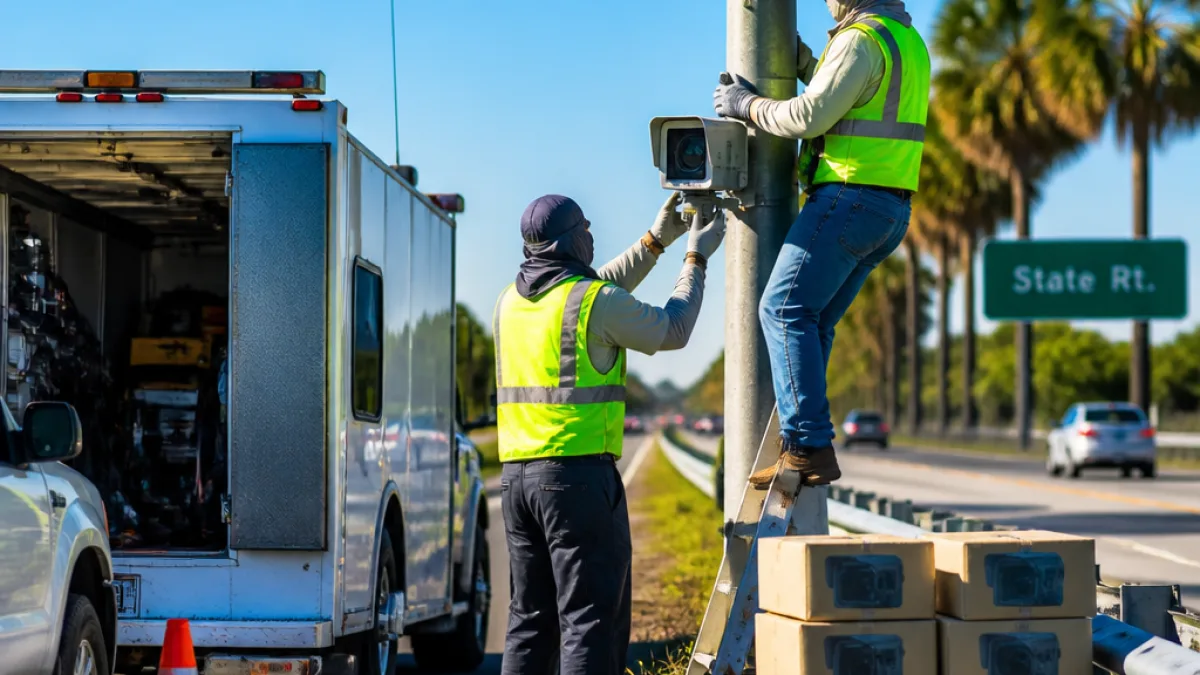
The Florida Department of Transportation has moved to halt the placement of Flock Safety and other automatic license-plate reader (LPR) cameras along state roadways, ordering law enforcement and local governments to remove devices within 30 days or face agency removal.
Agency cites privacy, misuse and expanding deployments
In a one-page memorandum issued Monday, FDOT Assistant Secretary Will Watts said the department would revoke all previously issued approvals for LPRs in state rights-of-way and will not issue new permits. The directive pointed to what FDOT described as a "recent exponential increase" in deployments and "concerning reports of misuse, data privacy concerns and surveillance schemes" as the basis for immediate action.
The cameras, most prominently sold by Flock Safety but made by several companies, photograph every vehicle that passes and store details such as license plate numbers, vehicle make and model, color and identifying marks. Agencies across Florida have installed thousands of the devices on streets and state road corridors in recent years; similar deployments have spread nationwide.
Law enforcement warns of lost investigative capability
Local sheriffs and police chiefs have argued the systems accelerate investigations, helping track stolen cars, locate missing persons and identify suspects in violent crimes. Orange County Sheriff John Mina, whose agency pays roughly $158,000 a year to operate 160 cameras, described the program as an important investigative tool.
"If somehow this were to go away, it's a big win for the criminals," Mina said, adding that losing access to the camera network would be a "huge detriment to law enforcement."
Officials in other jurisdictions have echoed those concerns, saying the systems create leads quickly and reduce investigation time. But supporters acknowledge the technology also raises civil liberties and data-security questions, particularly where footage can be shared across agencies and private vendors operate the networks.
Governor framed move as counterbalance to surveillance
The FDOT action follows comments last week from Gov. Ron DeSantis, who warned that camera deployments had become "out of control" and suggested the equipment may capture more than license-plate information. DeSantis told a national podcast audience he wanted to restore balance between public safety tools and individual privacy.
"We're gonna clear the state right-of-ways," the governor said, adding his concerns that cameras might record more than their makers say.
Growing backlash beyond Florida
Florida’s decision comes amid a broader national movement re-evaluating LPR systems. Several cities and counties around the country have canceled or declined to renew LPR contracts in recent months, and other states have seen pushback from elected leaders. In Texas, for example, the governor moved to halt state funding for similar camera programs.
Local responses and practical implications
Some Florida municipalities have already reacted. Oviedo City Council members voted to remove eight Flock cameras at the city's boundaries and to stop funding the program after residents raised privacy objections during a recent meeting.
For law enforcement agencies operating on state roads, the FDOT memo creates an immediate planning and budgeting issue. Agencies will need to:
- Inventory camera locations in state rights-of-way and identify which devices must be removed;
- Decide whether to relocate cameras to local roads not under FDOT jurisdiction, where permitted;
- Assess the operational impact on ongoing investigations and how to adapt investigative practices without the camera data stream;
- Review agreements with private vendors that manage image networks and data sharing.
Officials who rely on vendor-hosted networks also face questions about data retention, cross-jurisdictional sharing and oversight. Critics of LPRs have long said the systems can create de facto surveillance networks when combined with centralized databases.
Numbers at a glance
| Statistic | Figure |
|---|---|
| Orange County cameras | 160 |
| Orange County annual cost | $158,000 |
| Statewide deployments | Thousands (various agencies) |
FDOT’s memo does not specify how the department will determine which camera placements violate state rights-of-way rules or what standards will guide removals. It also did not outline a process for agencies to appeal or seek exemptions.
As the 30-day clock begins, local officials will have to weigh competing demands: the potential investigative benefits of LPR data against rising public unease and new state direction. The decision signals a significant policy shift in Florida’s approach to roadside surveillance and is likely to spur further debate among law enforcement, privacy advocates and elected leaders across the state.
Javier Castellanos, State Correspondent, WE NEWS.