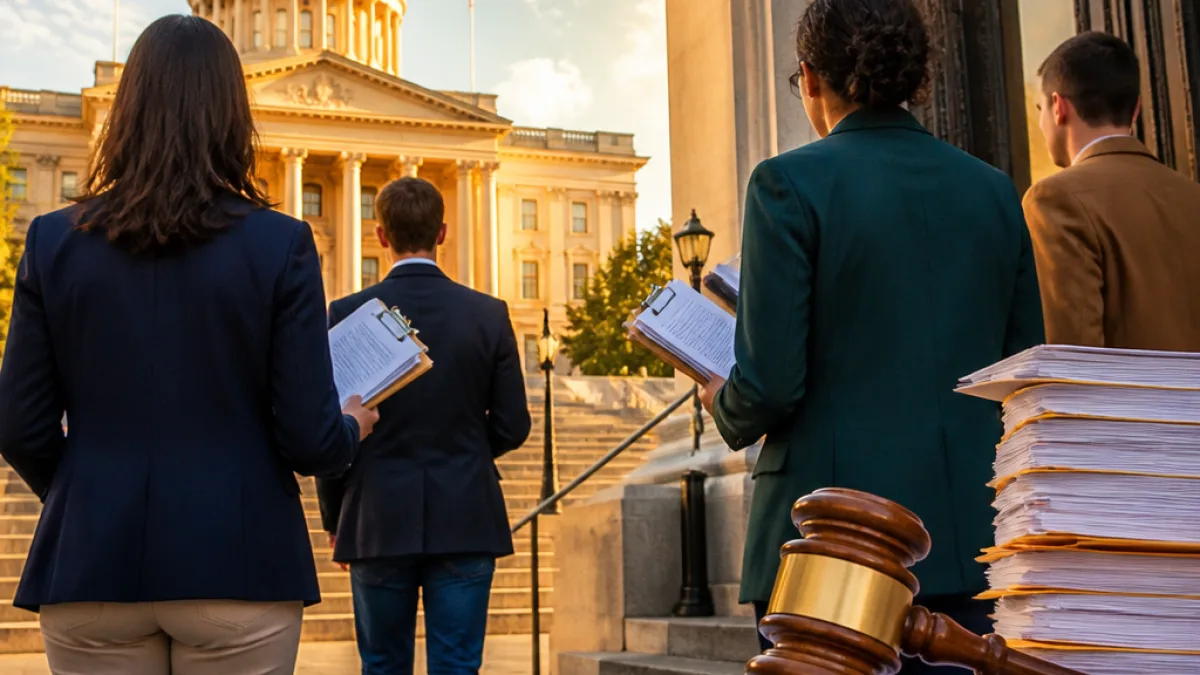
A federal judge on Friday declared several Arkansas laws that tightened rules for the state’s initiative and referendum process unconstitutional and permanently barred their enforcement, a decision that restores broader access for petition organizers and paid canvassers seeking to place measures before voters.
U.S. District Judge Timothy Brooks wrote that statutes requiring all petition canvassers to be Arkansas residents and barring paid canvassers working on statewide initiative petitions or referendums from living out of state violate the First Amendment. He also found unconstitutional a ban on compensating canvassers based on the number of signatures obtained.
Background of the lawsuit
The ruling stems from a lawsuit filed in 2025 by the League of Women Voters of Arkansas against Secretary of State Cole Jester. Two ballot-question committees, Protect AR Rights and For AR Kids, were later permitted to intervene in the litigation. The state has already signaled it will appeal, with a spokesperson for Attorney General Tim Griffin saying the office intends to challenge the ruling.
Groups behind the litigation and intervenors have argued the challenged statutes made it nearly impossible for citizens to propose constitutional amendments or laws and place them on the ballot. They said new requirements passed by lawmakers created practical barriers to collecting the needed signatures.
- Residency requirements for canvassers (all canvassers must be Arkansas residents)
- Restrictions on paying canvassers by signature
- Other procedural requirements previously challenged in the case
Judge Brooks had previously issued a preliminary injunction in November that temporarily blocked enforcement of some of the statutes against parties in the suit. Friday’s order converted that injunction into a permanent ruling for the challenged provisions at issue in this phase of the litigation.
Reactions from advocates and officials
"This is a good day for the voters of Arkansas," said Kristin Foster, executive director of the League of Women Voters of Arkansas. "The power to make our voices heard belongs to the people. The ballot initiative process gives Arkansans a direct say in their government, and we're proud to stand with voters and defend that right."
Voting-rights group Protect AR Rights described the decision as preserving Arkansans’ ability to place measures before voters and to hold elected officials accountable. Attorney General Tim Griffin’s office, through spokesperson Jeff LeMaster, confirmed the state plans to appeal the ruling.
What the decision overturns
The court’s final order specifically prohibits enforcement of the residency mandates for canvassers and the prohibition on paying canvassers per signature. Prior rulings in the case had already struck down several other requirements as violating the First Amendment, including certain disclosure and affidavit rules. Secretary Jester previously said some committees failed to gather enough valid signatures for the November ballot, and in one instance signatures were invalidated over an incorrect measure name printed on petitions; those factual determinations were not altered by this ruling.
| Challenged Provision | Court Ruling |
|---|---|
| Residency requirement for canvassers | Declared unconstitutional — permanently blocked |
| Ban on paying per-signature | Declared unconstitutional — permanently blocked |
Supporters of the challenged laws argued the measures were necessary to protect the integrity of the petition process. Opponents countered that the rules imposed unnecessary burdens on speech and political association and would make citizen-led ballot measures impractical.
Broader implications
The decision will affect how groups organize and pay canvassers for future statewide and statutory initiatives as they collect signatures across Arkansas. It also underscores continued judicial scrutiny of state rules that affect political speech and the mechanics of participating in direct democracy. The state’s announced intention to appeal means the dispute could move to a higher federal court, potentially leaving final resolution to an appellate panel.
For now, the ruling removes several substantial hurdles that petition organizers said constrained their ability to gather signatures. It leaves intact prior determinations by the court that other challenged provisions violated constitutional protections, and it preserves the option for campaigns and civic groups to continue pursuing ballot measures without the residency and payment limits struck down Friday.
The case remains a focal point in Arkansas politics as voters and advocacy groups assess how the ruling will shape campaigns for the ballot in upcoming election cycles.