
The El Paso District Attorney’s Office has dismissed a murder charge against a 28-year-old man accused in the fatal stabbing of his 81-year-old grandfather, saying the case no longer can be proved beyond a reasonable doubt after a judge excluded a recorded statement and a key witness became unavailable.
Judge rules alleged confession inadmissible
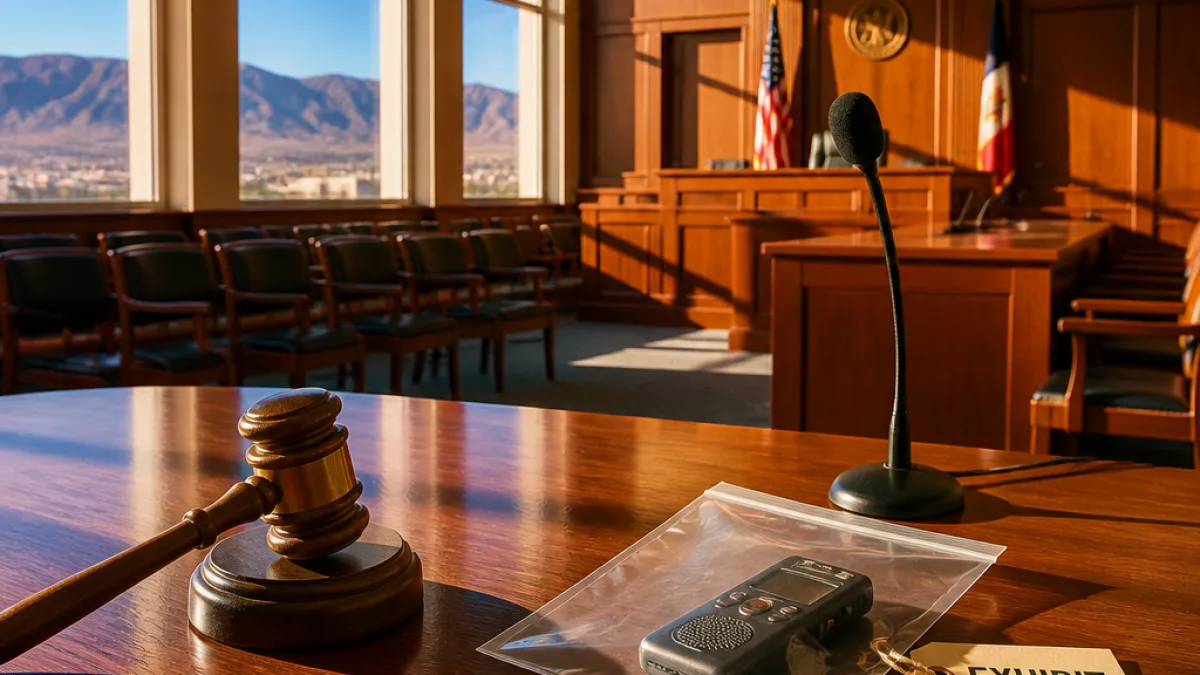
Court records show the murder charge against Kevin Robles was dismissed on Sept. 8 in connection with the Dec. 2022 death of Juan Julian Macias Salas at a home in El Paso’s Lower Valley. The judge ruled that an alleged confession — a recorded statement — could not be admitted because Robles was suffering from mental illness and could not be expected to understand his Miranda rights, according to court filings and statements from the district attorney’s office.
El Paso District Attorney James Montoya said in a statement that "since December 2022, the strength of evidence against the defendant has deteriorated significantly." The office confirmed the case was dismissed after assessing the admissible evidence and concluding it could not be proved beyond a reasonable doubt at trial.
"The court excluded the defendant's recorded statement, and the key witness became unavailable," Montoya said in the statement released by his office.
Other legal actions and courtroom questions
Although the murder charge in the stabbing case was dropped, Robles faces prison time tied to an unrelated matter. Court records show his probation was revoked in connection with a 2018 aggravated assault case, and he was sentenced to 10 years in prison. The district attorney’s office confirmed the revocation and sentence but did not provide additional details on the separate case.
Defense attorney Felix Valenzuela criticized how the case was handled prior to the dismissal, asking what criteria prosecutors used when deciding to pursue charges that put defendants and families through the stress and cost of potential life sentences. "There should be a better way to evaluate these cases before so much emotional scarring occurs to all people, victim's families included, involved," Valenzuela said in a court filing.
Evidence, witnesses and typical murder prosecutions
Prosecutors did not identify the unavailable witness. Court documents list only Robles' parents among potential witnesses, but prosecutors commonly rely on dozens of witnesses in homicide trials, including medical experts, first responders and forensic specialists.
The district attorney’s announcement underscores limits that can arise when physical evidence, witness availability or statements are ruled inadmissible. A Texas murder conviction can carry a sentence up to 99 years or life in prison, and prosecutors said their decision to dismiss followed a careful assessment of the remaining admissible evidence.
- Victim: Juan Julian Macias Salas, 81.
- Defendant: Kevin Robles, 28; murder charge dismissed Sept. 8.
- Other legal action: probation revoked in unrelated 2018 case; defendant sentenced to 10 years.
| Event | Date (known) |
|---|---|
| Fatal stabbing of Juan Julian Macias Salas | December 2022 |
| Murder charge against Kevin Robles dismissed | Sept. 8 (court records) |
| Probation revoked in unrelated 2018 case; sentenced to prison | Not specified in records provided |
Local legal experts and residents said the case raises broader questions about how mental-health considerations, witness availability and early investigative decisions affect the prospects of securing convictions in serious felony cases. The district attorney’s office emphasized that the decision to dismiss was reached after the court excluded evidence central to the prosecution and a previously available witness could not testify.
For the family of the victim and for the community, the dismissal leaves unresolved questions about accountability and closure. Prosecutors did not announce further investigative steps, and the district attorney’s office said it would continue to pursue justice within the bounds of admissible evidence.
Because the ruling involved the exclusion of a recorded statement on mental-health grounds, the case also may prompt discussions in local legal and advocacy circles about protocols for evaluating suspects’ competence during custodial questioning and about how to balance defendant rights with investigative needs.
The Enrique Moreno County Courthouse on East San Antonio Avenue, where the case was handled, declined additional comment beyond the filings and statements in the public record.















