
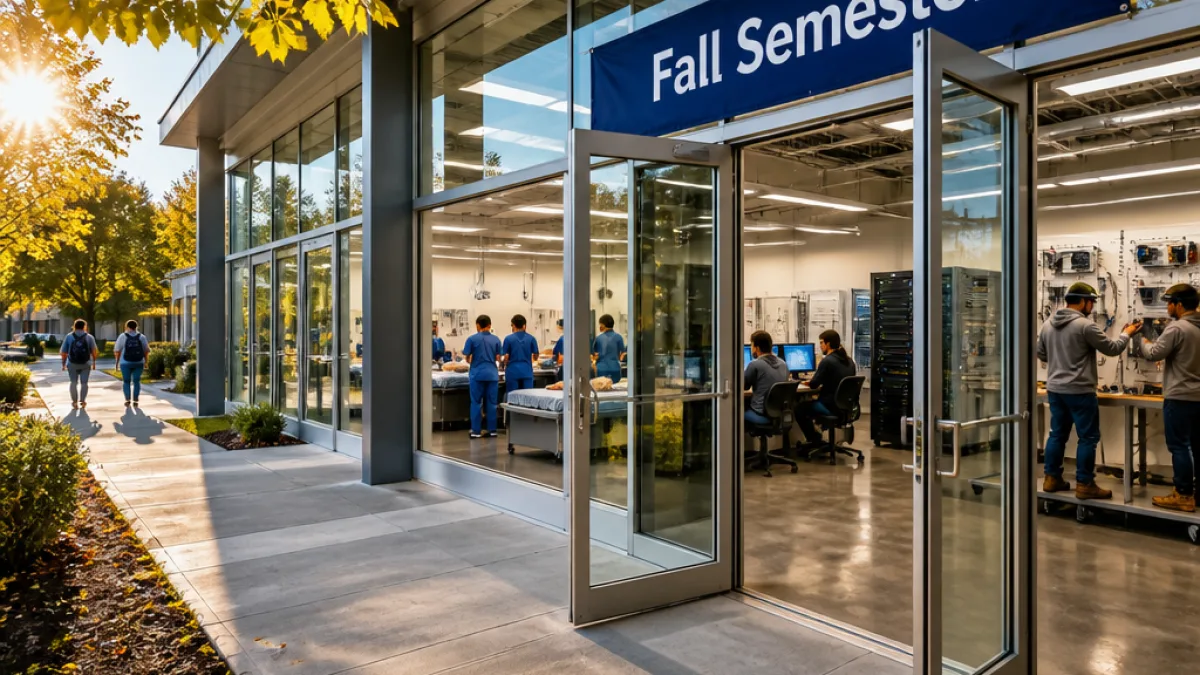
Hands-on programs driving enrollment growth at Durham Tech
Durham Technical Community College opened its fall semester amid a sharp rise in students seeking career-focused training in health care, information technology and the skilled trades, college leaders and students say. The increase reflects both adult career-changers and a growing number of younger learners taking college courses while still in high school.
Officials say lab-centered instruction and faculty with field experience are central to the college’s appeal. Students earn credentials designed to move them quickly into local jobs that remain in high demand.
“We are getting that hands-on experience, and we are being taught by people who have been in the field themselves, so they know exactly what to do and what the state boards are looking for,” said Durham Tech student Nadya Bennett.
Career shifts and early starts
Bennett, who completed a chemistry degree in 2024, described enrolling at Durham Tech to make a career change into nursing. She highlighted the value of short, skills-based programs that lead to licensure and quick job placement.
“Once you complete this CNA program and earn that license, you can get a job. People I know who completed this program were able to find jobs very easily,” Bennett said.
College President J.B. Buxton said the traditional picture of a community college student is shifting. While many still attend to retrain or acquire new competencies midcareer, Buxton said the college has seen a noticeable rise in younger students.
“When you think about nontraditional students, you generally think older, but nontraditional is starting to skew younger,” Buxton said.
Buxton pointed to the Durham Early College of Health Sciences as an example. The program enrolls ninth-graders who begin taking courses in fields such as nursing, surgical technology, medical assisting and clinical trials; after four years, students can graduate with industry credentials.
Demand concentrated in trades and health programs
School officials report heavy demand across several vocational programs. An electrical trades class currently carries the college’s longest waitlist, underscoring strong local interest in hands-on skilled trades training.
- Health care: Nursing pathways, CNAs and lab-based programs attracting career-changers and early-career students.
- Information technology: Programs preparing students for roles in a growing tech workforce.
- Skilled trades: Electrical courses and other hands-on offerings with significant waitlists.
The focus on practical, workplace-ready instruction aligns with employer demand in the Triangle region. Durham Tech’s model — combining classroom learning with applied labs and instructors who have worked in the field — aims to shorten the time between education and employment.
What this means for Durham
The enrollment shifts have implications for families, employers and the local labor market. For students, shorter programs and early college options provide pathways to stable employment without necessarily requiring a four-year degree. For local businesses, an expanding pipeline of credentialed workers could ease hiring pressures in health care, IT and construction-related trades.
School leaders said the college is responding by expanding access where possible, but demand in some courses continues to outpace available seats. That dynamic highlights ongoing workforce needs across the region and the role community colleges play in meeting them.
Durham Tech did not provide detailed enrollment figures in the report, but administrators described steady growth in both adult and high school populations, including a doubling of the college’s high school student population since Buxton became president.
| Program area | Current trend |
|---|---|
| Health care | Strong growth; hands-on labs and licensure programs |
| Information technology | Increasing enrollment; career-focused training |
| Skilled trades | High demand; electrical class has longest waitlist |
As Durham Tech continues to adapt to changing student demographics and labor-market needs, college officials and students say the institution’s hands-on approach remains a decisive factor for those pursuing quicker, career-aligned educational paths.















