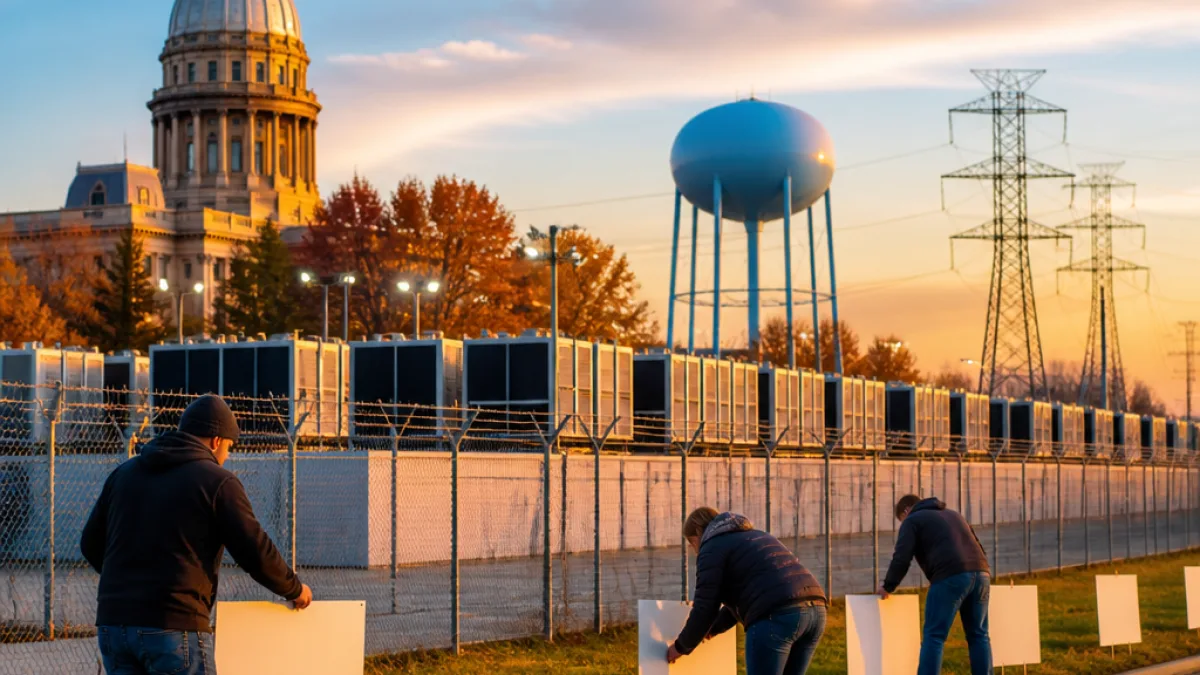
As artificial intelligence applications multiply, data centers have moved from economic-development wins to a flashpoint in Illinois politics. Gov. J.B. Pritzker, who championed tax incentives for data centers when he took office in 2019, has paused those credits this year, citing concerns about the strain hyperscale facilities place on energy and water systems and growing public unease.
From economic promise to regulatory pause
When the incentives were enacted in 2019, state leaders from both parties hailed them as a way to attract jobs and investment. Pritzker framed data centers as vital infrastructure, comparing their importance to roads, trains and schools. The policy shift this year underscores how rapidly the conversation has changed as the industry evolved toward larger, always-on facilities driven by AI workloads.
At a recent news conference, Pritzker acknowledged that the landscape in 2026 looks different than it did when the tax package was first approved. He emphasized the need to protect utilities and communities from higher costs and environmental harm as new, energy-intensive "hyperscale" data centers seek to expand in the state.
“We weren’t talking about AI hyperscalers back in 2019,” Pritzker said. “I’ve already taken action. We’ve taken away the data center tax credits that existed, but it’s with the goal of getting legislation that will ensure that the people of Illinois, the businesses of Illinois, are not having burdened upon them higher electric rates, higher water rates, or having environmentally unsound practices by these data centers.”
Politics and policy intersect
The issue has become a campaign focal point. Pritzker’s Republican opponent, Darren Bailey, has accused the governor of creating the incentives that now provoke backlash. At the same time, Bailey has attempted to distance himself from simply opposing data centers outright by framing his stance as one of consumer and community protection rather than anti-technology rhetoric.
“To be anti-AI, anti-data center, that’s not what this is about at all,” Bailey said in an interview. “This is about protecting the people
That incomplete sentence in the available excerpt signals Bailey is emphasizing protection of residents while still incorporating AI into his campaign strategy.
Public concerns and proposals
Groups pushing for tighter regulation have sought several changes they say would address the core concerns: requiring hyperscale operators to secure their own energy supplies, improving transparency about water consumption, and strengthening environmental reporting. Polling conducted this spring for the Illinois Clean Jobs Coalition — a leading advocate for regulation — indicated broad support among Illinoisans for measures that would force larger operators to be more accountable for energy sourcing and water use.
Supporters of stricter rules argue the changes would prevent utilities from shifting costs to residential and business customers and would protect regional water resources from heavy industrial demand. Opponents, including some economic development advocates and industry representatives, warn that heavy-handed regulation could chill investment and cost jobs.
What’s at stake for Illinois
Data center projects bring high upfront investment and potential construction and operations jobs, along with new tax bases in some communities. But hyperscale facilities also consume vast amounts of electricity and, in some cases, significant water resources for cooling — issues that have prompted municipalities and utilities to scrutinize proposed projects more closely.
Pritzker’s move to pause tax credits is framed as a temporary measure while lawmakers craft legislation intended to balance economic opportunity with utility reliability and environmental stewardship. Advocates for regulation say new statutory requirements — not just temporary administrative actions — are necessary to create long-term protections.
- 2019: Tax incentives for data centers signed into law and promoted as economic drivers.
- 2023: Pritzker publicly praised data centers as infrastructure in online remarks and posts.
- 2026: Credits paused amid concerns over AI-driven hyperscale facilities and their demands on energy and water.
| Year | Action/Context |
|---|---|
| 2019 | Tax incentives enacted; bipartisan support highlighting jobs and investment |
| 2023 | Governor’s public comments praising data centers as infrastructure |
| 2026 | Pause on credits announced; debate centers on AI hyperscalers, energy and water impacts |
Next steps
Lawmakers face competing priorities: attracting investment while safeguarding ratepayers and natural resources. Any legislative response will need to define what constitutes a hyperscale facility, determine reporting and permitting requirements for energy and water, and decide whether to reintroduce incentives conditioned on environmental and utility safeguards.
As the governor’s race proceeds, data centers are likely to remain a prominent issue, linking questions about technological innovation and economic development to the everyday concerns of Illinois residents about utility costs and environmental protection.
Danielle Osei is the state correspondent for WE NEWS.