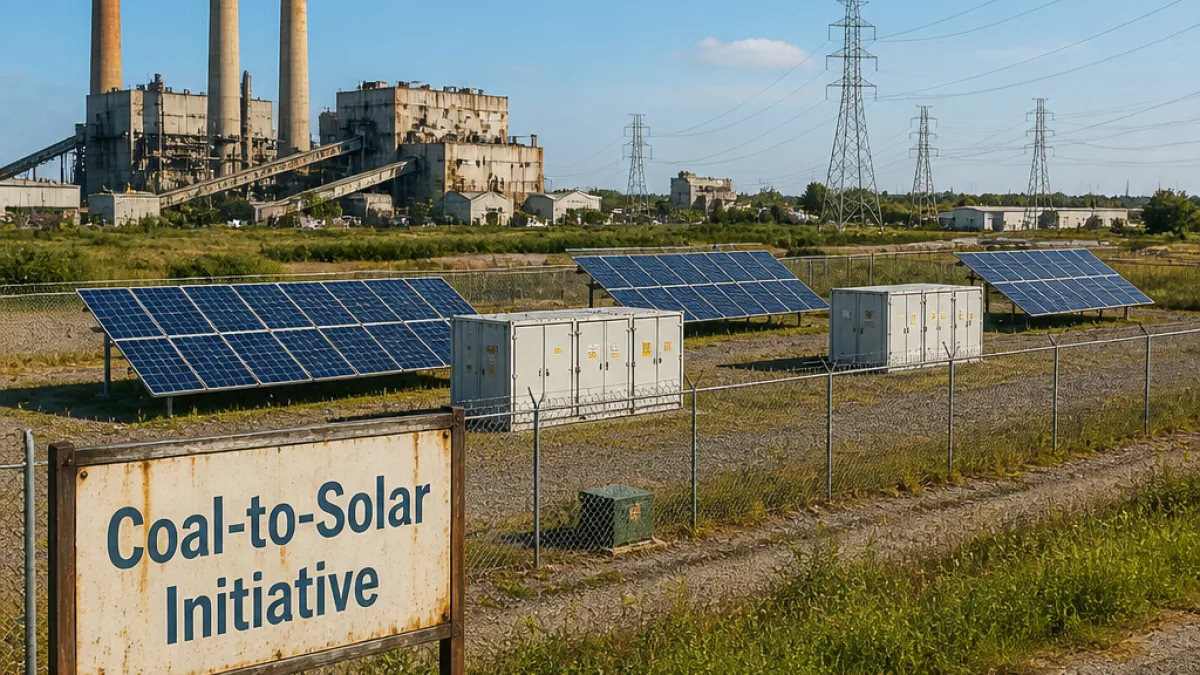
SPRINGFIELD AREA — Illinois’ five-year effort to convert shuttered coal-plant sites into renewable energy hubs produced only a fraction of what lawmakers and advocates had promised, according to a new report by the University of Illinois’ Climate Jobs Institute and the Prairie Rivers Network.
Program goals fell short
The state program, created as part of the 2021 clean energy law, aimed to leverage available land and grid connections at former coal plants to accelerate solar and battery deployment, while helping offset lost tax revenue and local jobs. Instead, researchers found the initiative yielded just three relatively small solar farms paired with energy storage — and no large, stand-alone battery projects the law’s architects had hoped for.
"It's a kind of sexy idea — we're building solar on coal plants. It's a neat picture of the green transition," said Roshan Krishnan, a co-author of the report and research specialist at the Climate Jobs Institute. "But in reality, it ends up being more complicated."
Why the program underperformed
The report attributes the limited outcomes not to the concept itself but to how the initiative was structured. Developers and utilities that owned eligible sites — primarily NRG Energy and Vistra — helped shape the program and pushed to include it in state law. Yet the involvement of those same companies, legal and financial constraints, and market conditions made some sites unattractive or infeasible for the large-scale projects originally envisioned.
Amanda Pankau, lead author of the report and director of energy and community resiliency at the Prairie Rivers Network, emphasized that the findings should inform future efforts to repurpose energy infrastructure, not deter them.
"The clean energy transition and how we incorporate a just transition and energy community reinvestment is new. It's uncharted territory," Pankau said. "This isn't just a dead end; there are other paths forward."
Researchers point to several recurring hurdles that limited development:
- Competing financial incentives elsewhere that made other sites more attractive to developers.
- Prior agreements and utility interconnection issues tied to existing grid infrastructure.
- Site-specific contamination, permitting or land-use challenges at former coal facilities.
- Developer economics that favored building on greenfield sites rather than navigating complications at retired power stations.
What was delivered
While the program fell short of its stated ambitions for multiple large arrays and standalone storage banks, Vistra — one of two companies with eligible sites under the program — completed three solar projects that included battery storage. NRG, which had proposed standalone battery projects, ultimately abandoned those plans.
| Planned | Delivered |
|---|---|
| At least six major solar + storage arrays | Three smaller solar + storage installations |
| Five large standalone battery banks | Zero standalone battery banks |
The study makes clear the gap between legislative goals and market realities, concluding that the state’s program design did not sufficiently address the economic and technical barriers developers face when reusing former coal sites.
Lessons for future policy
Report authors recommend policymakers rethink how to make coal-site redevelopment more attractive and feasible. Options include better incentives, clearer rules on site remediation and interconnection, stronger protections for communities losing tax revenue and jobs, and a more explicit role for public investment where market incentives fall short.
Those changes, advocates say, could help align the priorities of utilities, developers and affected communities while ensuring that the transition to renewables supports local economic stability.
Even as the report documents shortcomings, its authors caution that converting coal sites to clean-energy use remains a promising strategy — but one that needs smarter engineering and policy design to become routine practice across the state.
For Illinois, the report serves as a midterm reckoning: an opportunity to refine program rules and redirect resources so that future coal-to-solar initiatives produce the larger-scale projects and community benefits lawmakers intended when they crafted the 2021 clean energy law.
Reporting for this story drew on the University of Illinois Climate Jobs Institute and the Prairie Rivers Network report, including interviews with the study's authors and program stakeholders.