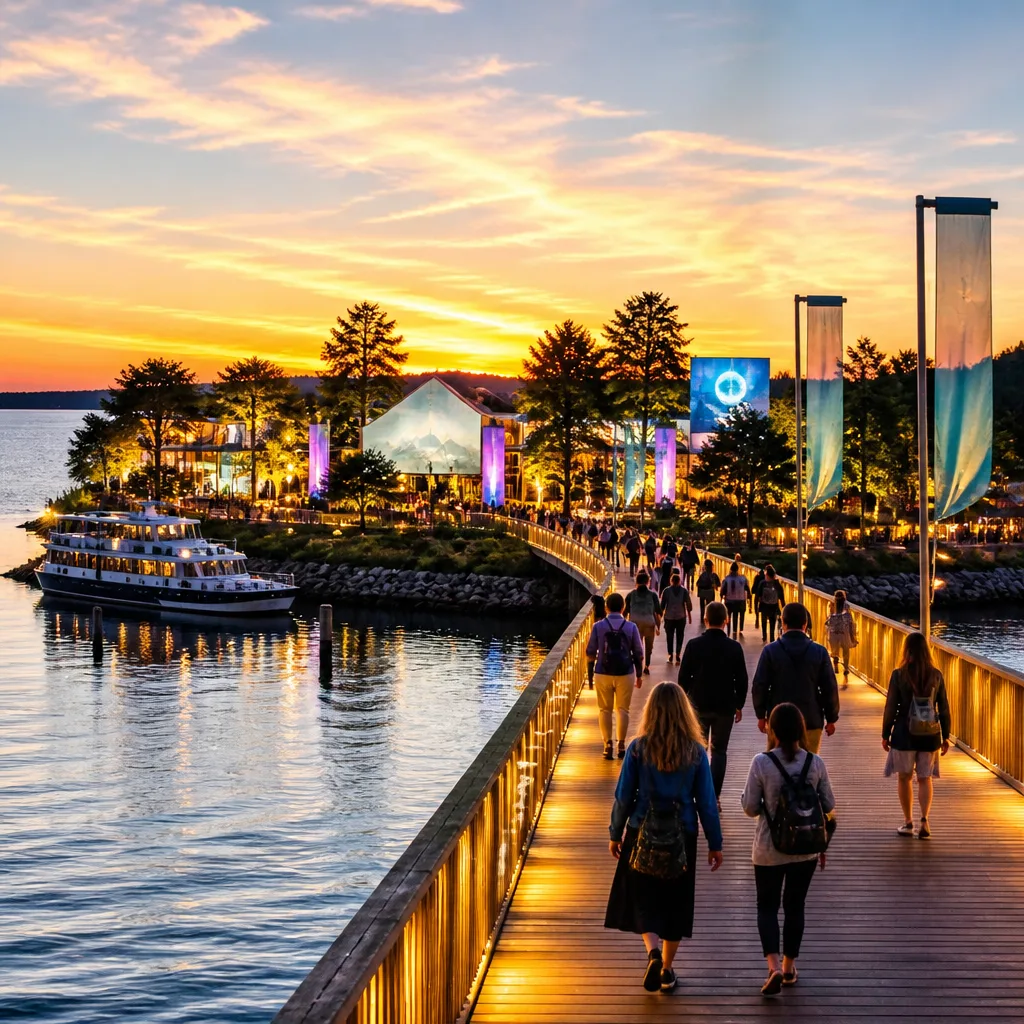
The tenth edition of Venice Immersive arrives not as a nostalgia act but as a marker of what organisers call a new chapter for extended reality (XR) and immersive storytelling. The festival’s senior figures are deliberately looking forward: after a decade of experimentation, the medium is being reshaped by finance, audience habits and an expanding market built around shared, location-based experiences.
From a corner of the Casinò to its own island
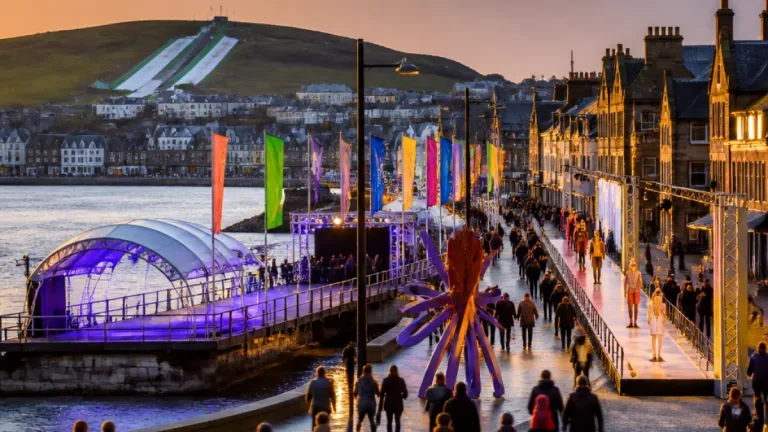
What began “in a modest nook between two floors of the Palazzo del Casinò” now occupies an entire island in the lagoon, reflecting how the festival has grown from a curiosity into a sector hub. The trajectory, however, has not been a straight line. The long-anticipated consumer boom in personal headsets has not materialised as multiples originally forecast; platform and hardware backers tightened their purses, and projects that once relied on private tech investment were left searching for new routes to production.
“We’re not planning any retrospectives. Instead, we want to focus on what’s happening next. This really feels like the beginning of a second chapter, for us and for the wider medium.”
The comment, delivered by Venice Immersive counsellor Michel Reilhac, encapsulates the festival’s intent: to stress innovation over commemoration. That future-facing stance is already visible in the models that are beginning to dominate the market.
Location-based entertainment: the new engine
Industry observers at the festival cite the rise of location-based entertainment (LBE) as the primary driver of the current market. Counsellor Liz Rosenthal pointed to an “explosion” of LBE centres in Asia, built to scale and designed for groups ranging from half a dozen participants to audiences in the hundreds. The creative ambitions of these projects have also evolved: where early VR pieces often framed users as spectators, newer titles offer free-roam, multiplayer interaction that imbues visitors with character and agency.
Examples showcased at or discussed around the festival include competitive and educational titles that illustrate the shift toward collective experiences:
- Amsterdam 1652: The Hands of the City — a competitive, location-based title
- Smithsonian Starstruck: An Immersive Experience — a museum partnership-driven production
- Everest: The First Ascent — a large-scale historical/heritage experience
| Title | Type | Notable partner/financing |
|---|---|---|
| Amsterdam 1652: The Hands of the City | Competitive, free-roam | — |
| Smithsonian Starstruck | Educational, immersive | Fever (marketing and ticketing) |
| Everest: The First Ascent | Heritage, multiplayer | — |
Partnerships and distribution are proving as important as artistic ambition. Rosenthal highlighted the role of companies such as Fever, a marketing and ticketing platform that provided financing for Smithsonian Starstruck, as indicative of a new hybrid approach where private investment comes with built-in distribution channels.
Public funding as a bridge, and a renewed business logic
With private platform money reduced, European public funding has often acted as a bridge for creators. Those subsidies have helped sustain development, but the pathway to sustainable income now looks different: returns are increasingly found in event-based venues and collective exhibition models rather than in the sale of personal headsets and apps.
That shift carries implications for makers and commissioners. Creatives must now design for spaces, audiences and operations that require different skills — logistics, theatrical design and live audience management — alongside the software craft that defined early XR work. The larger venues and group formats also demand higher upfront capital and longer planning horizons, which in turn encourage collaborations with institutions and private platforms able to underwrite and distribute work.
At the festival, this reconfiguration was not framed as a failure so much as a recalibration: the medium has matured into forms that better fit public sites, museums and commercial LBE centres. For audiences, that means more opportunities to experience immersive work socially, in rooms and arenas designed for shared participation rather than solitary consumption.
Venice Immersive’s tenth year thus reads as a report from a turning point — a celebration with its gaze fixed on the next wave of what immersive culture might become when it is made for people in the same place, at the same time.