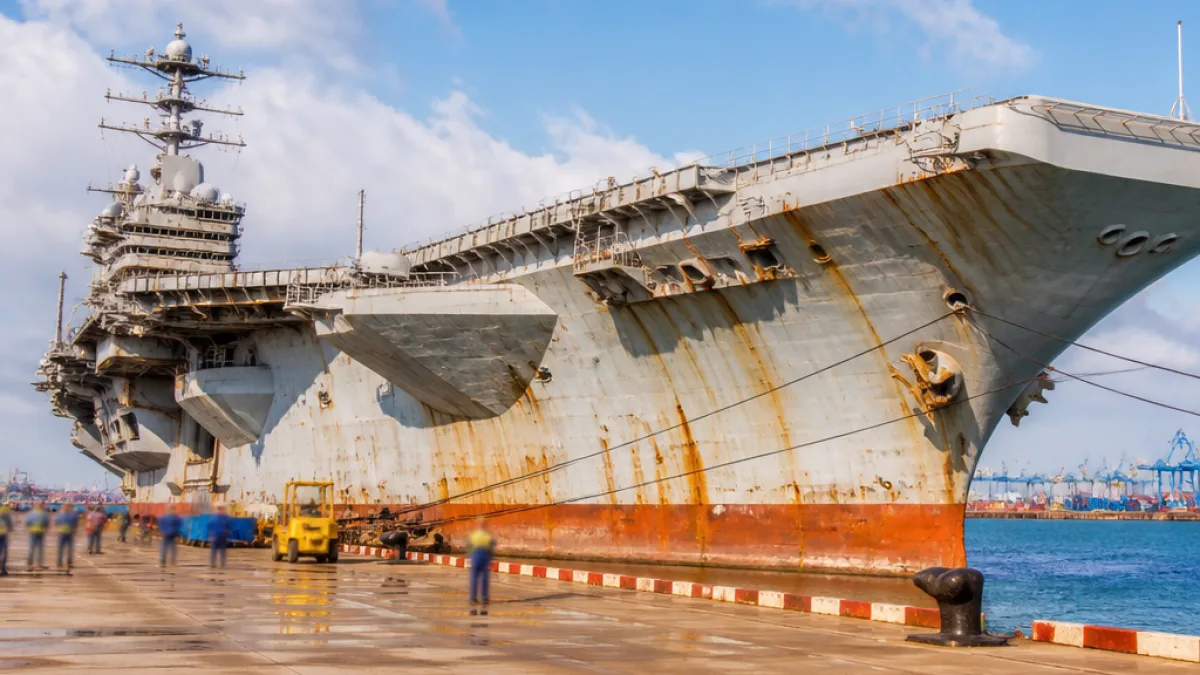
The US aircraft carrier USS Abraham Lincoln arrived at the port of Laem Chabang in Thailand this week displaying extensive surface corrosion from bow to stern after what the US Navy describes as an unusually long deployment.
Long deployment, visible toll
The almost 1,100‑foot warship has been at sea for 286 days since leaving its homeport of San Diego last November. Observers in Thailand and defence experts said the streak of missions and minimal port time has left the ship’s hull and superstructure with heavy rusting, particularly along the waterline.
Carl Schuster, a former US Navy captain who completed three tours on Nimitz‑class carriers, told reporters that rust along the waterline is to be expected after prolonged continuous operations. He said removing the corrosion would require specialised preservation work that cannot be carried out safely while the carrier is underway.
“Rust along the waterline is not unusual on a ship that has spent 60 days or more of operations continuously at sea,”
Schuster outlined the scale of the task: crews would need to be lowered to the waterline to abrade the affected areas, then apply two coats of rust‑preventative primer followed by two coats of naval grey paint. He estimated the full preservation effort could take about 30 days, though some priority repairs might be possible during a short port visit.
Port visit and limited repair window
The Lincoln’s stop in Laem Chabang — near the resort city of Pattaya — is intended to provide the crew with rest and recuperation after the marathon deployment. Officials said the visit will last several days, but Schuster cautioned that only high‑priority work can be carried out during a standard seven‑day port call. He added that forward hull areas typically receive attention first because they sustain the most wear when the ship transits through choppy, salty seas.
- Deployment length: 286 days at sea since November.
- Primary concern: rust and corrosion, especially at the waterline.
- Estimated preservation time: around 30 days for full treatment, per a former carrier captain.
Operational context and crew welfare
The Lincoln was redirected from its routine schedule to operations in the Middle East, where it spent months engaged in combat and blockade missions related to the conflict involving Iran. The extended deployment followed reports alleging growing mental‑health problems among sailors and shortages of supplies on board. Those concerns drew public attention and were followed by the carrier being relieved in August by the USS George Washington, a ship normally based in Asia.
Some family members of personnel aboard the Lincoln have publicly said sailors reached breaking points during the lengthy tour; defence officials have disputed the characterisation of conditions on board. In response, senior US defence figures have defended the support provided to ships and crews during extended operations.
Local and logistical implications
For Lincoln readers, the sight of a ship bearing the city’s name returning in visibly degraded condition has prompted a mixture of surprise and concern. While the vessel’s appearance is readily explained by the sustained operational tempo and the corrosive effects of saltwater on steel, experts stress that timely maintenance is vital to preserve structural integrity and safety.
| Detail | Reported fact |
|---|---|
| Homeport | San Diego |
| Time at sea | 286 days |
| Estimated preservation | Approximately 30 days (full treatment) |
| Relieved by | USS George Washington |
Observers emphasise that while certain rust can be treated at sea in sheltered conditions, the most significant work must be done when the ship is stationary and free from wave action. Failure to address corrosion early, Schuster warned, allows rust to spread and can undermine steel structures if left unchecked — a step that would complicate and lengthen future maintenance requirements.
The Lincoln’s brief visit to Thailand offers a narrow window to tackle urgent repairs and for sailors to take a much‑needed break after an unusually prolonged and demanding schedule at sea. How much of the preservation work can be completed during this stop will depend on time, tide and available shore‑side facilities.
This account draws on interviews with defence analysts and reporting about the vessel’s deployment and condition while docked at Laem Chabang.