Club withdraws range and says it failed to spot offensive association
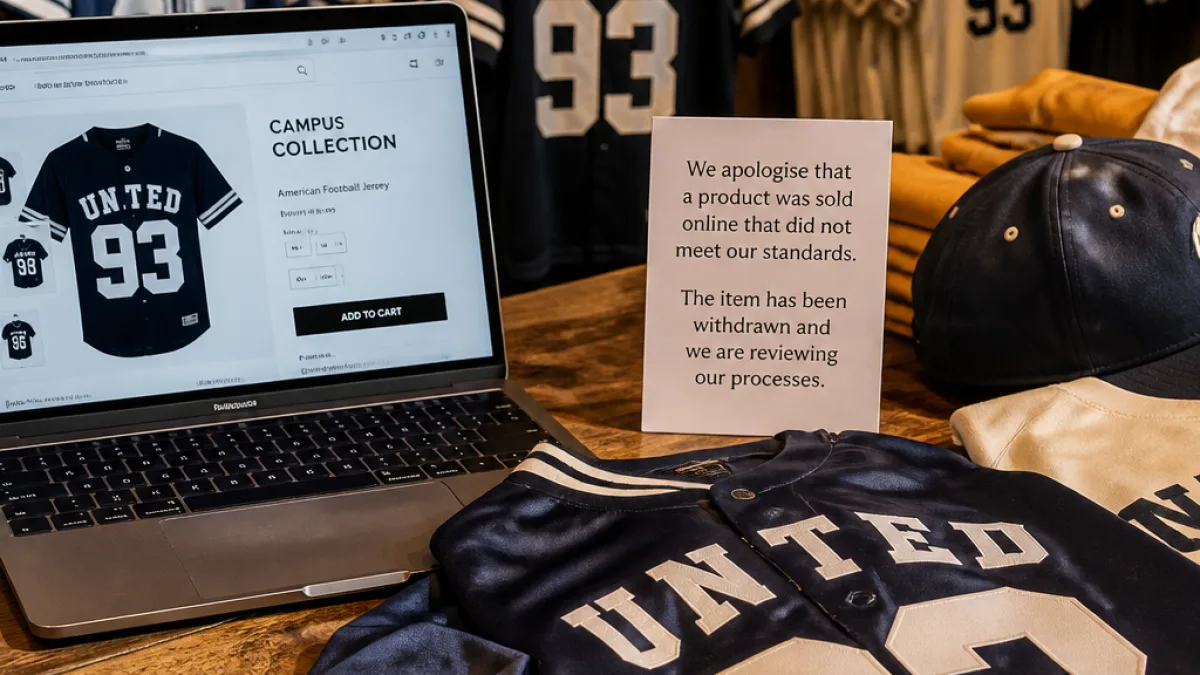
Oxford United has apologised and pulled a new clothing range after merchandise bearing the slogan “United 93” was released online at a sensitive time. The League One club said the items were published "without understanding of the historical context and associations" and accepted "full responsibility" for the error.
The wardrobe, promoted as the club's "Campus Collection" and inspired by American sportswear, featured an American football-style shirt and a baseball jersey with the phrase "United 93" across the chest. The branding was intended to reference Oxford United's long history — the club traces its origins to 1893 — but the phrase also evokes United Airlines Flight 93, one of the four passenger jets hijacked on 11 September 2001.
Reports said the club scheduled the wider collection release to coincide with the start of the NFL and MLB seasons on 18 September, but a teaser announcement was mistakenly published online on 10 September. Other accounts say the collection appeared on the club website on Friday morning and was removed a few hours later once the association was recognised.
- What happened: a new Oxford United "Campus Collection" went on sale with garments labelled "United 93".
- Why it caused offence: the phrase is associated with the hijacked Flight 93 on 11 September 2001, a terror attack that killed thousands.
- Club response: the collection was removed immediately and the club has apologised and launched a review of approval processes.
"The range was released without understanding of the historical context and associations. It should not have reached the point of sale and we take full responsibility for not undertaking proper due diligence."
Local fallout and fan reaction
For many Oxford residents and supporters the episode has been a stark reminder of how quickly marketing decisions can cause hurt beyond their intended audience. Some fans expressed anger and disappointment on local message boards and social media; others urged the club to treat the matter as an accidental oversight and to move quickly to put safeguards in place.
Oxford United's apology acknowledged the misstep and promised a review of internal approval procedures so that "nothing like this happens again." The club removed the collection "with immediate effect", according to statements reported by national outlets.
The imagery also touched on a wider cultural faultline: the club said the range was "inspired by the style and culture of American sports" — an aesthetic increasingly popular in football fashion — but that the specific wording should have been spotted and challenged during design and approval stages.
Timeline in brief
| Item | Detail |
|---|---|
| Club foundation | 1893 (originally Headington FC) |
| Merchandise teaser | Reportedly went live on 10 September (teaser) |
| Wider release planned | Planned to align with NFL/MLB season starts on or around 18 September |
| Removal and apology | Collection pulled "with immediate effect" after club realised associations |
National reporting also noted the wider historical context: almost 3,000 people died in the attacks of 11 September 2001. One of the planes, Flight 93, crashed in Pennsylvania after passengers sought to thwart the hijackers.
The incident highlights practical questions for the club's commercial operation in a city where the football club is a prominent local institution. Merchandising is an important revenue stream for clubs outside the Premier League, but it also carries reputational risk if products or campaigns are not properly vetted.
Supporters' groups will be watching how the club follows through on its pledge to change approval processes. For many local people, the priority now is that the club learns from the mistake, engages with those offended and puts practical safeguards in place so that future launches are sensitive to historical and international contexts.
The episode serves as a reminder to organisations of all kinds in Oxford and beyond: creative ideas must be balanced with thorough checks, particularly where language might carry meanings far removed from local intent.