Club shifts focus to tactics and safety as summer drought makes contact training risky
Newbury Blues have changed their pre-season approach as a prolonged spell of hot, dry weather has left pitches across West Berkshire unusually hard. The club's head coach says the emphasis has moved away from heavy contact work towards conditioning, technical drills and measures to reduce the risk of lower-limb and impact injuries.
Monks Lane's summer sessions have been affected by the same conditions hitting amateur and grassroots clubs across the area. While warmer weather has benefits for the style of play the Blues favour, firm ground can complicate preparations at the time teams are trying to bed in physical foundations ahead of the first fixtures of the campaign.
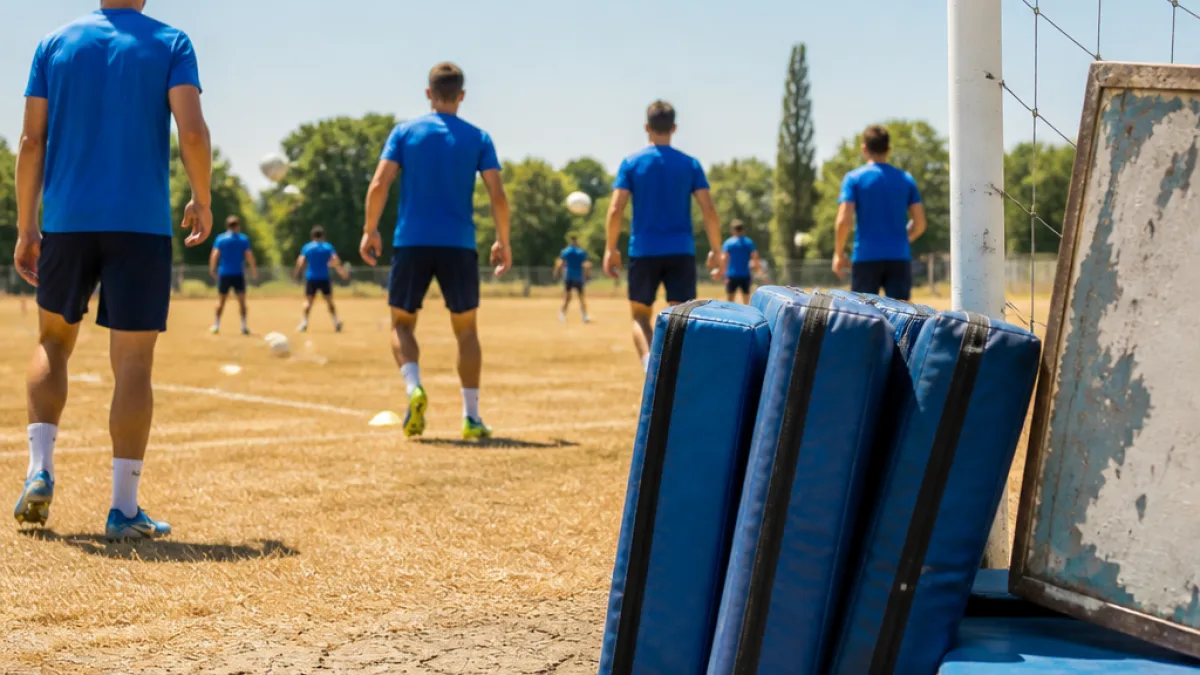
Addressing concerns over the playing surface, the head coach said the squad is taking a pragmatic approach to load management and contact. He described adjustments aimed at priming players' ankles and Achilles tendons, and said protective equipment has been used in place of full contact where appropriate.
"Drill wise is absolutely fine, some consideration given to players in terms of load on lower body activation and ensuring ankles and Achilles are primed,"
"Contact wise we have used mats and pads when necessary and looking at options as contact begins to increase approaching our first pre-season game."
He added that block work without heavy contact has allowed the Blues to concentrate on the fundamentals of attack and defence, particularly defensive connection and line speed—areas the coaching team consider priorities that can be trained effectively without regular contact sessions.
Practical steps being taken
The club has implemented several practical steps to limit injury risk and maintain preparation momentum:
- Reduced contact frequency: Contact drills are not scheduled for every session; instead, contact is phased in as necessary.
- Use of protective equipment: Mats and pads are deployed during higher-impact work to soften landings and collisions.
- Targeted load management: Sessions focus on lower-body activation and conditioning for ankles and Achilles to reduce strains and impacts.
- Hydration and recovery: Players are monitored for fluid and glycogen replenishment to counter the effects of hotter training conditions.
Those measures mirror guidance Newbury Blues say they have received from the Rugby Football Union (RFU), which has issued notices about how warmer weather and firm pitches should be handled. The coach welcomed the guidance but suggested that wider logistical help could ease preseason planning for clubs that need access to artificial grass pitches (AGPs) when natural turf is unsuitable.
"In reality rugby teams don't need to do contact every session or even every week,"
He argued that more timely release of AGP schedules from governing bodies would help clubs like Newbury to book appropriate facilities when summer conditions render grass pitches problematic.
How this lands for the local game
For players and supporters in Newbury, the short-term effect is a shift in what fans see at training. Sessions will prioritise ball skills, tactical work and fitness that are transferable to match situations and less dependent on hard contact. For younger or amateur players, limiting contact lowers the immediate risk of impact injuries caused by limited shock absorption on a firm surface.
There are, however, practical tensions for a club preparing to compete. Contact remains an essential element of match-readiness in rugby, and coaching teams must balance injury prevention with ensuring players are suitably prepared for the physical demands of competitive matches as pre-season progresses.
For local grassroots clubs that share pitches, the issue is also one of access. Artificial surfaces can provide a reliable alternative during prolonged dry spells, but demand and availability vary across the region. The Blues’ call for clearer scheduling from the RFU reflects a wider need for better co-ordination between governing bodies and clubs during weather extremes.
Outlook ahead of the season
With the physical foundations now in place, the Blues are turning attention to integrating tactical systems and preparing for their opening fixtures. The coaching team will continue to monitor pitch conditions and adjust contact levels accordingly, aiming to strike a balance between player safety and competitive readiness.
| Issue | Club response |
|---|---|
| Firm, dry pitches | Reduced contact; more drills and technical work |
| Injury prevention | Load management; ankle and Achilles activation; use of mats/pads |
| Facility access | Request for clearer AGP scheduling from RFU |
The Blues’ pragmatic approach is designed to protect players while preserving the momentum of pre-season. How effectively the club can reintroduce contact as matchday approaches will be watched closely by supporters and by other clubs facing the same weather-related disruption.