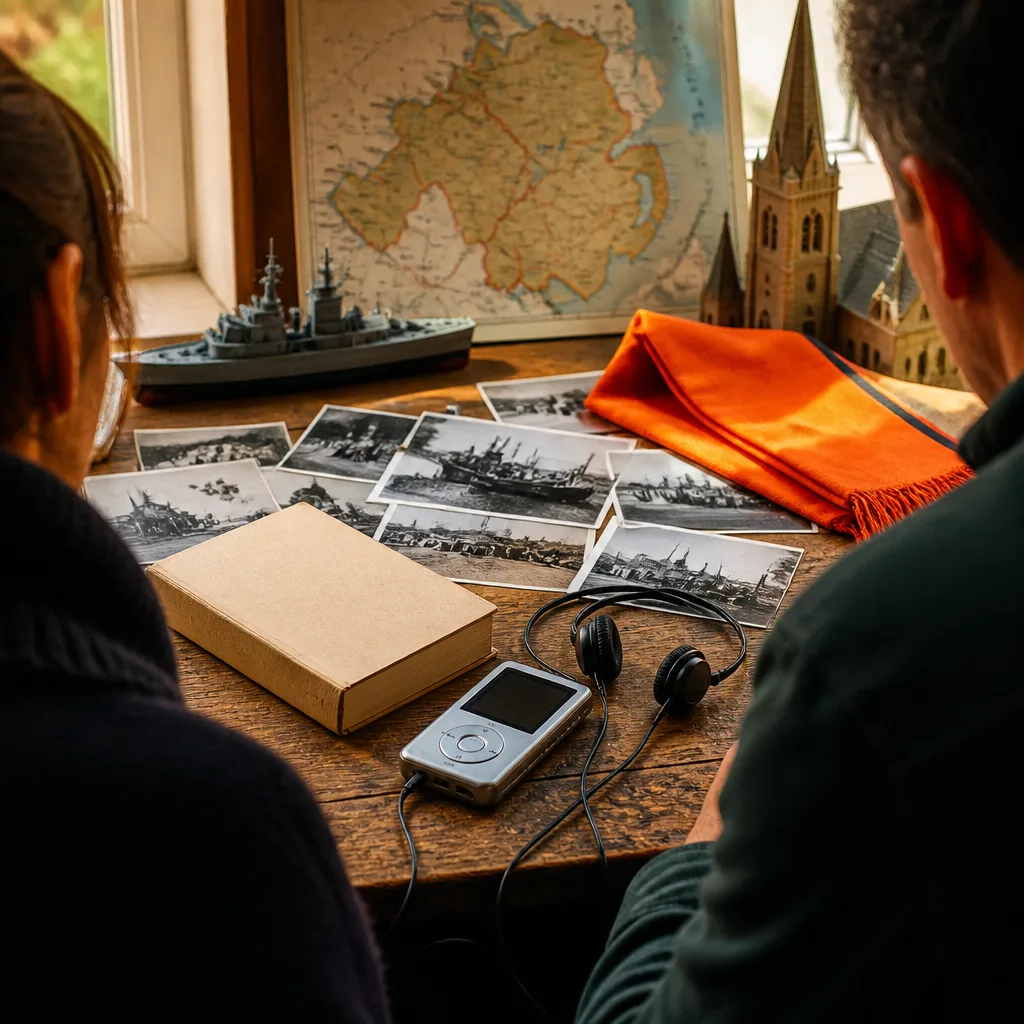
Religion, memory and the messy business of peacebuilding are under the microscope in a newly published short book and related audio features that revisit the Northern Ireland Troubles from distinct, often personal angles. Professor Gladys Ganiel’s research, published this year as Christianity and Peacebuilding in Northern Ireland, is accompanied by a series of recorded conversations and archive pieces that probe how faith shaped — and was shaped by — conflict and reconciliation.
Re-examining religion’s role
Ganiel’s work addresses a familiar but complicated question: to what extent were the Troubles a religious conflict, and what part did Christians play in helping to end it? For many outside Northern Ireland, the labels Catholic and Protestant have long served as shorthand for the warring sides. Ganiel’s research argues that although religion was a feature of the conflict for some, its role is not straightforward and remains open to debate.
The book is presented alongside a package of audio segments and discussions that surface a range of perspectives on the Troubles, from dramatic prison-ship escapes to long-running disputes over parades, and personal reckonings with loss and deception.
Key audio features revisited
Highlights from the companion audio content include a look back at the IRA’s dramatic escape from the HMS Maidstone and an exploration of the Drumcree parade crisis.
- HMS Maidstone escape — a January 1972 incident in which internees swam through Belfast Lough and absconded via a hijacked bus; the segment revisits the episode and its humiliation of authorities.
- Drumcree and the Orange Order — an examination of the long-running dispute over marches in Portadown and the role of the Parades Commission, including recent court rulings that have reignited tensions and discussion about the future of contested parades.
- Personal testimony — interviews and reflections, such as those from relatives of victims and participants, which complicate simple narratives and foreground the human cost of conflict.
“Everything that I was told was a lie”: Lauren Bradford-Clarke, Colin Howell’s daughter
The inclusion of deeply personal testimonies underlines how the Troubles continue to reverberate through families and communities. One segment revisits the story of Lauren Bradford-Clarke, who grew up believing her mother had taken her own life before later discovering the truth — a reminder that the aftermath of violence often includes private shocks and long-delayed reckonings.
Context and consequences
These pieces are not nostalgia: they ask how religious actors and institutions contributed to peacemaking, and where they perhaps fell short. By pairing scholarly analysis with archival and contemporary audio reporting, the material offers readers and listeners a layered inquiry rather than a single verdict.
That approach matters because public debates about identity, commemoration and justice in Northern Ireland remain contentious. Legal decisions — such as recent rulings related to parading — can reopen wounds decades after the events, and academic work that clarifies motivations and mechanisms for peacebuilding can feed directly into policymaking, community relations and cultural memory.
| Feature | Duration / Timestamp |
|---|---|
| Professor Gladys Ganiel interview (Christianity and Peacebuilding) | 34:57 |
| HMS Maidstone escape segment | 25:41 |
| Drumcree parade crisis discussion | 49:21 |
For audiences in Britain and Ireland, the package serves two uses: as a primer on the contested role of religion in the Troubles, and as a timely reminder that disputes over parades, memory and responsibility are not merely historical footnotes. They remain active public issues that shape civic life and cultural discourse.
Whether as a short book to inform policy and study, or as a collection of audio features that make archival material accessible and resonant, the project underscores the continuing need for nuanced accounts of conflict. It also reinforces that reconciliation work is ongoing — an effort that requires clear-eyed history, community engagement and sometimes uncomfortable personal testimony.