
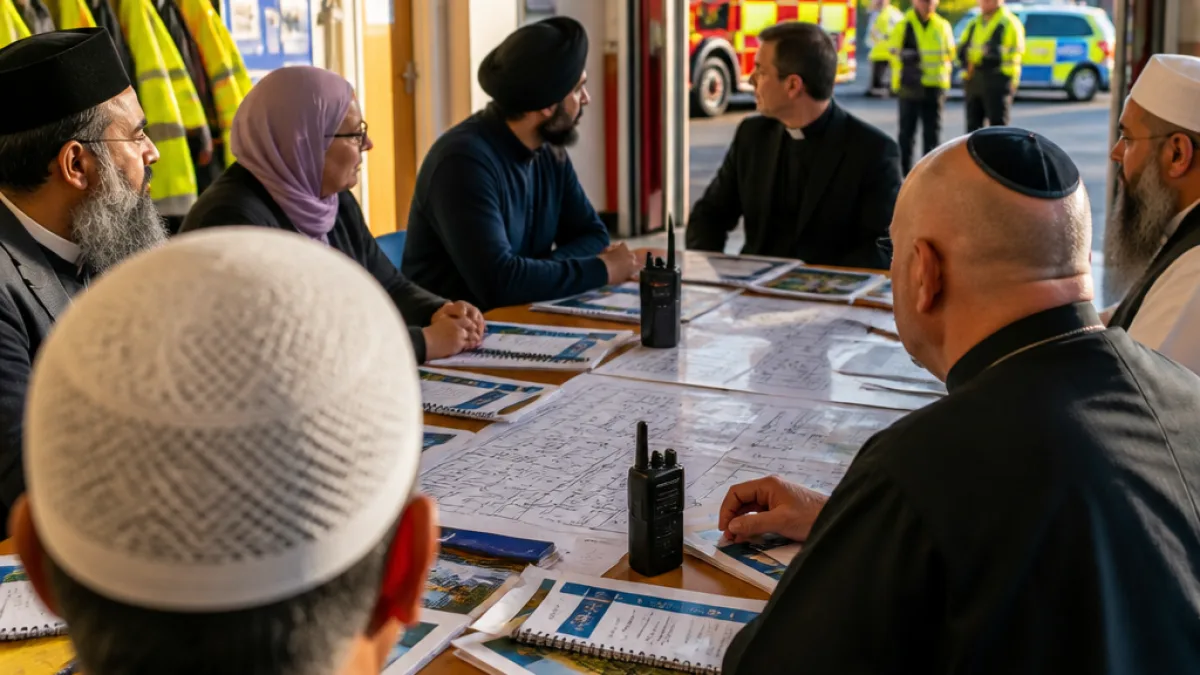
Partners introduce new guidance to protect places of worship in Luton
Faith leaders, community representatives, Luton Borough Council, Bedfordshire Police, Bedfordshire Fire and Rescue Service and local security provider AEGIS convened in Luton for a workshop aimed at improving the safety and preparedness of mosques, churches, synagogues, temples, gurdwaras and other faith settings.
The event focused on practical measures to protect congregations and buildings from a range of risks while maintaining the inclusive, community‑facing role that places of worship play in the town. Organisers said the new resource draws on national best practice, government guidance, emergency services expertise and the experience of faith organisations themselves.
Speakers and participants emphasised that there is no specific intelligence of an immediate threat to places of worship in Luton, but described planning and prevention as sensible and proportionate steps in an increasingly unpredictable environment. Discussions centred on roles, relationships and straightforward actions that settings can adopt to increase resilience.
- Identify a dedicated safety lead for each setting to coordinate preparedness and act as a contact point for partners.
- Strengthen relationships with local emergency services to improve response and mutual understanding.
- Review physical security measures for buildings and access arrangements.
- Develop emergency procedures and run drills appropriate to each site and congregation.
- Carry out tailored risk assessments for premises and events, informed by local context.
The workshop introduced an illustrated guidance document, described by organisers as a practical tool rather than a prescriptive checklist. It encourages local communities to adapt recommended measures to the size, location and capacity of each faith setting.
“The time to prepare is when you do not need it. Our faith communities play a vital role in the life of Luton, and it is our responsibility to ensure they have the tools, knowledge and support needed to keep people safe. This is the beginning of an ongoing partnership, not a one-off conversation.”
The quotation was attributed to Sujel Miah, a local faith leader who addressed the gathering. His comments underlined a theme that ran through the workshop: preparedness is most effective when it is collaborative and proportionate to local needs.
What this means for congregations and residents
For congregations, the guidance offers a route to practical steps without imposing uniform standards that may not suit every building or community. For councils and emergency services, the event provided an opportunity to raise awareness of local support available and to encourage early engagement by places of worship on safety matters.
AEGIS, described in briefing materials as a Luton‑based security provider, outlined training opportunities that could be tailored for faith settings. Those present heard that training and exercises can build confidence among volunteers and staff, and improve coordination with police and fire responders should an incident occur.
| Recommended action | Why it matters |
|---|---|
| Designate safety lead | Ensures clear point of contact and responsibility |
| Review building access | Reduces vulnerability while preserving openness |
| Run tailored drills | Improves response and reduces panic in emergencies |
Organisers were keen to stress that the measures are not intended to change the welcoming nature of places of worship in Luton. Instead, the approach promoted by the workshop seeks to balance openness with sensible steps that can protect people and property.
Attendees included representatives from different faith backgrounds, reflecting the diverse religious landscape of the town. The council and emergency services said they will continue to engage with faith organisations to refine the guidance and to support its implementation where required.
While the workshop does not signal the presence of an active threat, it marks a renewed emphasis on local partnership working: building relationships, sharing expertise and making sure that places of worship have clear, proportionate plans to manage incidents should they arise.
As the initiative moves from discussion to delivery, congregations will be watching to see how the guidance is taken up locally and what practical support becomes available for smaller groups and volunteer‑run settings that may lack dedicated safety resources.