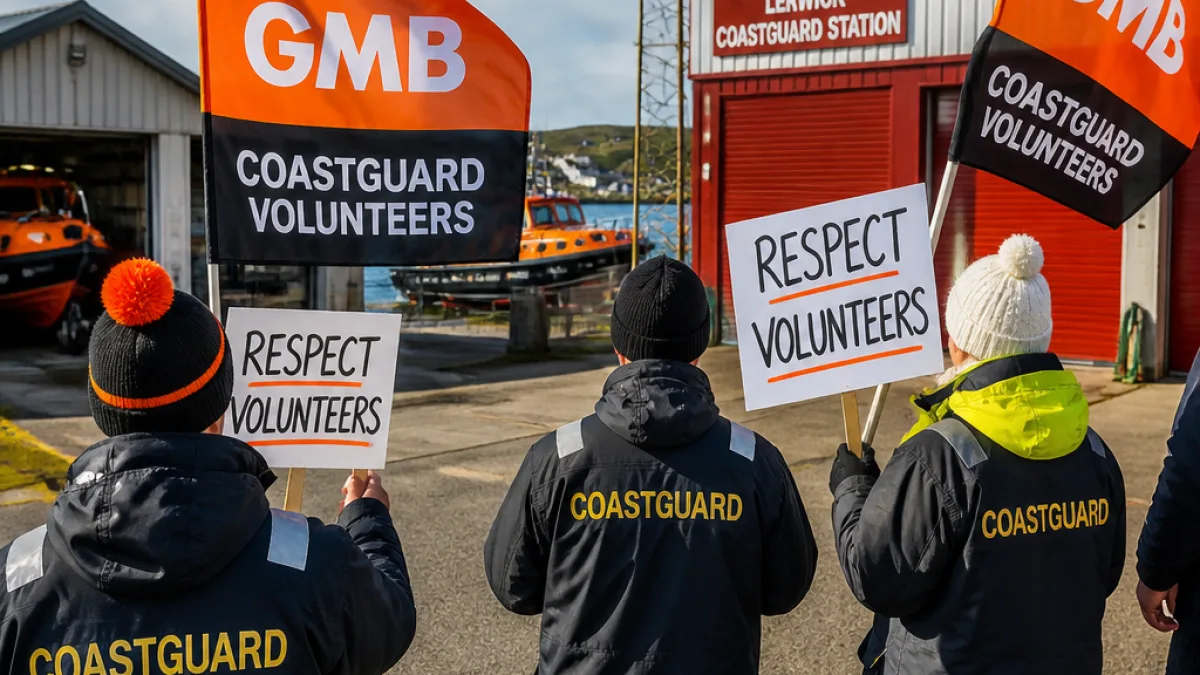
Lerwick’s coastguard team is one of 580 coastguard stations across the UK that have signed a formal expression of no confidence in the leadership of the Maritime and Coastguard Agency (MCA) chief executive, a union campaign has confirmed.
Local team joins national protest over leadership and volunteer payments
The GMB union wrote to the MCA chairman, Lord Stevens, in July to set out its lack of confidence in the conduct of the agency’s chief executive, Virginia McVea. Since that initial communication, signatures from coastguard stations have continued to arrive, bringing the total to 580 stations backing an internal motion of no confidence.
The move follows a separate dispute over a planned change to payments for coastguard rescue volunteers, which had been due to take effect in September. The MCA, which is funded by the UK Government, had intended to stop volunteers claiming around £11 per hour for callouts and attending training exercises. Those planned reductions were paused by the UK Government one month prior to the pause being reported, an outcome described by rescue officers as a "major win".
"These life-saving workers have already told Lord Stevens in no uncertain terms they are unhappy with the chief exec," said GMB national officer Nicola Savage.
In Shetland the proposed changes prompted strong local reaction. Concerns were expressed that the cuts risked "hollowing out a crucial emergency service" and could leave island communities without volunteer coastguard officers. Lerwick’s inclusion among the stations supporting the vote reflects those wider regional anxieties about the future of volunteer rescue provision and the treatment of volunteers.
Union demands and next steps
The GMB has said it has not yet received a response from Lord Stevens to its initial letter. The union has written a further letter to the chairman to formally escalate the concerns raised by coastguard staff and volunteers.
- Expression of no confidence in the chief executive’s leadership;
- An independent review into leadership culture at the MCA;
- Opportunity for staff and volunteers to submit evidence to that review;
- A clear timetable for responding to the concerns raised by coastguard personnel.
GMB has framed the demands as measures necessary to restore trust and ensure the safety and effectiveness of coastguard operations. The union argues that speed and transparency are required to reassure volunteers and the communities they serve.
| Item | Detail |
|---|---|
| Stations signed | 580 |
| Proposed volunteer payment | Approximately £11 per hour (payment pause reported) |
| Key contacts named | Lord Stevens (MCA chairman); Virginia McVea (MCA chief executive); Nicola Savage (GMB national officer) |
Local politicians have also voiced concern. Shetland’s MP, Alistair Carmichael, described the proposed payment changes as "fundamentally disrespectful" to the volunteers who provide vital search and rescue services to island communities. He warned the plans risked leaving islands such as Shetland without the volunteer capacity to respond to emergencies.
For Lerwick and other island stations the dispute is not only about pay but about the sustainability of volunteer services and the relationship between central agency leadership and locally based rescue teams. Volunteer coastguard officers are integral to maritime safety in remote and island communities, where professional resources are often limited by distance and availability.
The GMB has said the union will press for an independent review into the MCA’s leadership culture and for an opportunity for coastguard staff and volunteers to give evidence. How quickly the MCA chairman will respond to the latest correspondence, and whether the agency will agree to the union’s stated demands, remains to be seen.
Meanwhile, the pause on the planned changes to volunteer payments has removed the immediate deadline in September, but it has not resolved the underlying disputes over governance, respect for volunteers and the terms and conditions under which life-saving work is carried out.