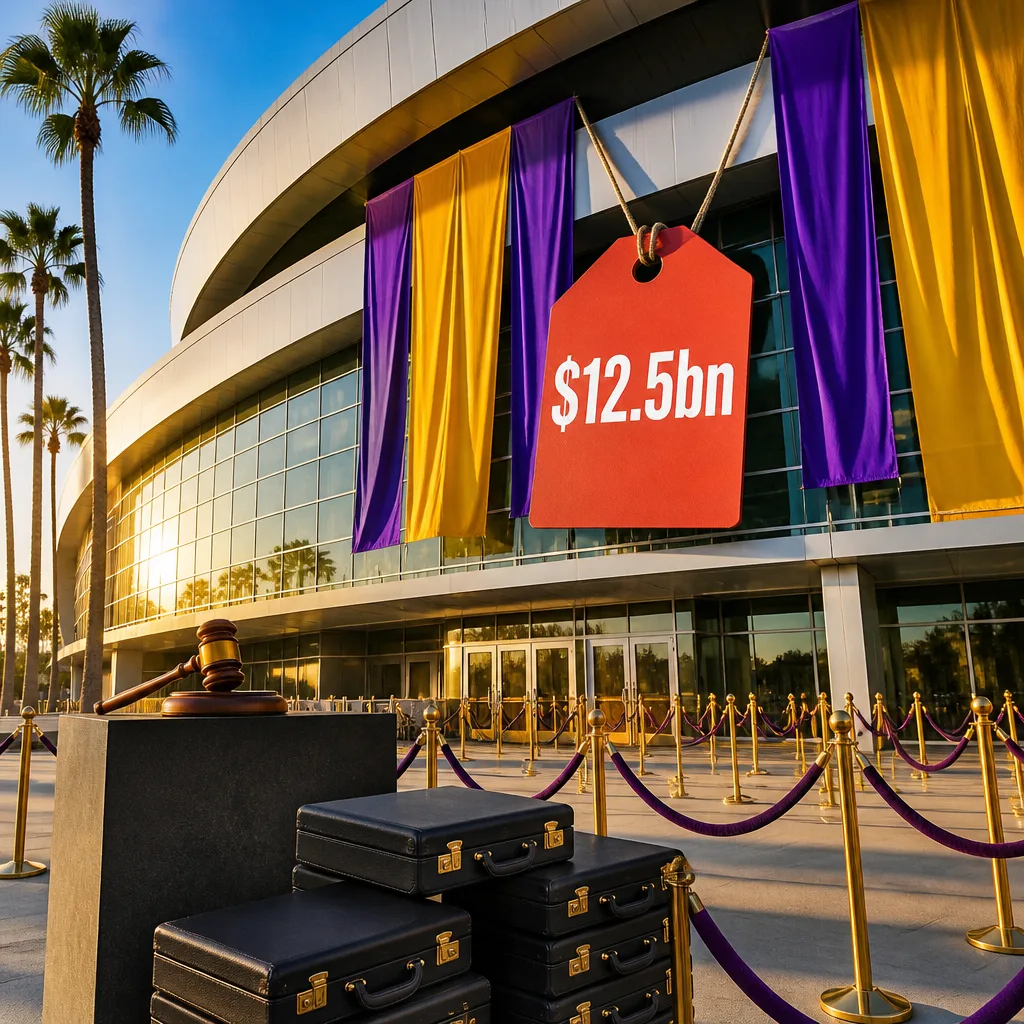
The Los Angeles Lakers are reportedly in line to be sold at a $12.5 billion valuation to former Disney chief executive Bob Iger and investor Joshua Kushner, a transaction that would set a fresh record for the sale of a North American professional sports franchise if approved by NBA owners.
Sky‑high prices reshape ownership landscape
The price tag is further proof that premium pro sports franchises are now the domain of billionaires and institutional investors. The proposed Lakers deal follows a series of eye‑watering sales across the major North American leagues in recent years and comes just 14 months after the team was valued at $10 billion when it was sold to Mark Walter in June 2025.
That turnaround — the same franchise changing hands at vastly different valuations in little more than a year — underlines how quickly the market for elite teams has been accelerating. Even established benchmark sales from the recent past look modest by comparison.
- June 2025 – Los Angeles Lakers: $10.0 billion (sale to Mark Walter)
- April 2025 – Boston Celtics: $6.1 billion (sale to Bill Chisholm, Symphony Technology Group)
- July 2026 – Seattle Seahawks: $9.612 billion (sale by the Paul Allen estate to group led by the Khosla family)
- Historical purchases: Jerry Buss acquired the Lakers for about $68 million in 1979; the Grousbeck family bought the Celtics in 2002 for $360 million; Paul Allen purchased the Seahawks for roughly $200 million in 1997.
Consequences for sport and finance
At valuations now measured in multiple billions, franchise ownership is increasingly treated as an asset class attractive to sophisticated investors. For clubs, the immediate effect is greater capital availability for facilities, brand development and global expansion. For the leagues, higher franchise prices expand TV rights leverage and the appeal to international sponsors.
But the rapid escalation also raises practical questions. Wealthy, sometimes opaque, ownership groups may reshape club priorities; smaller-market teams could find it harder to compete in an environment where capital infusions drive advantage. The steep rise in price points also narrows the pool of prospective buyers to extremely wealthy individuals and institutional players, altering governance dynamics within leagues that rely on owner voting.
| Franchise | Reported valuation | Date |
|---|---|---|
| Los Angeles Lakers | $12.5 billion | Announced 2026 |
| Los Angeles Lakers | $10.0 billion | June 2025 |
| Seattle Seahawks | $9.612 billion | July 2026 |
| Boston Celtics | $6.1 billion | April 2025 |
For fans, the headline figures can seem distant from matchday realities — ticket prices, squad investment and community ties — but there is a clear line from ownership wealth to what a franchise can do on and off the field. Franchise owners now command influence both inside the sporting boardroom and in global media markets.
Market momentum and what to watch next
Approval by NBA owners is the next procedural hurdle for the Lakers transaction. If sanctioned, the deal would not only reset the ceiling for sports franchise sales in North America but also serve as a fresh benchmark when other major clubs and leagues assess their value. Observers will be watching whether this price surge triggers further consolidation, new investment vehicles targeting sports assets, or regulatory scrutiny of ownership structures.
What is undeniable is that, in the span of a generation, the cost of entry to the highest echelons of professional sport has multiplied many times over — a shift driven by media rights, globalisation of fanbases and the crossover appeal of elite sports as prestige assets for the ultra‑wealthy.
The proposed Lakers sale is the latest chapter in that story, and it underlines how the balance between sporting heritage and financial muscle is being rewritten in real time.