
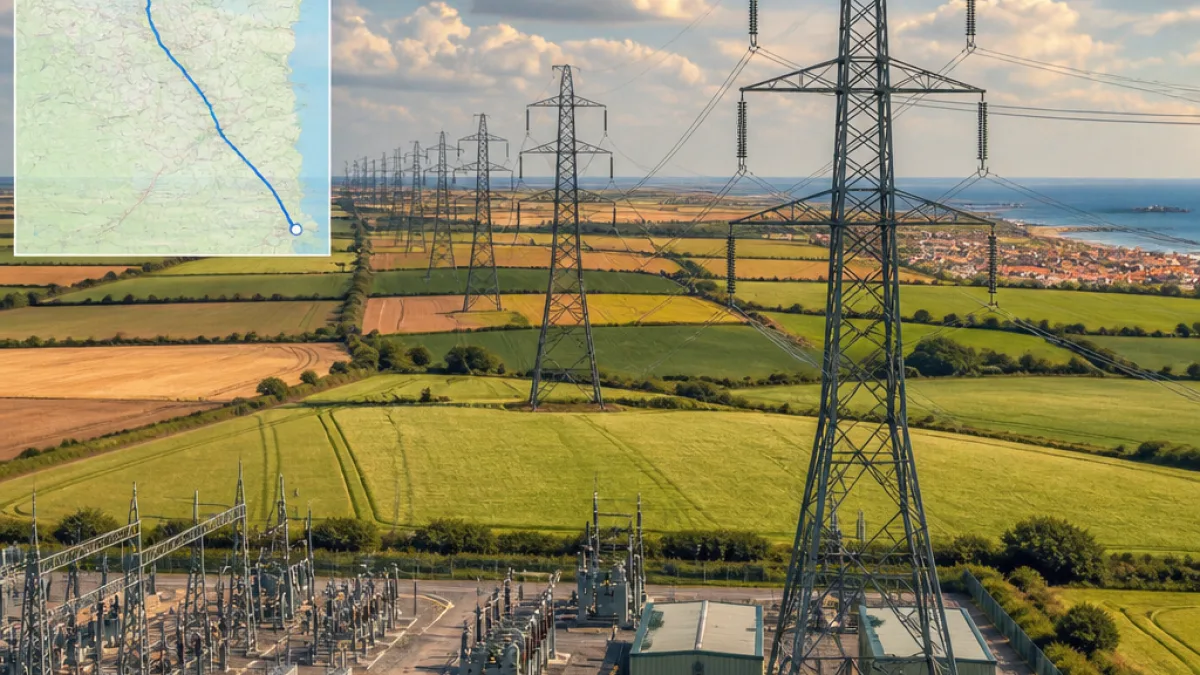
The operator responsible for Britain’s high‑voltage transmission network has set out proposals for a new 140km overhead electricity line between a proposed Grimsby West substation in north‑east Lincolnshire and the Walpole area of Norfolk. The National Grid project, part of a wider national programme to prepare Britain’s network for a surge in demand, would also include up to four new substations along the route.
Why Grimsby is on the map
National Grid says that growing amounts of power from UK offshore wind will need to be carried ashore along the east coast in the years ahead. With electricity demand forecast to double as homes, businesses and transport move from fossil fuels to electricity, the operator argues the network must be strengthened to move cleaner power where it is required.
In published material explaining the proposals for the Grimsby to Walpole route, National Grid describes a process of assessing different engineering options for new transmission: overhead lines, underground cables, offshore connections and upgrades to existing infrastructure. The company emphasises that each option is judged on engineering viability, cost, distance, capacity and delivery speed.
Overhead lines versus other options
National Grid has said it considered offshore and underground alternatives for this corridor but concluded that overhead lines remain one of the most efficient means of transporting large volumes of electricity. According to the operator, overhead lines can carry significantly more power than underground cables and are simpler to deliver in many cases.
The project director for Grimsby to Walpole, Ben Ridgeon, underlined the stated intention to work with local communities. He said the scheme is about strengthening the network while engaging with the people and organisations affected.
“Lincolnshire has an important role to play in the country’s energy future, but that does not mean local views come second,” Ben Ridgeon said. “Our job is to listen, make changes where we can, and make sure this project works as well as possible for the people and places along the route.”
National Grid’s published answers to frequently asked questions stress that decisions on route and technology are not taken lightly and that stakeholders have been given detailed information as plans develop.
Local consequences and concerns
For Grimsby and the surrounding county, the proposals carry multiple implications. The physical presence of an overhead transmission corridor and new substations could affect farmers, landowners and communities along the east‑coast corridor. At the same time, strengthening high‑voltage connections is central to enabling further growth in renewable power generation coming ashore — an outcome National Grid presents as supporting cleaner, more affordable energy.
- Route length: 140km between Grimsby West and Walpole
- New infrastructure: up to four new substations proposed along the route
- Policy context: part of a series of national projects to upgrade Britain’s transmission network
| Item | Detail |
|---|---|
| Proposed route | Grimsby West (north‑east Lincolnshire) to Walpole (Norfolk) |
| Length | 140km |
| Substations | Up to four new substations proposed |
| Driver | Projected doubling of electricity demand; offshore wind connections |
National Grid highlights that it will continue to share detailed information with stakeholders and the public as plans progress. That suggests a series of engagement events and consultations will follow, although specific dates and a delivery timetable have not been published in the material provided to local media.
For residents in Grimsby this is likely to become an important planning and environmental debate: balancing the need to carry substantial volumes of renewable electricity inland with the visual, agricultural and ecological impacts that major overhead lines and new substations can bring to the landscape.
As National Grid develops its proposals, local councils, parish communities, landowners and farmers will be among those expected to scrutinise the route options and press for mitigation measures. The company says it will listen and consider changes where possible to reduce local impacts while meeting national energy needs.
Further details and formal consultations are expected to be made available as the project advances through its planning and consenting stages. For now, the Grimsby to Walpole proposal marks a significant regional piece of the national effort to modernise Britain’s electricity network.















