
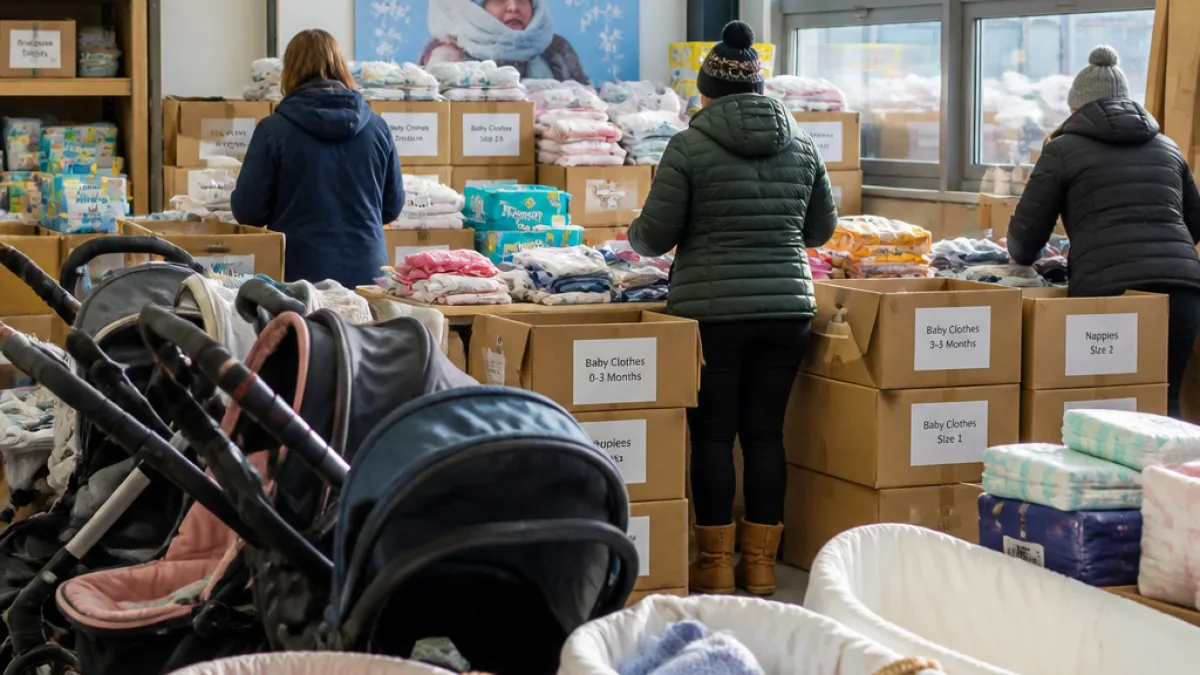
Charity seeks more donations after supporting 550 families since June
Leeds Baby Bank has issued an urgent plea for donations after recording a marked rise in referrals from health and social care professionals. The charity, which provides essentials such as prams, Moses baskets, nappies and clothing to families in need across the city, said it had assisted an "unprecedented" number of households since the start of June.
Founded in 2017 by Chantal Nogbou, the charity will mark its first decade in January and says its caseload and the profile of those seeking help have changed substantially since it began. Staff say the increase in demand has accelerated in recent months and they are bracing for further pressure as winter approaches.
"We get even more people needing help then because they want to put the heating on, but they still need to buy nappies and feed and clothe their child,"
The organisation reports it has supported 550 families in Leeds since June. Volunteers and staff describe the numbers as a stark indicator of the strain many households are under, with needs extending beyond the charity's traditional remit as costs for energy and everyday essentials rise.
Changing profile of need in the city
Leeds Baby Bank says the makeup of families seeking help has altered since it opened. Where once a smaller proportion of children lived in relative poverty, the charity now encounters areas where child disadvantage is much more common.
Chantal Nogbou told reporters she had seen a "massive increase" in referrals and highlighted the prevalence of working parents among those helped. According to the charity, around 70% of the children they support have at least one parent in paid employment—underlining that work is not always providing adequate security against financial shock.
- Founded: 2017
- Families helped since June: 550
- Proportion of children helped with a working parent: about 70%
Regional context and consequences
Government statistics cited by the charity show that 27% of children in the Yorkshire and Humber region live in relative low income families—the joint highest proportion in England alongside the West Midlands. A relative low income family is defined as one living on less than 60% of the median national household income for that year.
Those figures, combined with the Baby Bank's reported rise in referrals, suggest pressure points across Leeds that could influence public services and community support networks as demand rises for basics such as nappies and clothing.
| Metric | Value |
|---|---|
| Families helped since June | 550 |
| Children helped with a working parent | ~70% |
| Children in relative low income (Y&H) | 27% |
Charity workers warn that, while donations and volunteers have been vital, they are stretched when referrals rise quickly. As winter approaches, many families may be forced to choose between heating and key items for infants—nappies, clothing and safe sleeping equipment—making the Baby Bank's stock and funding more critical.
Leeds Baby Bank's appeal illustrates a broader challenge for the city: how to ensure families with young children can access basic items without falling into crisis, even when at least one adult in the household is in work. Local healthcare professionals and social workers are among those who refer families to the charity, which acts as a frontline responder to immediate material need.
The charity's call is straightforward: increased public donations of baby essentials and financial support will help it meet present need and prepare for the additional demand winter typically brings. Without those contributions, staff fear they will struggle to maintain the level of assistance currently being provided.
For Leeds residents, the situation is a reminder that child poverty and household hardship are not abstract statistics but factors shaping day-to-day life in communities across the city.















