Women in Scotland are being let down by major inequalities in the diagnosis and treatment of long‑term conditions, leading to avoidable deaths and poorer outcomes, Chest Heart & Stroke Scotland (CHSS) has said as it launched a three‑year plan to tackle gaps in prevention, detection and support.
Evidence of disparity
The charity highlighted several stark differences in how women and men experience care for cardiac, stroke and respiratory illnesses. Among the figures cited by CHSS:
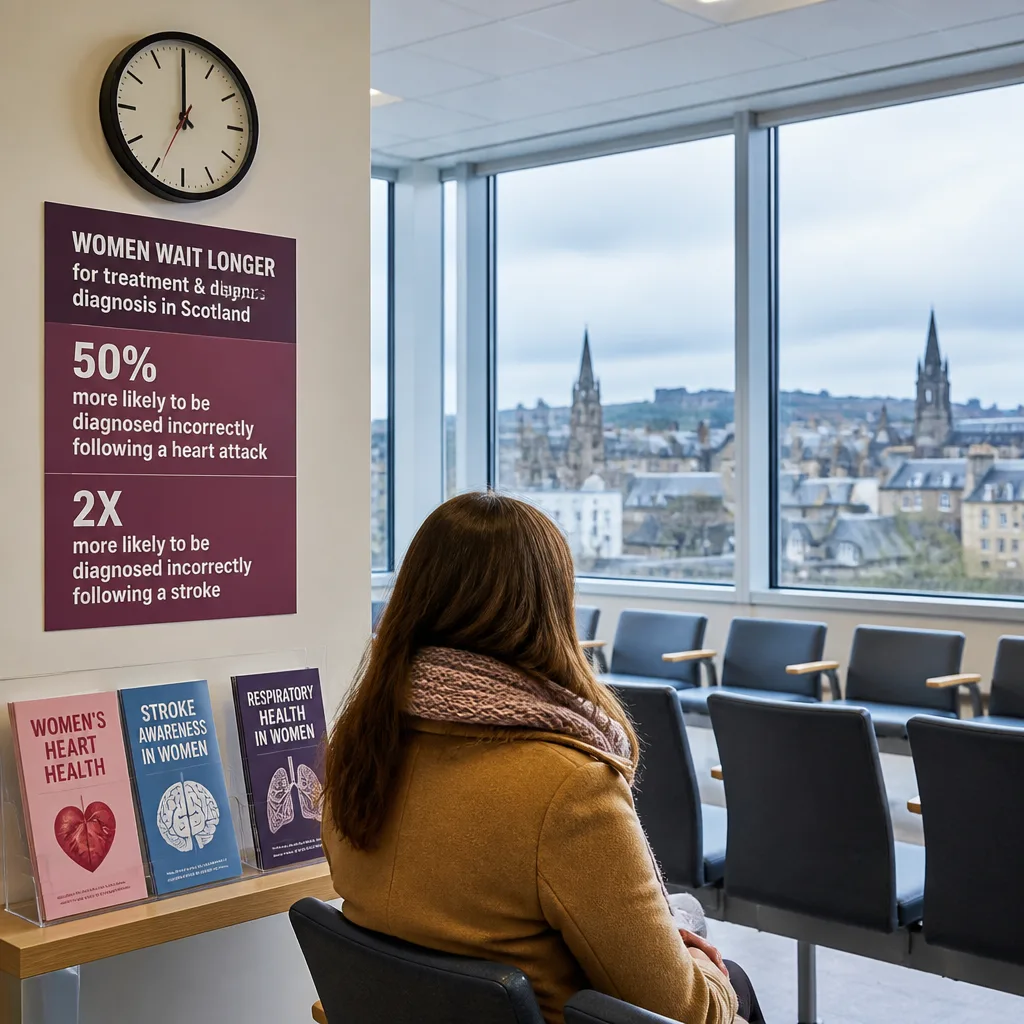
- 50% — the charity's estimate that women are half again as likely as men to be misdiagnosed after a heart attack.
- Women are reportedly twice as likely as men to be misdiagnosed with heart failure across the UK.
- Average time to diagnosis for heart failure is cited as 20 weeks for women versus 3.6 weeks for men.
- Each year in Scotland there are more than 4,600 strokes among women and in excess of 1,200 deaths from stroke.
- Asthma and chronic obstructive pulmonary disease are said to be more common in women, who are described as nearly twice as likely to die from asthma than men.
CHSS also reported that women are less likely to receive diagnostic tests within 72 hours of a heart attack and less likely to be prescribed secondary‑prevention medicines intended to lower the chance of a further cardiac event.
Charity plan and calls for change
In response, CHSS published a Women's Health Plan for 2026–2029 that sets out actions on prevention, early detection, women‑specific information, peer support and professional training. The charity said it will campaign for stronger policy commitments, increased funding and for women to be better represented in medical research.
"Women have been telling us for years that their symptoms aren’t being taken seriously, and the evidence backs them up,"
The charity's chief executive described the plan as a way of translating lived experience into practical measures to improve awareness and access to appropriate care. CHSS emphasised that discussions about women's health must extend beyond reproductive and maternal issues to encompass chronic cardiorespiratory conditions and Long Covid.
Context and limitations
The figures released by CHSS raise urgent questions for clinicians and policymakers about diagnostic pathways, referral thresholds and the design of clinical trials. Evidence from the broader literature shows that sex and gender can influence symptom presentation, comorbidity patterns and responses to treatment, but the exact causes of the disparities reported here are multifactorial and require careful investigation.
CHSS's publication is primarily a policy and campaigning document; it collates charity data and experience rather than presenting new peer‑reviewed research. That distinction is important: the statistics signal systemic problems that merit independent audit and targeted research to determine causation, quantify attributable risk and identify effective interventions.
Potential consequences and next steps
If the disparities persist, women could continue to experience avoidable harm and worse long‑term outcomes for conditions that are largely treatable if diagnosed promptly. The charity's plan seeks to influence practice and policy through:
- training for health professionals on sex and gender differences in presentation and diagnosis;
- improving timely access to diagnostic tests and evidence‑based medications for women;
- advocating for greater inclusion of women in clinical research to ensure treatments are tested across populations.
Health boards, clinicians and the Scottish Government will face pressure from campaigners and healthcare bodies to respond. The CHSS call to action adds to wider demands for faster progress on women's health equity across Scotland.
| Measure | Reported disparity |
|---|---|
| Misdiagnosis after heart attack | Women 50% more likely than men |
| Heart failure misdiagnosis (UK) | Women twice as likely as men |
| Average wait for heart failure diagnosis | Women 20 weeks, Men 3.6 weeks |
| Annual strokes in women (Scotland) | 4,600+ |
| Annual stroke deaths in women (Scotland) | 1,200+ |
Further independent analysis is needed to verify the numerical estimates and to understand how much of the excess risk is attributable to diagnostic delays, treatment differences, biological factors or social determinants of health, including access to care. Policymakers should treat CHSS's plan as a prompt for evaluation and targeted action to reduce inequalities in care.