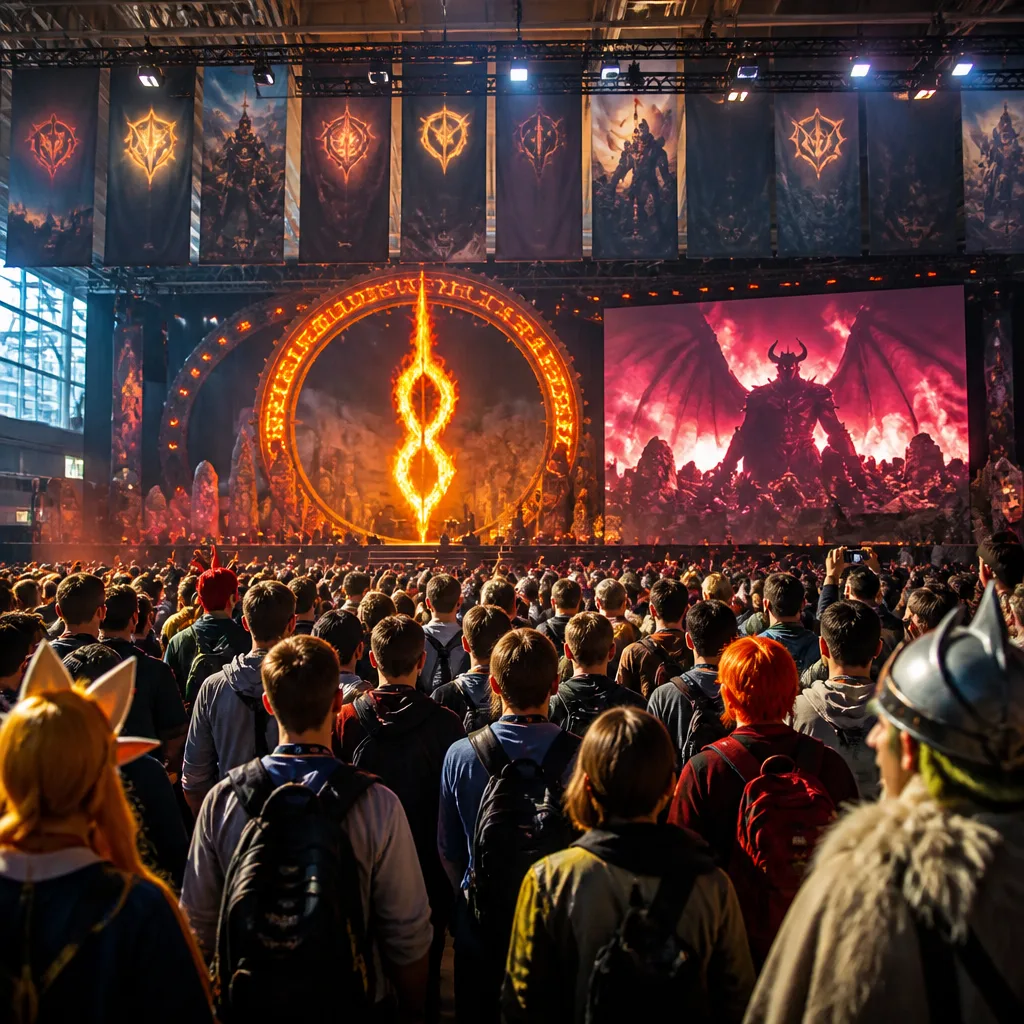
Blizzard Entertainment used the return of its BlizzCon fan convention to declare what many in Hollywood and gaming have long expected: the studio intends to become a major player in film and television as well as video games. During the event’s opening address, Blizzard President Johanna Faries confirmed the company is developing an animated Diablo series with Netflix, signalling a fresh push to convert the publisher’s longstanding franchises into screen projects.
From shrine to screen: why IP matters
The announcement came before a packed hall of fans and a much larger online audience. BlizzCon, held this year at the Anaheim Convention Center after a three‑year hiatus, had been expected to attract about 40,000 attendees across two days, and roughly 7,000 were present in the opening ceremony hall when Faries unveiled the Netflix plan. The move makes sense in an era when streaming platforms are voracious for proven intellectual property: video games arrive with established worlds and devoted audiences, reducing the risk for content buyers.
“Diablo” itself is a particularly potent asset. Over three decades the franchise has amassed a global player base exceeding 130 million, a figure Faries invoked to make the case that Blizzard’s characters and settings can attract sizeable non‑gaming viewers as well. The Netflix partnership appears to be the spearhead for a broader strategy: Faries said the initiative is not limited to a single title, and that discussions about adaptations for other Blizzard properties were underway.
“To our ‘Overwatch’ community, to our ‘Warcraft’ community,” she said, “Just know that there are great discussions being had.”
The comment, delivered onstage, underlines how Blizzard plans to leverage multiple franchises rather than one‑off projects. Since taking the helm in 2024, Faries has emphasised a vision of “entertainment with a capital E,” signalling a corporate pivot from being primarily a games company to a multi‑platform content house involved in production and licensing.
Industry implications and fan dynamics
The announcement will be watched closely in Los Angeles and London by producers and streamers who have increasingly looked to gaming IP for tentpole series and films. For Blizzard, partnerships with established studios — Netflix being the most visible example so far — offer access to distribution muscle and production expertise, while granting platforms a ready‑made audience.
That mutual attraction carries both upside and risk. On one hand, a well‑executed adaptation can amplify a franchise’s cultural reach and open new revenue streams. On the other, long‑term fans can be unforgiving if adaptations stray from the source material. The onus will be on Blizzard and its partners to balance fidelity with the storytelling demands of a different medium.
- Confirmed project: Netflix animated series based on Diablo.
- Audience figures mentioned: ~40,000 expected BlizzCon attendees; ~7,000 present at the opening ceremony; Diablo has 130 million players historically.
- Leadership: Johanna Faries, Blizzard President since 2024, driving expansion into film and TV.
The fans at Anaheim made their enthusiasm clear when the news was announced, cheering loudly and filling viewing areas across the convention centre and online streams. That reaction will be reassuring for executives who prize demonstrable demand when allocating development budgets.
What to watch next
Details about the Diablo series — including creative teams, episode counts and production timelines — were not released during the opening speech. Nor were agreements for adaptations of other properties confirmed beyond the implication of active conversations. Nevertheless, the announcement sets a roadmap for how Blizzard may pursue future projects: high‑profile partnerships, selective use of its most recognisable IP, and an emphasis on multi‑platform visibility.
| Item | Figure |
|---|---|
| Expected BlizzCon attendance | 40,000 |
| Opening ceremony crowd | 7,000 |
| Historical Diablo players | 130 million |
For fans of Blizzard’s worlds, the shift to television is both an invitation and a warning: the company is open for business beyond games, but success will depend on craftsmanship as much as on the weight of its brands. For the entertainment industry, it is a reminder that the next wave of screen adaptations will increasingly come from places that, until recently, were considered strictly gaming ecosystems.