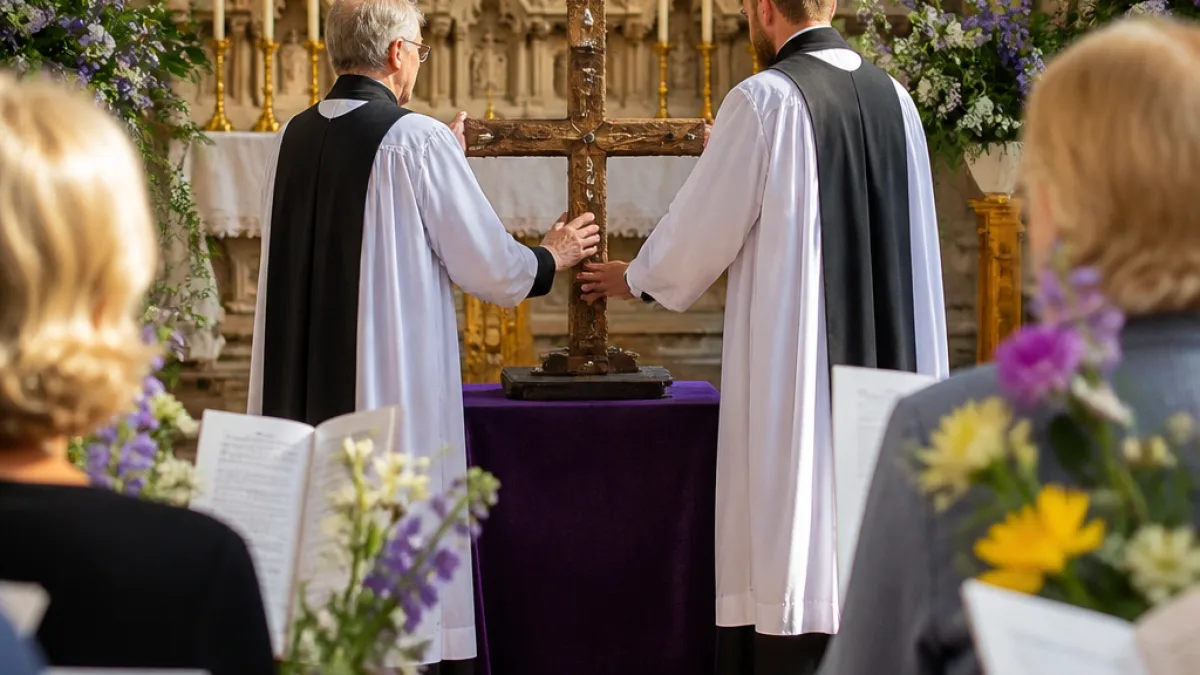
Bangor congregation marks a century and a half of service
Members of the Mothers’ Union from across North West Wales gathered at Bangor Cathedral on Sunday 9 August to celebrate the organisation’s 150th anniversary and the admission of the Diocese of Bangor Mothers’ Union to the Community of the Cross of Nails.
The service fell on Mary Sumner Day, the date every year when people connected with the Mothers’ Union recognise the charity’s founder, Mary Sumner. The event in Bangor combined celebration with a clear focus on reconciliation and peacebuilding, themes that have become central to the charity’s work locally and internationally.
Admission into a global network
During the service, the Diocese of Bangor Mothers’ Union was formally admitted into the Community of the Cross of Nails, a worldwide network of churches, charities, chaplaincies and schools that grew from the post-war reconciliation work of Coventry Cathedral. The original Community of the Cross of Nails emerged after the cathedral’s destruction in the Second World War and has since concentrated on healing historical wounds and promoting justice and peace.
The Mothers’ Union’s central charity itself became a member of the Community of the Cross of Nails in 2018. The new admission for the Diocese of Bangor reflects that national link being expressed across church life in this part of Wales.
Symbol presented and placed in the cathedral
Canon Kate Massey from Coventry Cathedral acted as guest preacher and presented the Cross of Nails during the service. The cross will be placed in Bangor Cathedral for visitors and worshippers to use as a focal point for prayer for peace and reconciliation.
The Very Revd Dr Manon Ceridwen James, Dean of Bangor Cathedral and Bishop-elect of Bangor, said the placement of the cross would be a continuing reminder of shared responsibilities to pray and to work for healing where there is division.
"The Mothers’ Union has spent 150 years turning faith into practical care for families and communities. Joining the Community of the Cross of Nails is a natural expression of that commitment," the Dean said.
Local leadership and national connections
Sue Rivers, President of Mothers’ Union in Wales, described the Cross of Nails as an "inspirational symbol" of forgiveness and peace and expressed her delight at the Diocese of Bangor joining the community.
The admission highlights how a long-standing local charity is linking its practical work for families with wider efforts to promote reconciliation. For Bangor, the cross will be both a devotional object and a visible sign of the cathedral’s engagement with international networks of healing and justice.
- Event: 150th anniversary service of Mothers’ Union (Mary Sumner Day)
- Location: Bangor Cathedral
- Key moment: Admission of Diocese of Bangor Mothers’ Union to Community of the Cross of Nails
- Presenter: Canon Kate Massey (Coventry Cathedral)
- Notable figures present: Sue Rivers (President, Mothers’ Union in Wales); The Very Revd Dr Manon Ceridwen James (Dean of Bangor Cathedral)
| Item | Detail |
|---|---|
| Anniversary | 150 years |
| Date | Sunday 9 August |
| Network joined by central MU | Community of the Cross of Nails (joined in 2018) |
For many in the congregation, the event was both an opportunity to remember the Mothers’ Union’s origins and to signal its present priorities. The organisation, founded in 1876 by Mary Sumner, has long combined faith with practical support for families; the new Cross of Nails placement will extend that witness into areas of reconciliation and peacebuilding.
Locally, members said they hoped the cross’s presence in the cathedral would encourage pilgrims and visitors to pause and pray, and to consider how the Mothers’ Union’s concern for families meets the wider need for community healing. The symbolic gesture adds a new layer of meaning to Bangor Cathedral’s role as a spiritual and civic space in the city.
As Bangor continues to host events that link local history with international networks, the Mothers’ Union’s anniversary service underlined how small communities can remain connected to global movements for forgiveness and justice while continuing their everyday practical work in families and neighbourhoods.