Saharanpur consumers and small investors considering silver purchases should be aware that published daily rates are benchmarks and the final retail price often differs because of additional charges, purity differences and regulatory aspects, BusinessToday.in reported. The explainer clarifies how silver purity is expressed, what adds to showroom bills and the alternatives to holding physical metal.
How purity is defined and what it means for buyers
Silver purity is normally expressed as fineness, showing the parts of pure silver per 1,000 parts of alloy. BusinessToday.in noted common grades used in jewellery and coinage, which affect both appearance and price.
- Fine silver (.999) — 99.9% pure, often sold as bullion or high-purity items.
- Britannia silver (958) — 95.8% silver content, historically set as a higher standard than sterling.
- Sterling silver (925) — 92.5% silver and 7.5% other metals (typically copper); most common for jewellery and household items.
- Coin silver (900) — 90% silver, historically used in coins.
| Grade | Fineness |
|---|---|
| Fine silver | 999 (99.9%) |
| Britannia | 958 (95.8%) |
| Sterling | 925 (92.5%) |
| Coin silver | 900 (90%) |
Why showroom prices differ from the daily benchmark
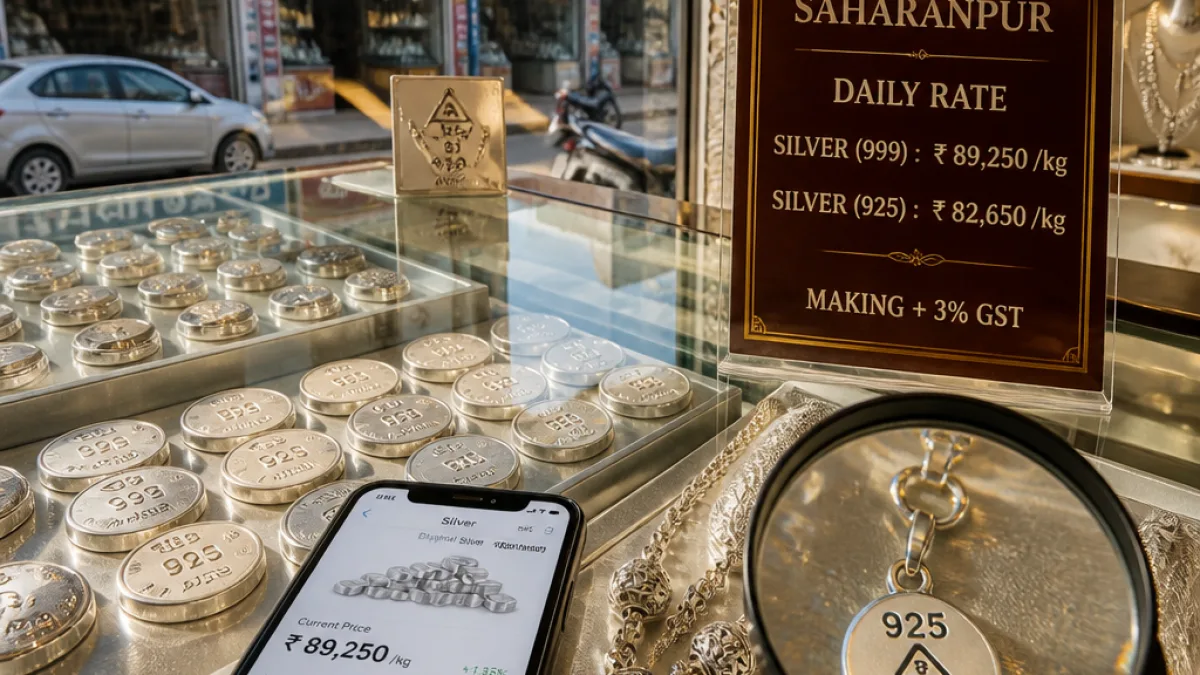
According to the report, the displayed daily silver price should be treated as a base rate. The final amount payable at a jeweller or showroom usually includes:
- Making charges — variable fees for design and workmanship; these differ widely by product and retailer.
- 3% GST — Goods and Services Tax applied on the final calculation as noted in the explainer.
- Stone deductions — for studded jewellery, the weight of embedded stones is excluded from net silver weight when computing price.
"The daily silver rate you see online is just a benchmark. The final showroom price will always be higher due to the following additions," BusinessToday.in reported.
Authentication: hallmarking and identification
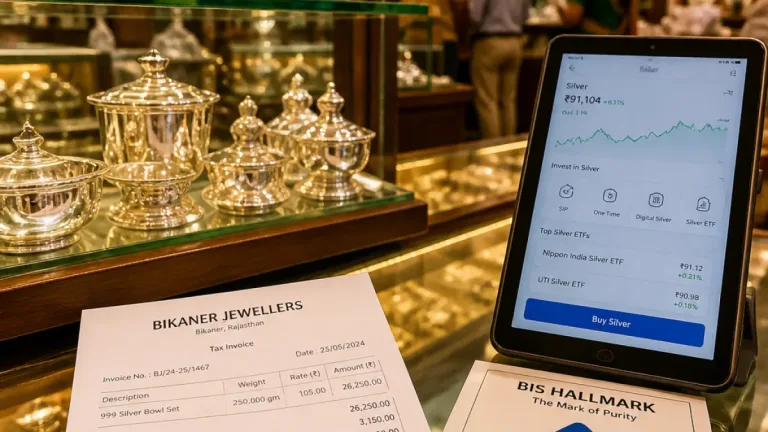
Buyers in Saharanpur are advised to verify authenticity before purchase. The report recommends checking for the BIS hallmark and the purity grade stamp (for example, 925 or 999), which indicate the declared fineness. Some items may also carry a HUID code; BusinessToday.in said HUID use is more standardised for gold, and less uniformly applied for silver.
Paper and digital alternatives to physical silver
For those who prefer not to handle, store or pay making charges on physical silver, the report outlined alternatives:
- Digital silver — platforms allow purchase and holding of silver without taking physical delivery; however, BusinessToday.in noted these are not regulated by SEBI and flagged potential concerns around transparency, pricing and investor protection.
- Silver ETFs and funds — exchange-traded funds or fund-of-funds that track silver prices and trade on stock exchanges, providing a way to buy and sell exposure like a security.
What this means for Saharanpur residents
For consumers in Saharanpur seeking to buy jewellery or invest, the distinction between benchmark price and retail price is key. Check the stated fineness on any item, insist on BIS hallmarking where applicable, get clarity on making charges, and confirm how stone weights are treated in the final calculation. Those considering non-physical routes should weigh the convenience against regulatory and transparency concerns highlighted by BusinessToday.in.
Shoppers and small investors who want the latest 1 kg or per-gram silver rate for Saharanpur should consult live market feeds or the cited BusinessToday.in page for up-to-date benchmarks before transacting and factor in the additions described above.