Heritage in practice: an overview
The folk arts of Dadra and Nagar Haveli and Daman and Diu comprise a mosaic of tribal traditions, coastal customs and colonial-era influences that remain visible in everyday life, festivals and public architecture. The region's cultural repertoire includes Warli painting, a variety of tribal dances, traditional music, indigenous handicrafts and Portuguese-style buildings that together convey the historical layering of the Union Territory.
Warli painting: a tribal visual language
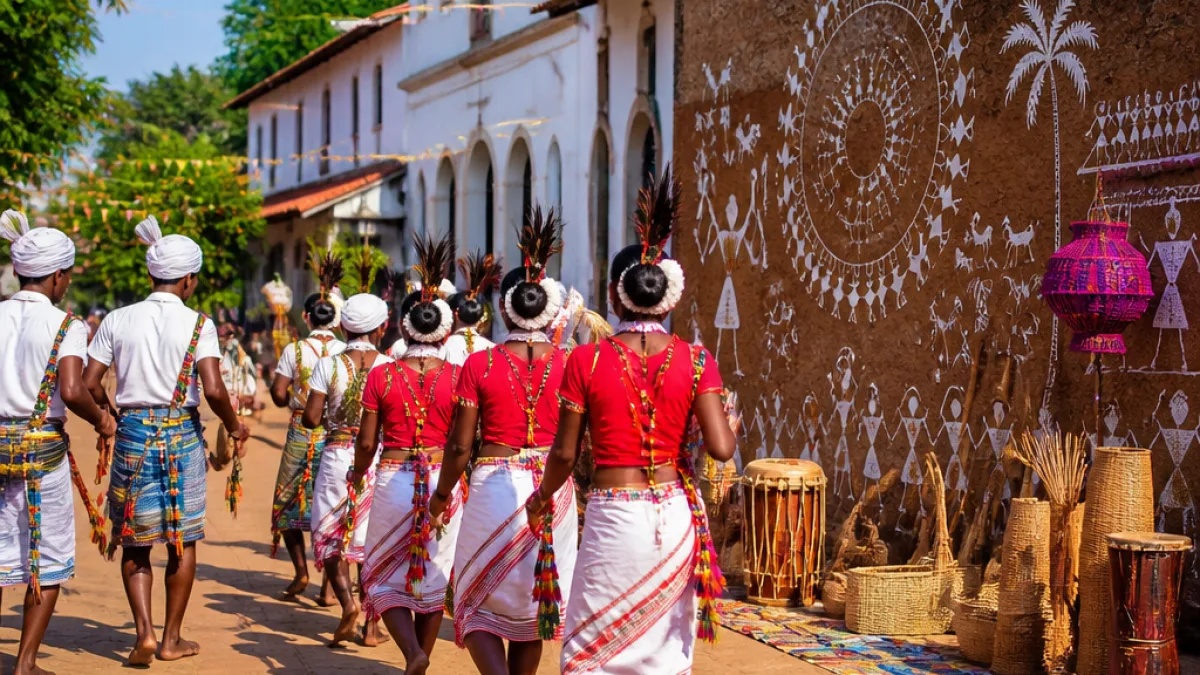
Warli painting — practised by communities in and around Silvassa — stands out as the best-known visual tradition in the territory. Originating in the North Sahyadri ranges of Maharashtra, the style is characterised by simple geometric forms and figures rendered largely in white pigment made from ground rice on an ochre or mud base.
Traditional themes are symbolic and repetitive. Common motifs depict marriage rituals, harvest scenes and community ceremonies; the marriage god is often represented symbolically and processions may be shown through animals such as horses. Historically, the compositions were created without straight lines, relying instead on dotted or dashed strokes; contemporary makers increasingly adapt the technique to paper, cloth and large murals, and sometimes introduce modern objects such as bicycles into the narrative.
Dance, music and craft traditions
The Union Territory's tribal communities — including the Warli, Kokna, Dhodia, Kathodi and Koli — maintain a lively repertoire of folk dance and music that is closely tied to seasonal festivals, weddings, harvests and religious observances. Coastal settlements in Daman and Diu also reflect Gujarati and Saurashtrian influences, adding further regional variety to musical forms and ritual practice.
Handicrafts produced locally serve both functional and ceremonial purposes. Craftspeople work with materials and motifs connected to daily life, producing items used in rituals as well as souvenirs for visitors. These crafts sustain livelihoods and help transmit traditional skills across generations.
Colonial imprint: Portuguese architecture
Portuguese influence in Daman and Diu is visible in the built environment. Churches, forts and residential structures carry architectural details that distinguish the coastal settlements from the inland tribal areas. This colonial-era architecture coexists with indigenous forms, creating a distinctive visual contrast within the Union Territory.
Where arts meet occasion
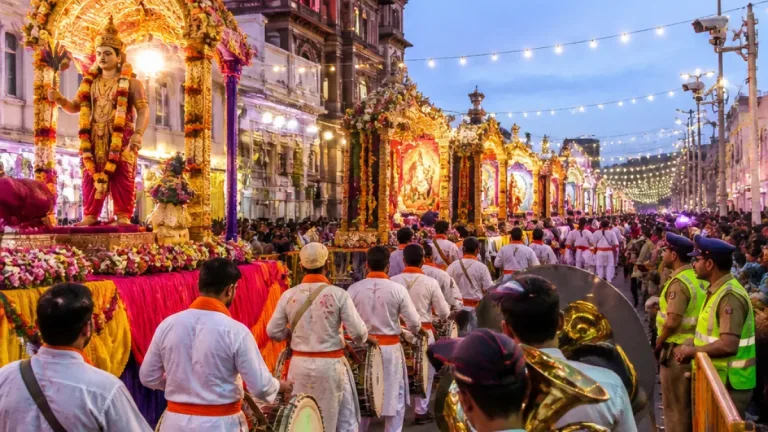
Folk arts here are not confined to galleries. They are integral to rites of passage and community gatherings — woven into marriage ceremonies, harvest festivals and local religious events. The performative arts, visual motifs and crafts function as social glue, reinforcing group identity while marking seasonal time and life-cycle transitions.
Contemporary shifts and continuities
While many practices remain rooted in tradition, contemporary pressures and opportunities are shaping how arts are produced and consumed. Artists and artisans increasingly move beyond walls of homes and village spaces to create on paper, cloth and public surfaces. This shift can broaden markets and visibility, but it also raises questions about material authenticity and the commercialisation of ritual motifs.
| Art form | Key features | Context |
|---|---|---|
| Warli painting | White rice pigment, geometric figures, mud/ochre base | Rituals, weddings, murals; now on paper and cloth |
| Tribal dances & music | Community performances, seasonal themes | Harvests, festivals, life-cycle ceremonies |
| Handicrafts | Functional and ceremonial objects, local materials | Local use and sale to visitors |
| Portuguese architecture | Churches, forts, colonial residential styles | Daman and Diu coastal settlements |
Practical implications for residents and visitors
- Local festivals and weddings are primary occasions to witness live performance and communal arts in context.
- Silvassa remains a focal point for Warli practitioners; visitors seeking authentic examples should look for village murals and community events rather than only retail outlets.
- Purchasing crafts directly from artisans supports livelihoods and helps sustain traditional skills.
Preservation and living culture
Preserving these art forms requires attention to both material practice and the social settings that give them meaning. Sustaining craft economies, providing platforms for community performances and recognising craftspeople as cultural bearers are measures that can help protect the territory's living heritage. At the same time, adaptive change — such as the use of new supports and markets — may offer routes to economic resilience while altering how traditions are expressed.
The folk arts of Dadra and Nagar Haveli and Daman and Diu therefore represent a continuing conversation between past and present: ritual practice and everyday life, tribal traditions and coastal influences, and vernacular forms alongside colonial legacies. For residents and travellers alike, the territory's cultural expressions offer a direct way to engage with its history and social life.