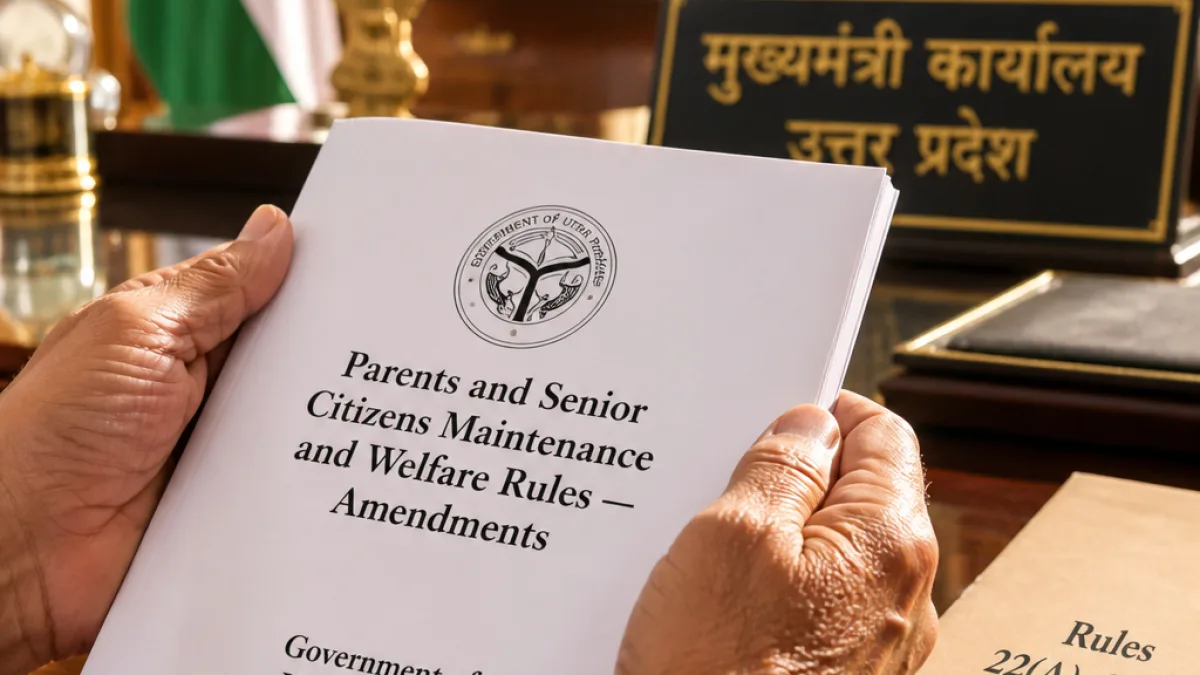
The Uttar Pradesh Cabinet on August 25 approved amendments to the Parents and Senior Citizens Maintenance and Welfare Rules, 2014, inserting three new provisions that state officials say will strengthen legal protection for ageing parents and other senior citizens in the state.
What the amendment does
The Cabinet cleared the insertion of Rules 22(A), 22(B) and 22(C) after the existing Rule 22 in Chapter Six of the rulebook. According to the Cabinet note, the changes are intended to close gaps identified by the Thirteenth Report of the Seventh State Law Commission and to make the maintenance framework more effective.
Officials said the revised rules will:
- Provide sharper legal protection against neglect and ill‑treatment of senior citizens;
- Allow elderly parents to seek eviction of children or other relatives from the parent’s property if those relatives fail to provide maintenance or subject the parent to abuse;
- Authorise the Chief Minister to take further decisions, in consultation with concerned departments, for phased implementation and refinement of the scheme.
Background and legal context
The amendments build on the central Maintenance and Welfare of Parents and Senior Citizens Act, 2007, which made maintenance a statutory obligation for children and legal heirs and created tribunals empowered to order maintenance. The state rules of 2014 framed the procedures and operational details under the Act for Uttar Pradesh.
State officials said the Law Commission report identified lacunae in the existing rules that could impede timely redressal and effective enforcement. The Cabinet decision follows those recommendations and aims to strengthen administrative and legal instruments to uphold the dignity of elderly persons.
Implications for families and property rights
The most consequential provision cited in the Cabinet note allows a senior citizen to seek eviction of children or relatives from the parent’s own property where those relatives refuse to provide maintenance or are responsible for abuse. Legal experts say such a measure shifts the emphasis from passive maintenance claims to active restoration of the senior citizen’s control over residential premises.
Implementation of eviction powers will require tribunals or district authorities to adjudicate competing claims, assess maintenance obligations and determine whether eviction is a proportionate remedy. The Cabinet has authorised the Chief Minister to consult departments and issue implementation directions — a move that gives the administration flexibility to frame procedural safeguards and appellate mechanisms without returning to full Cabinet for each change.
Practical steps and enforcement
Officials did not specify a timeline for notification of the amended rules or the exact procedural route for eviction and maintenance proceedings. They said the government will consult the departments of social welfare, law and revenue to operationalise the new provisions.
A schematic view of the decision:
| Element | Effect |
|---|---|
| New Rules 22(A)–22(C) | Stronger safeguards; eviction powers for senior citizens in specified cases |
| Authority to Chief Minister | Power to take further decisions on implementation in consultation with departments |
| Legal basis | Builds on Maintenance and Welfare of Parents and Senior Citizens Act, 2007 |
Stake and expected outcomes
Uttar Pradesh, with its large elderly population, faces social and administrative challenges in ensuring timely maintenance, healthcare access and protection from abuse. The state note accompanying the amendment framed the move as an attempt to help senior citizens "live with dignity" and to deter atrocities and neglect by family members.
Observers say the new provisions could lead to more claims before maintenance tribunals and district authorities, and could require bolstering of legal aid and social welfare outreach to ensure elderly persons can access the remedies on offer.
Next steps
The Cabinet has empowered the Chief Minister to make further decisions regarding roll‑out. Departments are expected to draft implementation guidelines, and the state may issue notifications and circulars setting out procedural timelines, jurisdictional rules and the powers of district authorities and tribunals under the amended rules.
How rapidly and effectively the changes translate into on‑ground relief for the elderly will depend on administrative capacity, tribunal functioning and the government’s willingness to invest in support systems such as legal assistance, shelter arrangements and monitoring mechanisms for vulnerable seniors.
Reporting from Lucknow.