Ghamasaan, the latest crime drama from director Tigmanshu Dhulia, returns to the Hindi heartland and the world of dacoits and local power brokers, but the film’s brooding atmosphere is not matched by consistently rich character work, according to a review of the ZEE5 release.
Premise and setting
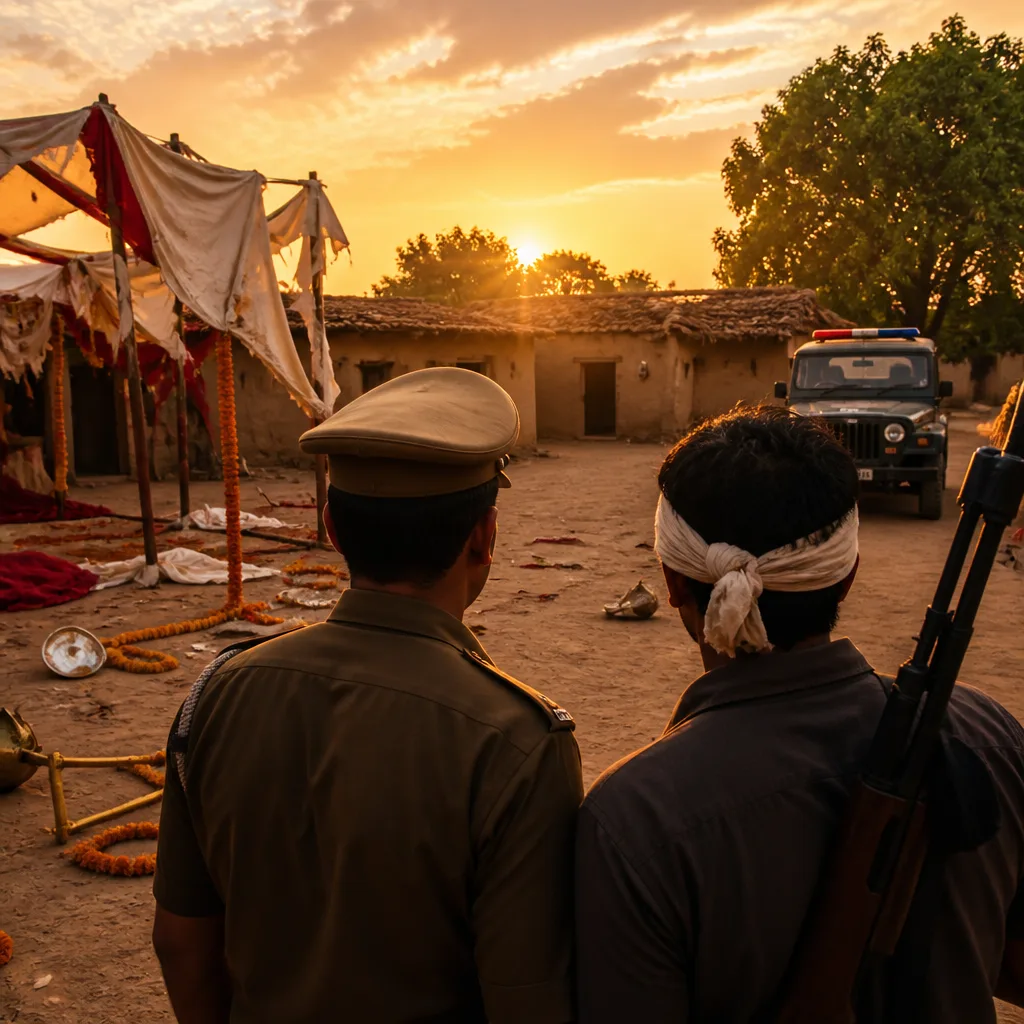
Set against the socio-political milieu of the late 1990s and early 2000s in the Hindi belt, the film stages a cat‑and‑mouse confrontation between a feared outlaw and an earnest police officer. The narrative opens with a wedding scene whose fallout—triggered by the revelation that the groom’s grandfather is a police informer—sets the feud in motion.
The principal confrontation is between Maharaj, portrayed by Arshad Warsi, a dreaded dacoit who commands both fear and influence, and Aditya, an IPS officer played by Pratik Gandhi, tasked with bringing him to account. The plot charts the escalation of violence and the ways in which local political and administrative networks become entangled with criminal power.
"who are the real jan sevaks when almost everyone in the system appears to be serving themselves?"
Strengths: atmosphere and themes
The review highlights the film’s handling of the region’s atmosphere: dusty lanes, armed men, local brokers and the uneasy overlap between formal authority and extra‑legal power. These elements are described as evocative and integral to the film’s strongest sequences.
- Performances: The leads are cited as anchors—Warsi’s menacing presence and Gandhi’s upright officer provide much of the film’s moral counterpoint.
- Setting and authenticity: The depiction of caste, politics and the landscape of rural power is noted as a central achievement.
- Core idea: The moral ambiguity of who serves the public—officials or those who operate outside the law—drives the film’s most interesting moments.
Limitations: pacing and character development
Despite the atmospheric strengths, the film is criticised for uneven screenplay work. At roughly 2.5 hours, the narrative is said to suffer from lapses in pacing and a tendency to underdevelop several characters. These shortcomings reduce the emotional payoff of the central conflict, the review finds.
The screenplay is described as recognising complex, game‑theory like manoeuvres—where alliances and advantages shift—but not always investing enough in individual backstories or motivations to make those shifts feel fully earned. As a result, some sequences that might have built tension instead diffuse it.
| Aspect | Assessment |
|---|---|
| Atmosphere | Strong |
| Lead performances | Compelling |
| Screenplay and pacing | Uneven |
| Character depth | Underdeveloped |
Context and implications
Ghamasaan continues Dhulia’s long engagement with rural crime and the interface between violence and governance. The film looks to interrogate how local power structures operate and to what extent traditional institutions—police, politicians—are compromised by patronage and fear. While the thematic intent is clear, the review concludes that the delivery is mixed, leaving the film short of its full potential.
The title releases on ZEE5, bringing the director’s portrayal of dacoit‑era conflict to a streaming audience. The review assigns the film a rating of 2 out of 5, signalling that its merits in atmosphere and central performances are tempered by structural weaknesses in storytelling.
The film’s interrogation of authority and service—summed up in its central rhetorical question about who truly serves the public—remains its most provocative contribution, even as other dramatic elements fail to cohere consistently.