The Punjab Mining Department has tightened billing norms after complaints that illegally mined sand and gravel from the Swan and Sutlej rivers were being presented as legally procured using GST invoices issued from Himachal Pradesh, according to officials and sources familiar with the matter.
Allegations outline a cross-border invoice racket
Operators at lawful mining sites in Ropar district lodged grievances, saying materially cheaper, allegedly illegal consignments were undercutting their sales. The complainants told the department they suspected stone-crusher units were buying illicit material from both Punjab riverbeds and adjoining areas of Himachal Pradesh, then using GST bills issued by firms registered in Himachal to show the material as legitimately sourced.
Those raising the alarm pointed to implausible consignments recorded on single invoices as a key red flag. In several instances, a single bill purported to document the transport of nearly 5,000 cubic feet of sand and gravel in one vehicle — an amount the complainants said was practically impossible to carry in a single truck. Other invoices allegedly recorded much smaller vehicles and even scooters transporting up to 1,000 cubic feet, further fuelling doubts about the documents' authenticity.
Department response and quantity cap
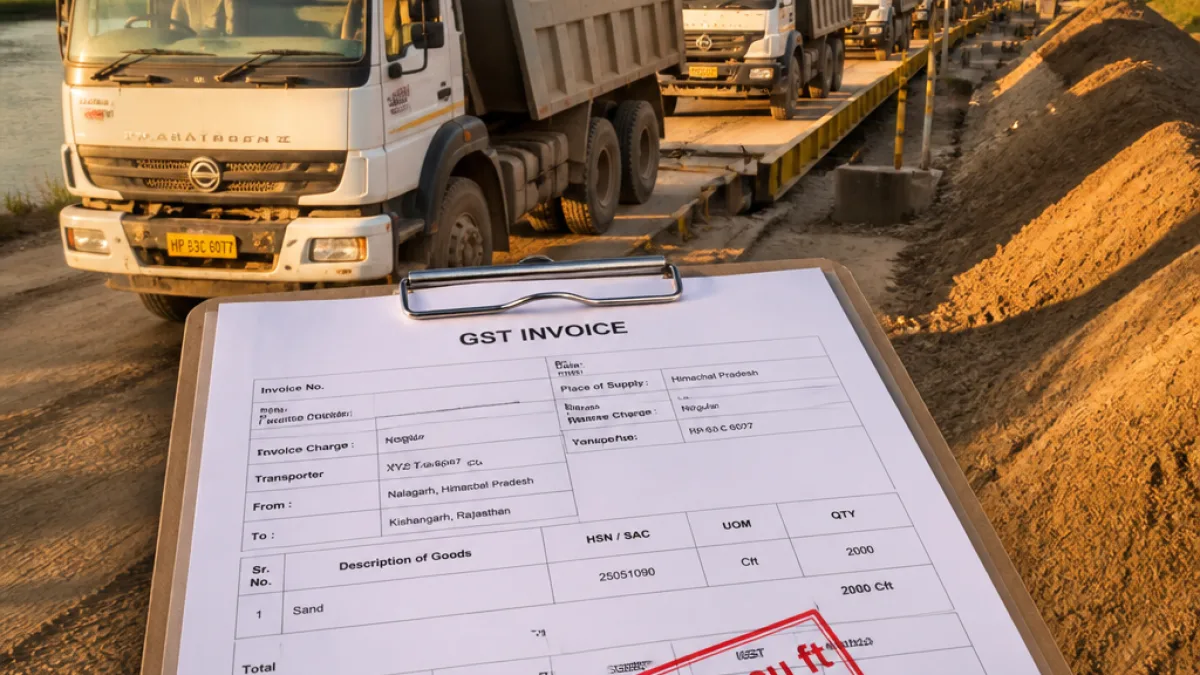
In response to the suspected irregularities, the Punjab Mining Department imposed a ceiling on the quantity of mining material that may be sold against a single invoice, officials confirmed. The cap limits sales per bill to 2,000 cubic feet, a move described by department sources as an attempt to curb misuse of invoices to launder illegally extracted material into the legal market.
Bhavuk Sharma, Executive Engineer (Mining), Anandpur Sahib region, confirmed that the cap had been introduced. He also said he had learned that the Himachal Pradesh GST authorities had initiated investigations in the Nalagarh region, but that he was not aware of similar cases in the Anandpur Sahib region.
Alleged modus operandi and scale
Sources alleged that several Punjab residents had set up firms in shops located in Himachal border areas specifically to issue GST invoices for mining material. The firms reportedly had little or no actual mining activity and mainly sold invoices to stone-crusher operators in Punjab.
The complaintants estimated that fake bills worth nearly ₹15 lakh were being generated every day to facilitate sales of illegally mined material, according to the information provided to the Punjab authorities.
| Issue | Allegation / Response |
|---|---|
| High-volume invoices | Single bills showing up to 5,000 cu ft per vehicle (deemed implausible) |
| Small-vehicle invoicing | Invoices claiming 1,000 cu ft transported by scooters or small vehicles |
| Quantity cap per bill | 2,000 cu ft (Punjab Mining Department) |
| Estimated fake bills value | ₹15 lakh per day (alleged) |
Impact on legal operators and market
Legal mining operators in Ropar complained that a flood of cheaper, allegedly illegal material was distorting the market and undermining their sales. The use of invoices to make illicit consignments appear legitimate would, if proven, create unfair competition and reduce revenues for compliant firms that follow environmental and royalty rules.
Operators and department sources argued that installation of a per-invoice cap would make it harder to mask large illegal consignments as routine transactions, and would help enforcement agencies detect suspicious patterns in billing and transport.
Investigations and next steps
According to the sources, the alleged scheme triggered internal checks and tighter norms by the Punjab department. They said the issue first surfaced following formal complaints by lawful operators who flagged anomalous invoices and unlikely transport claims.
On the Himachal side, the sources indicated that GST authorities had begun probing certain cases in the Nalagarh region. Punjab officials said they were monitoring the situation and expected coordination with Himachal authorities to verify the legitimacy of firms registered in border areas and examine records for possible invoice fraud.
- Key action: Punjab Mining Department has imposed a 2,000 cubic feet cap per invoice.
- Alleged malpractice: Firms in Himachal ostensibly issuing GST invoices without actual mining operations.
- Alleged scale: Fake invoices worth nearly ₹15 lakh daily, according to complainants.
Authorities in both states are poised to examine registrations, transport logs and GST records to establish whether invoices were produced without corresponding physical transactions and to hold any responsible parties to account, the sources said.