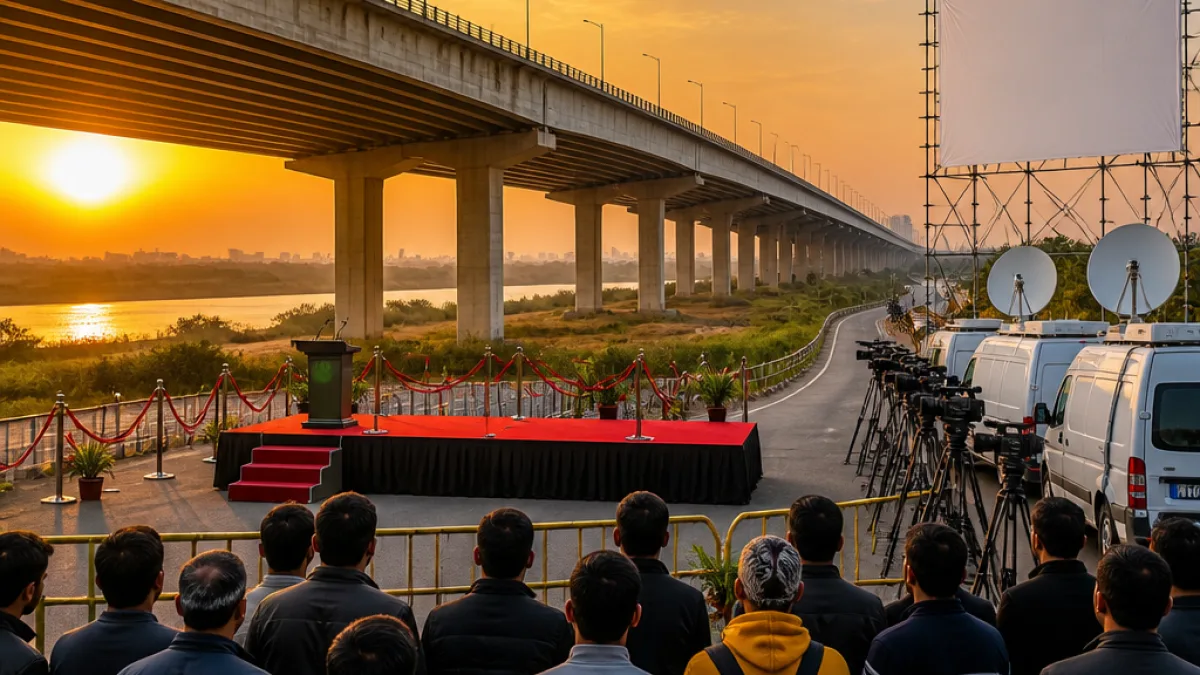
Decade‑long project to be inaugurated on September 29
Noida residents and East Delhi commuters can expect substantially shorter journeys to South Delhi after the much‑delayed Barapullah Phase‑III elevated corridor is opened to the public on September 29, officials said. The project, which will provide a signal‑free connection from Mayur Vihar to Sarai Kale Khan, is expected to reduce the average travel time to AIIMS from about 35–40 minutes to 15 minutes, according to reporting in The Indian Express.
The corridor will be inaugurated by Union Home Minister Amit Shah in the presence of Chief Minister Rekha Gupta, Public Works Department (PWD) Minister Parvesh Sahib Singh told The Indian Express. The opening is being billed as the culmination of a project that was approved in 2014 and began construction in 2015.
Originally targeted for completion in 2017, the Barapullah Phase‑III project became synonymous with delays owing to multiple challenges. The Indian Express account cited setbacks including a seven‑year land acquisition dispute, environmental clearances and technical difficulties associated with building across the Yamuna floodplain.
- Official timeline: Approved in 2014, construction began in 2015, originally due in 2017; inauguration set for September 29, 2026.
- Expected benefit: Travel time between East Delhi/Noida and AIIMS (South Delhi) reduced from 35–40 minutes to about 15 minutes.
- Political role: Union Home Minister Amit Shah to inaugurate; Chief Minister Rekha Gupta and PWD Minister Parvesh Sahib Singh to be present.
“For years, Delhiites saw deadlines come and go… Since last year, I have personally visited the site multiple times, reviewed progress regularly, and worked with officials to remove bottlenecks and get the project completed for the convenience of the public,”
The statement on oversight and accelerated progress was attributed by The Indian Express to PWD Minister Parvesh Sahib Singh, who said the project witnessed faster work over the past year and a half after authorities addressed key bottlenecks. The report also said that after the BJP assumed power in Delhi last year, the government obtained Centre clearance to transplant trees from the site, which helped clear one of the environmental hurdles.
| Milestone | Year/Status |
|---|---|
| Project approval | 2014 |
| Construction begun | 2015 |
| Original target completion | 2017 |
| Inauguration | 29 September 2026 (scheduled) |
For Noida commuters, a signal‑free link to Sarai Kale Khan and improved access to central medical facilities such as AIIMS could mean shorter emergency transfer times and reduced congestion on existing corridors that currently carry large volumes of inter‑city traffic. The reported travel‑time reduction from around 35–40 minutes to 15 minutes, if realised in practice, would represent a substantial improvement for daily travellers and patients needing urgent care.
Nevertheless, the project’s long history of delays underscores the operational challenges involved in urban infrastructure across the Yamuna floodplain, from land acquisition to environmental clearances and complex engineering. Authorities will face the next test in ensuring smooth traffic integration, maintenance and enforcement once the elevated corridor opens.
Local commuters in Noida and East Delhi will be watching initial traffic patterns closely after the inauguration, particularly during peak hours, to see whether the projected time savings materialise and whether feeder roads and junctions are adequately managed to prevent new bottlenecks.
The Indian Express report provides the timeline and official comments on the project’s completion and the anticipated benefits.