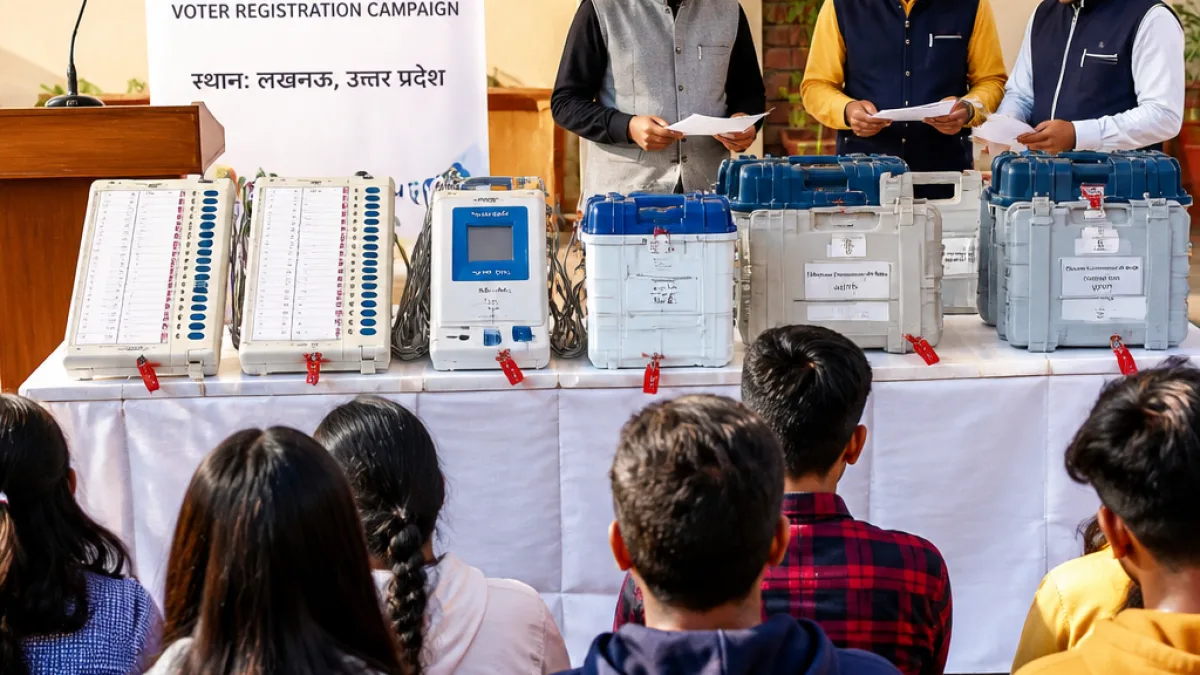
Chief Election Commissioner outlines EVM security, urges youth voter registration
Lucknow: Chief Election Commissioner Gyanesh Kumar on Monday sought to reassure students about the security of India’s electronic voting machines (EVMs), saying the devices are manufactured by public sector companies and do not have internet, Bluetooth or Wi‑Fi connectivity. Kumar made the remarks during an interaction at Colvin Taluqdars’ College as part of a two‑day visit to the city, according to an official statement.
Explaining the scale of the electoral exercise in India, Kumar said the country has around 100 crore voters and that conducting polls for such a vast electorate requires extensive administrative effort. He highlighted the role of large numbers of officials and employees who work to ensure the electoral process runs smoothly.
“Before accepting any information, it is essential to check its source and verify its authenticity,” Kumar said, urging students to be cautious about misinformation circulating on social media.
Kumar responded to students’ queries about EVMs, stressing that machines used in India are produced by public sector undertakings and are not connected to the internet or any wireless technologies. He advised young people to verify the authenticity of information before sharing it, given the current social media environment.
- EVM manufacture and security: Kumar said EVMs are made by public sector companies and lack internet, Bluetooth and Wi‑Fi connections.
- Voter outreach: He encouraged students who have turned 18 to register, citing Article 326 of the Constitution and noting the commission’s digital facilities for voter registration.
- Civic engagement: The CEC underscored the importance of young voters participating actively in democracy and verifying information sources.
Reflecting on his own background, Kumar recalled his school days in 1979 and credited his teachers with shaping his path. He also narrated a personal decision point: while preparing to go to the United States, his mother's wish and his attachment to India led him to remain in the country and pursue public service. He then cleared the civil services examination and began his administrative career in the Kerala cadre of the Indian Administrative Service, a trajectory he said eventually led him to the office of the Chief Election Commissioner.
| Topic | Key points from Kumar's visit |
|---|---|
| EVM connectivity | Manufactured by public sector firms; no internet, Bluetooth or Wi‑Fi |
| Voter base | India has around 100 crore voters; large administrative undertaking |
| Youth engagement | Students urged to verify information and register to vote under Article 326 |
The CEC’s reassurance comes amid continuing public discussion about electoral technology and misinformation. By addressing students directly at a historic Lucknow institution, Kumar sought to combine technical clarification with broader civic messaging — stressing both the mechanical security features of EVMs and the responsibility of young voters to check information before accepting or sharing it.
Officials said the Election Commission provides voter registration facilities through its digital platforms, which Kumar highlighted while urging newly eligible electors to complete enrolment. He also encouraged active participation in the democratic process, noting that robust turnout and informed voters are central to the functioning of the world’s largest democracy.
There was no mention in the official statement of any demonstration of EVM functioning during the session. The CEC’s visit to Lucknow is part of broader outreach efforts by the commission to engage stakeholders and reinforce confidence in election administration ahead of future polls.