Shimla: The Himachal Pradesh High Court has directed the National Highways Authority of India (NHAI) and M/s Gawar Shimla Highway Private Ltd. to jointly pay interim compensation of ₹2,23,55,924 to a woman whose multi-storey house came down amid construction of the four‑lane Shimla Bypass on NH‑5, a bench order showed on Tuesday.
Bench orders equal share within four weeks
A Division Bench comprising Chief Justice G S Sandhawalia and Justice Bipin C Negi ordered the two parties to bear the assessed amount equally and deposit the interim payment within four weeks. The award breaks down into ₹1,65,17,336 assessed for structural damage and ₹58,38,588 for personal belongings destroyed in the incident.
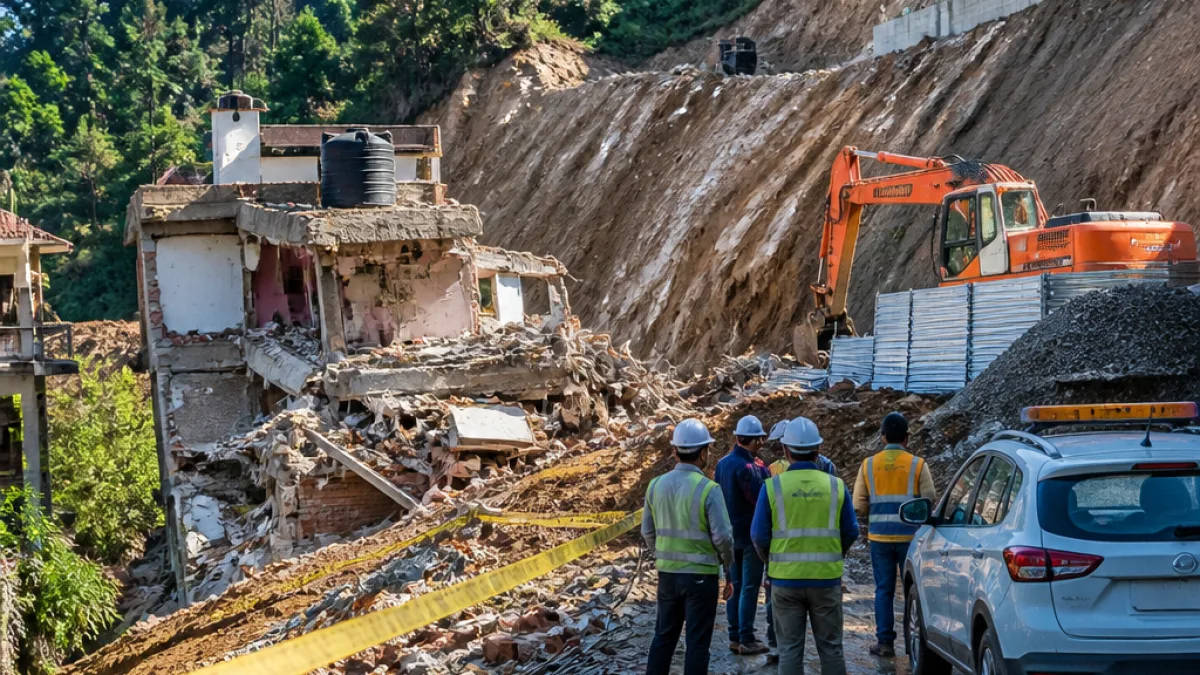
The court took action after receiving correspondence from a neighbouring resident, who reported that her three-and-a-half-storey house at Chamyana had been destabilised following a massive landslide and the collapse of the adjoining structure owned by the claimant, identified in the order as Ranjana Devi. The affected site falls under Package‑II of the Shimla Bypass project.
"Not a penny has been paid," the bench observed, expressing concern over delay in disbursal after the assessment was completed last year.
Court links collapse to slope cutting and surface water
The court noted that inquiry documents and police reports placed responsibility on vertical cutting of the downhill slope carried out as part of the highway works, without adequate geotechnical and hydrological safeguards. Uncontrolled surface water runoff was recorded as a contributing factor in the landslide that led to the collapse.
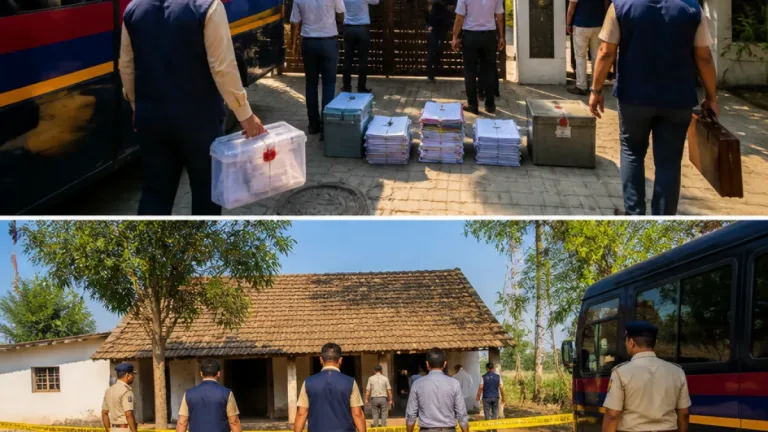
An FIR has been registered at Dhalli police station in connection with the episode, according to court records. The Bench emphasised that agencies executing deep hill cutting must ensure proper supervision and safety measures, and cannot evade responsibility for harm caused by deficient practices.
State asked to assess and monitor neighbouring houses
Besides directing payment to the victim, the High Court instructed state authorities to carry out an assessment of damage to the neighbouring resident who brought the matter to the court’s notice. It further ordered monitoring of six other adjacent houses that have been identified as vulnerable to landslides.
The order underscores judicial concern over safety protocols in hill-area infrastructure projects and signals a prompt remedial and preventive approach: compensation for the immediately affected, damage assessment for others, and oversight to avert further incidents.
Practical implications for residents and agencies
- For affected homeowners: The interim compensation is to be paid within four weeks; they should seek remaining legal remedies through the court if further loss remains.
- For NHAI and contractor: The bench held them jointly liable and reiterated the need for integrated geotechnical and hydrological management when carrying out deep cutting in hill terrain.
- For local administration: Authorities have been asked to assess neighbouring properties and monitor at‑risk structures to prevent secondary disasters.
Table: Compensation components
| Component | Amount (₹) |
|---|---|
| Structural damage | 1,65,17,336 |
| Belongings destroyed | 58,38,588 |
| Total interim compensation | 2,23,55,924 |
The court’s direction follows the completion of an assessment last year; however, the bench recorded that no payment had been made to the victim to date. It also observed that agencies undertaking such projects must put in place adequate supervision and cannot "wash off" responsibility for safety lapses.
Police and inquiry reports placed causation on the methodology of slope cutting and the absence of integrated measures to handle ground stability and runoff. The bench’s orders combine compensation, criminal inquiry (via the FIR), and administrative measures to protect other houses in the vicinity.
Officials at the NHAI office in Shimla and representatives of M/s Gawar Shimla Highway Private Ltd. had not been named in the order as commenting parties; the court’s directions are binding until modified on appeal or further order.
The judgment draws attention to risks inherent in hill‑road widening and four‑laning projects, particularly where vertical hill cutting and surface water are not managed by sound geotechnical methods. The High Court’s twin focus on relief for victims and preventive oversight for other dwellings may shape how authorities plan and supervise remaining packages of the Shimla Bypass.