GDA to consider master plans for Harnandipuram township and Aerocity
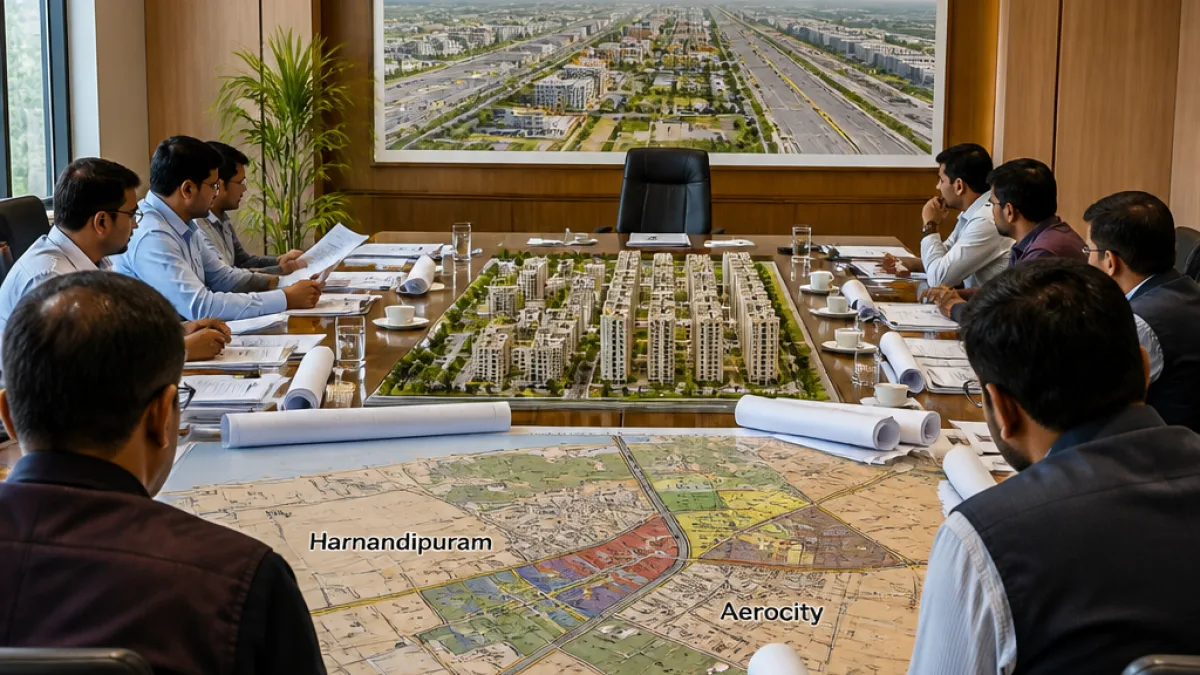
The Ghaziabad Development Authority (GDA) board is set to examine detailed project reports and official layouts for major expansion projects including the Harnandipuram township, Aerocity and decisions on Bandha Road, Business Today reported on Monday. The proposals, if approved, will guide the next phase of planned growth and connectivity for the fast-expanding city.
The Harnandipuram Township is described in planning documents as a large-scale residential and mixed-use development covering roughly 521 hectares. The Uttar Pradesh government under Chief Minister Yogi Adityanath has already set aside an initial budgetary provision of ₹2,384 crore for the project, according to the report.
"Once these proposals secure board approval, connectivity and planned growth across the city’s peripheral zones will gain significant momentum," GDA Secretary Vivek Kumar Mishra said, as reported by Business Today.
The project footprint will require land from eight surrounding villages. The villages named in the proposal are:
- Mathurapur
- Shamsher
- Champat Nagar
- Bhanera Khurd
- Nagla Firoz
- Mohanpur
- Bhovapur
- Shahpur Nij and Morta
Harnandipuram is positioned directly behind Raj Nagar Extension and is expected to become a major residential hub once land acquisition and infrastructure phases progress. The board will also review the detailed project report for Aerocity, an adjoining scheme envisaged as a modern growth node, and proposals for acquiring land and making key infrastructure decisions along Bandha Road.
Why the approvals matter for Ghaziabad residents
Approvals at the board level typically trigger the next stages of project implementation — formal land acquisition, award of contracts, and mobilisation of funds for roads, utilities and civic services. For Ghaziabad residents, the immediate consequences would include changes in land values, potential displacement for villagers whose land is to be acquired, and longer-term gains in housing supply and connectivity.
Urban planners and municipal records indicate that packaging multiple projects — a township, an Aerocity node and strategic road improvements — is intended to produce a unified development corridor. The GDA's decision to consider these items together suggests an attempt to align housing delivery with transport and utility planning to avoid piecemeal growth.
| Project | Area / Notes | Initial Allocation |
|---|---|---|
| Harnandipuram Township | Approx. 521 hectares; land from eight villages | ₹2,384 crore (initial) |
| Aerocity | Detailed Project Report under review | Not specified in report |
| Bandha Road | Infrastructure decisions to be considered | Not specified in report |
Officials tracking Ghaziabad’s urban expansion have repeatedly noted pressure on the city’s peripheral areas due to rising demand from commuters and households seeking affordable housing near the National Capital Region (NCR). Earlier development drives for sectors such as Raj Nagar Extension have attracted residents and builders; Harnandipuram and Aerocity represent the next large parcels earmarked for planned urbanisation.
However, large-scale land acquisition often raises concerns on compensation, rehabilitation and the pace of delivery for civic amenities. The report does not detail timelines for the land-acquisition process, compensation packages or resettlement arrangements for affected villagers. Those details typically emerge in subsequent meetings or notifications following board approval.
GDA Secretary Vivek Kumar Mishra’s remarks, as recorded in the Business Today report, underline the administration’s expectation that board sanction will accelerate connectivity work and organised growth. Local residents, elected representatives and landowners around the proposed sites are likely to watch the board meeting closely for decisions that will determine both the scope and schedule of implementation.
As the proposals move through the GDA process, the administration will need to balance rapid urban expansion with safeguards for affected communities and ensure infrastructure keeps pace with planned development, observers say.