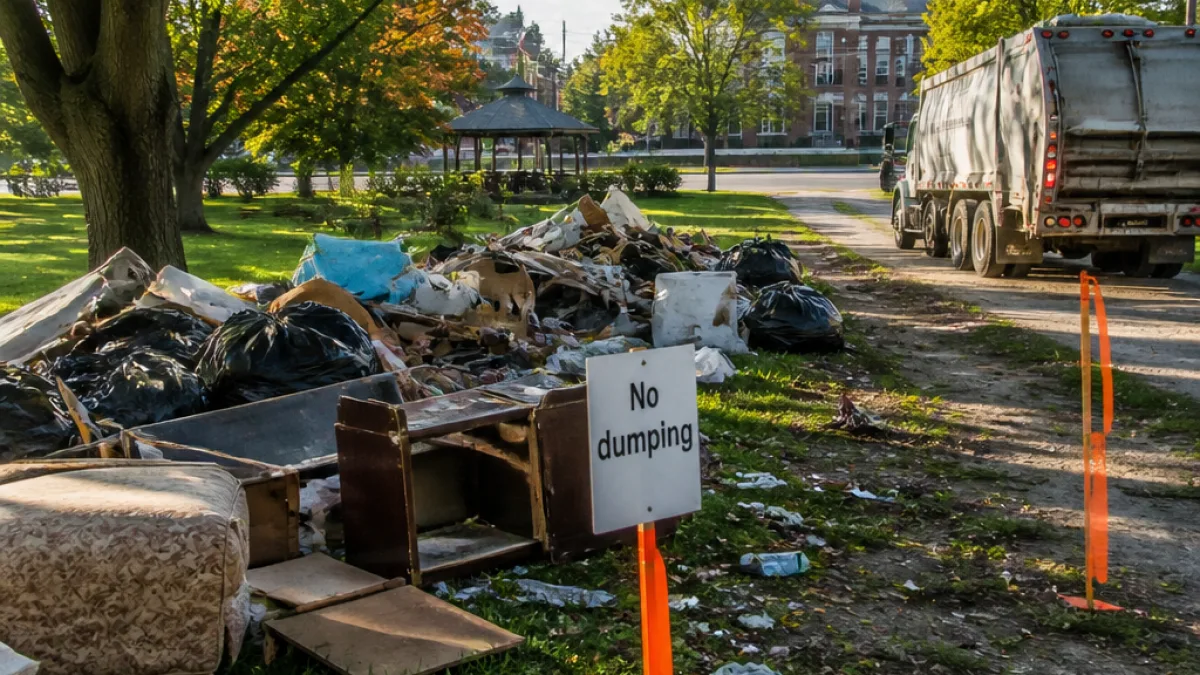
Woodstock officials are preparing to confront a surge in illegal dumping that has left parks, trailheads and the downtown core fouled with household garbage and other waste, prompting city council to investigate six possible responses that would require collaboration with Oxford County.
Council asks staff to study six options
At its August meeting, Woodstock council directed municipal staff to report back with detailed analysis of six recommendations aimed at improving public cleanliness and encouraging what the city calls “waste system compliance.” While the recommendations were presented by city staff, the bulk of the measures would involve some degree of co‑ordination with county staff because waste management falls under the County’s authority under the Municipal Act.
City officials say complaints from residents have grown as trash is increasingly found in public spaces across the Friendly City. Areas singled out by councillors and staff include downtown streetscapes, parks and trailheads frequented by families and recreational users.
- Downtown core: reports of household waste left at sidewalks and alleys
- Parks and trailheads: litter and dumped bags affecting user experience and wildlife
- Other public spaces: ad hoc dumping making cleanup challenging and costly
County collaboration and service levels at centre of debate
Because waste collection and disposal are administered by Oxford County, city councillors said a key part of the discussion will be whether the county can restore a higher downtown level of service by increasing frequency or consistency of pickups. That proposal — the first of the six recommendations presented to council — would aim to reduce overflow and make it less attractive for people to abandon waste on public property.
Council asked staff to examine potential impacts and any associated costs for each recommendation and to return with findings. Staff will also be expected to outline how the measures could be implemented in partnership with county staff and what enforcement or education components might be required.
Local consequences and options ahead
For residents, the options under consideration could translate into a range of actions, from increased collection services to enhanced signage, surveillance or targeted enforcement in hotspot areas. Any shift in service frequency would likely need approval and funding discussions at the county level; other measures could be adopted by the city alone but may carry staffing or capital costs.
City councillors stressed the need to balance deterrence and support — for instance, pairing stronger enforcement with public awareness campaigns explaining proper disposal options and schedules. They also want staff to identify where municipal or county resources can be reallocated or leveraged to get quicker results without creating unsustainable budget pressures.
What residents can expect next
Staff will report back to council with a more detailed assessment of the six recommendations, including projected costs and potential timelines. Any proposal that requires county action will involve follow‑up discussions with Oxford County officials. In the meantime, council members urged residents to continue reporting incidents of illegal dumping so staff can better map problem areas and prioritise responses.
| Issue | Implication |
|---|---|
| Increased downtown dumping | May require higher collection frequency or enforcement |
| Parks and trails litter | Impacts recreation, safety and wildlife |
| Responsibility | Waste management administered by Oxford County |
Woodstock residents will likely see the first concrete proposals after staff complete the requested analysis and return to council. The outcome will determine whether short‑term actions can be taken by the city or whether broader, county‑led changes in service and policy are needed to curb the practice.