Alison Hume, the Member of Parliament for Scarborough and Whitby, says the Government’s decision to temporarily ban the sale of disposable barbecues and to pursue changes to gambling and planning rules responds to hard lessons from last year’s wildfires and local campaigning.
Action after fires
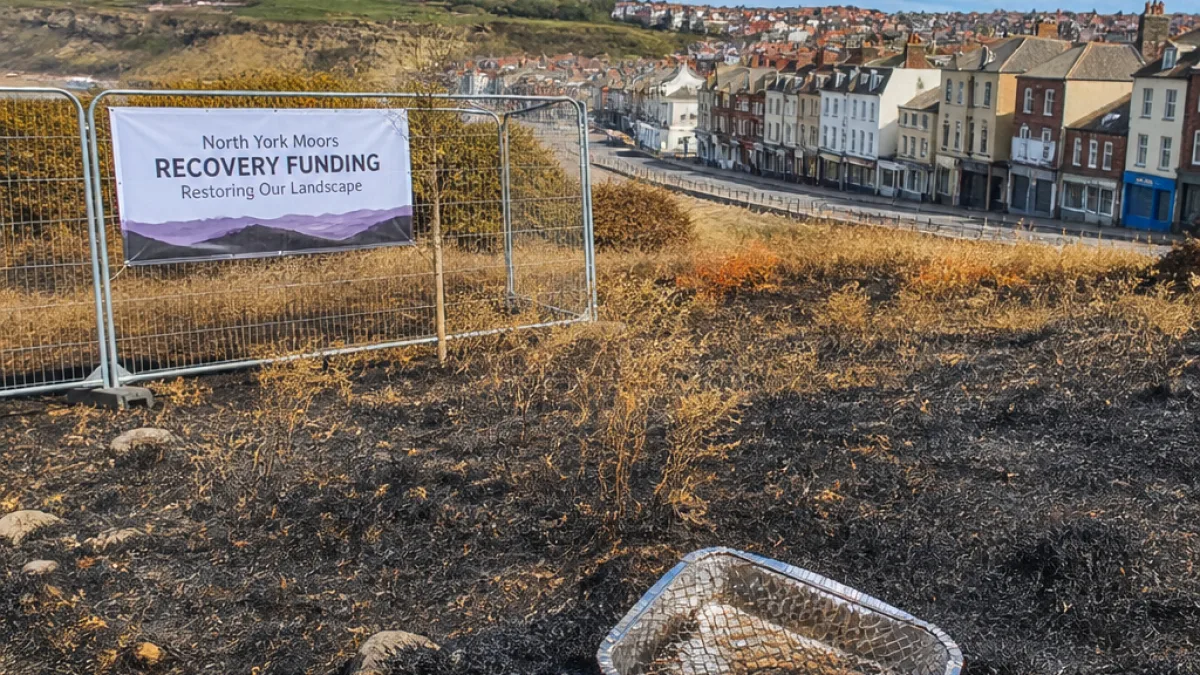
In a column published this month, Hume described the move to curb disposable barbecues as a pragmatic measure driven by local experience. She recalled the major incident declared during the largest wildfire to affect the North York Moors, saying the physical and psychological scars remain.
Hume said that underground temperatures at the moor became so intense during the fire that they created their own microclimate, producing flame and dust cyclones. She linked disposable barbecues to subsequent fires in locations including Wykeham Forest and argued that restrictions were necessary when a product repeatedly sparks incidents that risk lives and landscapes.
Parliamentary work and local campaigning
The MP noted that she established the All‑Party Parliamentary Group on Wildfire Prevention and has pushed for a ban on disposable barbecues. In her column, Hume framed the ban as part of a wider push to ensure communities are better protected and that those who responded to the fires — firefighters, farmers, gamekeepers and volunteers — receive more than gratitude.
“They deserve action to ensure we learn the lessons of Fylingdales, including the £3.2m being provided by Government to aid the recovery process.”
Hume highlighted that the Government has committed £3.2 million to aid recovery following last year’s major incident. The funding is presented as part of steps to address the immediate and ongoing consequences of the wildfire.
Changes to gambling and high‑street planning
Beyond wildfire prevention, Hume said her long‑running campaign on gambling controls has seen a breakthrough. The Government has announced plans to abolish the Gambling Act’s controversial “Aim to Permit” rule, which Hume and others argued limited local democratic control over the presence of gambling premises.
Hume cited a recent local example in which an Adult Gaming Centre opened despite strong local opposition, saying the removal of the “Aim to Permit” approach restores the principle that local communities should have a decisive say over what appears on their high streets.
She also mentioned forthcoming changes to planning controls for vape shops and stronger powers to tackle rogue bus operators, suggesting a package of measures that aim to strengthen local planning and consumer protections.
Local implications and next steps
For residents in Whitby, Hume’s column signals sustained attention from Westminster on issues that have immediate local resonance: wildfire risk, the composition of the high street, and public safety. The temporary ban on disposable barbecues and the funding committed to recovery are presented as short‑term responses to a recent crisis; changes to planning and gambling rules are framed as longer‑term shifts in who decides what is permitted in local communities.
- Temporary ban on sale of disposable barbecues advocated after link to local fires.
- £3.2 million government funding cited for recovery following the North York Moors wildfire.
- Plans to abolish the Gambling Act’s “Aim to Permit” rule to restore local decision‑making on gaming premises.
Hume’s column positions these developments as the result of sustained campaigning and local experience of wildfire risk. The announcements now await the detail of government regulations and implementation, which will determine how quickly and effectively the measures affect communities in and around Whitby.