Verdict follows social-media confession and 80-minute statement to police
A Whitby man has been found guilty of second-degree murder in the death of his estranged wife, who was strangled at a family home in Whitby last November.
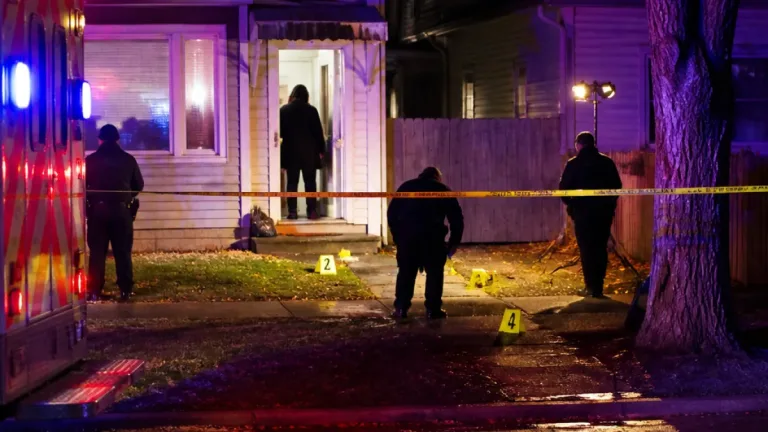
Superior Court Justice Lisa Wannamaker convicted the accused, Troy Moulton, after a judge-alone trial in March. The victim, Latonya Anderson, was 34 and lived at the home on Kressman Court with her 12-year-old son, her mother and her brother. Anderson was four days away from her 35th birthday when she was killed on Nov. 4, 2023.
Prosecutors say Moulton posted a message on social media after the attack that read,
“Am sorry for killing her, I love her and I can’t imagine her with a next man.”After leaving the residence, he briefly spoke with the couple’s son, who later found his mother dead. Moulton then attended a bank, completed a wire transfer to Jamaica, wrote further messages online and contacted Durham Regional Police to turn himself in.
After turning himself in, Moulton was taken to police custody where he provided an approximately 80-minute statement setting out what occurred that night. At trial, he testified that he did not intend to kill Anderson and described the death as accidental, saying he had not realised his arm was around her neck when he held her close so she could not leave.
Justice Wannamaker rejected that account, finding Moulton either intended to kill Anderson or intended to cause bodily harm and was reckless as to whether death would ensue. Assistant Crown attorney Tammy D’Eri told the court the case contains aggravating features, including the fact that Anderson’s son heard the fight, and asked the judge to set a lengthy parole-ineligibility period.
Life sentence mandatory; parole-ineligibility to be set
A conviction for second-degree murder carries a mandatory sentence of life imprisonment, but the judge must set a period of parole ineligibility that can range from 10 to 25 years. The Crown urged a 20-year period of parole ineligibility in this case, citing the circumstances that made the offence particularly serious.
| Sentencing element | Detail |
|---|---|
| Conviction | Second-degree murder |
| Mandatory sentence | Life imprisonment |
| Parole ineligibility range | 10–25 years |
| Crown submission | 20 years |
The judge will determine the appropriate period of parole ineligibility after considering submissions and the aggravating and mitigating factors presented by both Crown and defence.
Local impact and unanswered questions
The events of Nov. 4 left a family and a community grappling with loss. Anderson’s 12-year-old son, who was in the home at the time of the killing, is among those directly affected; prosecutors cited his presence and the fact he heard the struggle as an aggravating factor for sentencing.
- Victim: Latonya Anderson, 34 (nearly 35)
- Accused: Troy Moulton, convicted of second-degree murder
- Location: Home on Kressman Court, Whitby; date of killing Nov. 4, 2023
The case underscores a persistent issue in communities across Ontario: domestic violence and intimate-partner homicide. Court records and the Crown’s submissions outline a pattern of behaviour and actions that prosecutors say demonstrate intent and recklessness.
As the judge prepares to set the parole-ineligibility period, Whitby residents and local service providers will be watching the outcome closely for its legal consequences and its human toll. The criminal finding removes the question of guilt from the public record; sentencing will focus on the period before a person convicted of this offence could first apply for parole.
Further court hearings to set the parole-ineligibility period are expected. The decision will determine when the convicted man might first be eligible to seek conditional release under federal parole rules, a significant milestone in any homicide sentence.