
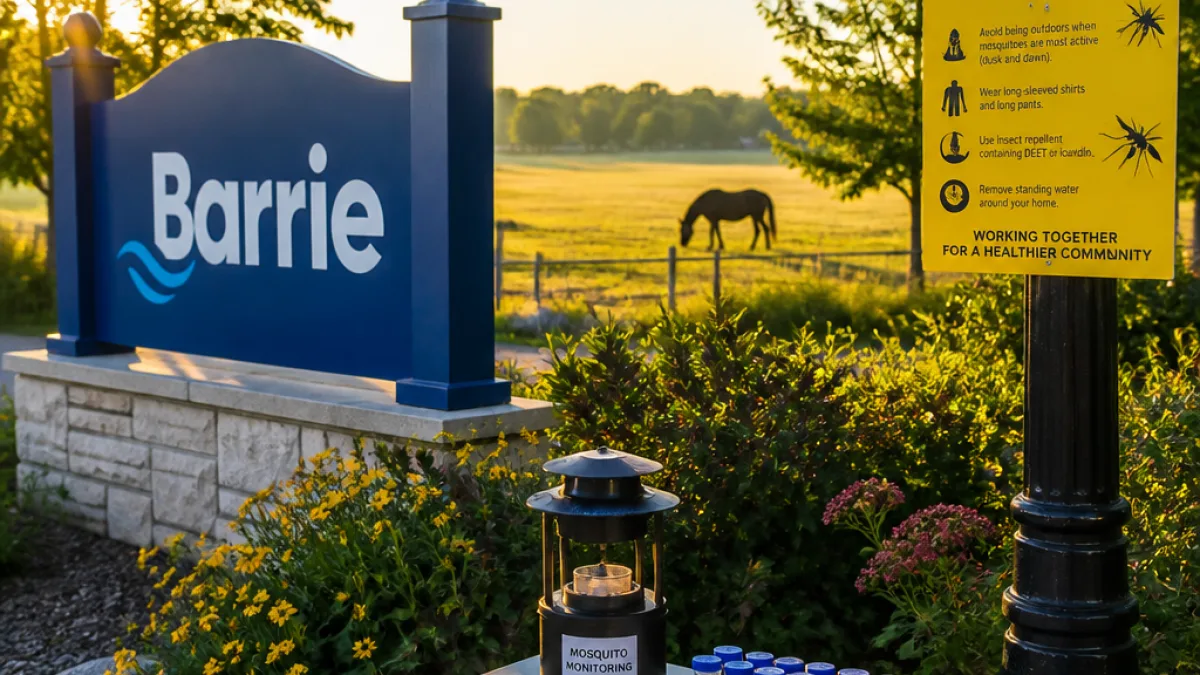
Virus found in local mosquito samples as late-summer risk rises
The Simcoe Muskoka District Health Unit (SMDHU) has confirmed that mosquitoes collected in Barrie have tested positive for West Nile virus, and is reminding residents to take precautions as the season of highest risk approaches.
In addition to the positive mosquito pool in Barrie, the health unit says the virus was recently detected in a bird and a horse elsewhere in the Simcoe Muskoka region. The SMDHU emphasised surveillance remains active across the region through trapping and laboratory testing.
"Currently, no human cases have been confirmed in Simcoe Muskoka in 2026," the health unit said in a news release.
What has been detected
Local detections so far are limited to non-human sources, but they underscore the virus’ presence in the area. West Nile virus is carried in a natural cycle between birds and mosquitoes; humans can become infected if bitten by an infected mosquito.
| Detection | Location | Status |
|---|---|---|
| Mosquito pool | Barrie | Positive |
| Bird | Simcoe Muskoka region | Positive |
| Horse | Simcoe Muskoka region | Positive |
| Human cases | Simcoe Muskoka | None confirmed in 2026 |
Public-health advice for residents
The health unit advised practical steps residents can take to reduce the risk of mosquito bites and limit mosquito breeding around homes. Those measures are especially important in late summer, when mosquito activity and virus transmission are most likely.
- Use an insect repellent that is approved for use in Canada and follow the label directions.
- Wear light-coloured clothing and cover exposed skin with long sleeves, long pants, socks and a hat when mosquitoes are present.
- Remove standing water from around your property to reduce mosquito breeding sites.
- Ensure window and door screens are in good repair to keep mosquitoes out of homes.
Most people infected with West Nile virus do not develop symptoms. However, the SMDHU warns that some people can become seriously ill; symptoms to watch for include fever, severe headache, muscle weakness, stiff neck, confusion and sensitivity to light. In rare cases the virus can lead to serious neurological illness.
The health unit said anyone experiencing concerning symptoms should seek medical attention.
Local context and consequences
For Barrie and neighbouring communities, a positive mosquito test is a reminder of the urban–rural interface that shapes seasonal public-health risks. City neighbourhoods with storm drains, catch basins or containers that hold water can become breeding grounds, while nearby wetlands and rural properties remain natural mosquito habitat. The combined landscape can sustain local mosquito populations that transmit viruses between birds, horses and occasionally people.
Municipal staff and public-health officials typically rely on a mix of surveillance, public advisories and targeted larval control to limit risks. The SMDHU said it will continue monitoring mosquitoes across Simcoe Muskoka through trapping and testing while keeping the public informed.
For more information on West Nile virus, including current guidance, visit the health unit’s webpage at smdhu.org/WNv.















